
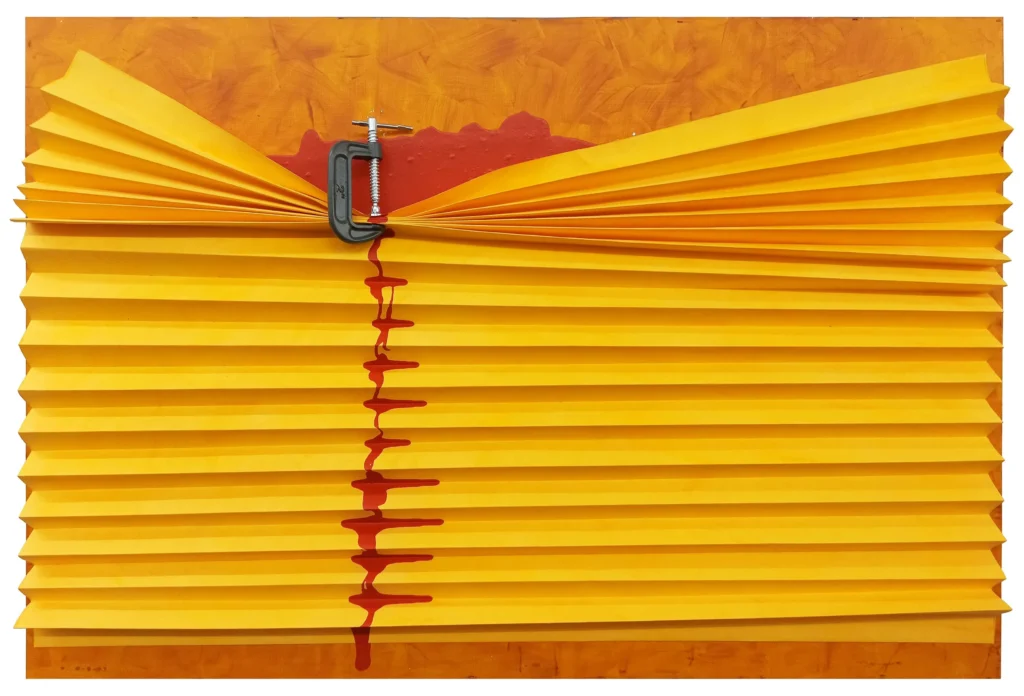
“Visceral Geometry” closes March 1 at Paço Imperial — a rare Rio encounter with a São Paulo master absent from the city for 17 years.
This Sunday, March 1, marks the final day of Gilberto Salvador – Visceral Geometry at the Paço Imperial in downtown Rio de Janeiro. The exhibition offers Rio audiences what may be their only near-term chance to experience the work of one of Brazil’s most accomplished — and least seen — contemporary artists.
Curated by Denise Mattar, the show brings together approximately 40 works — paintings, sculptures, and videos — spread across three galleries on the second floor of the historic Paço Imperial. Salvador, who has used a wheelchair since contracting polio at nine months old, has rarely shown work outside São Paulo, making this retrospective a genuinely rare event.
An artist who never stopped
Gilberto Salvador has been working for over 60 years without interruption. Mattar frames the exhibition’s significance with clarity:
“Salvador’s work, an essential part of the São Paulo art scene, is little known in Rio de Janeiro, largely due to the artist’s mobility challenges — a wheelchair user who rarely mentions his physical limitations, and for that very reason, an example of resilience and courage. The exhibition thus takes on an air of the unprecedented, offering Rio audiences the rare opportunity to discover an artist at the mature peak of his production.” — Denise Mattar, curator
Geometry, color, and raw material
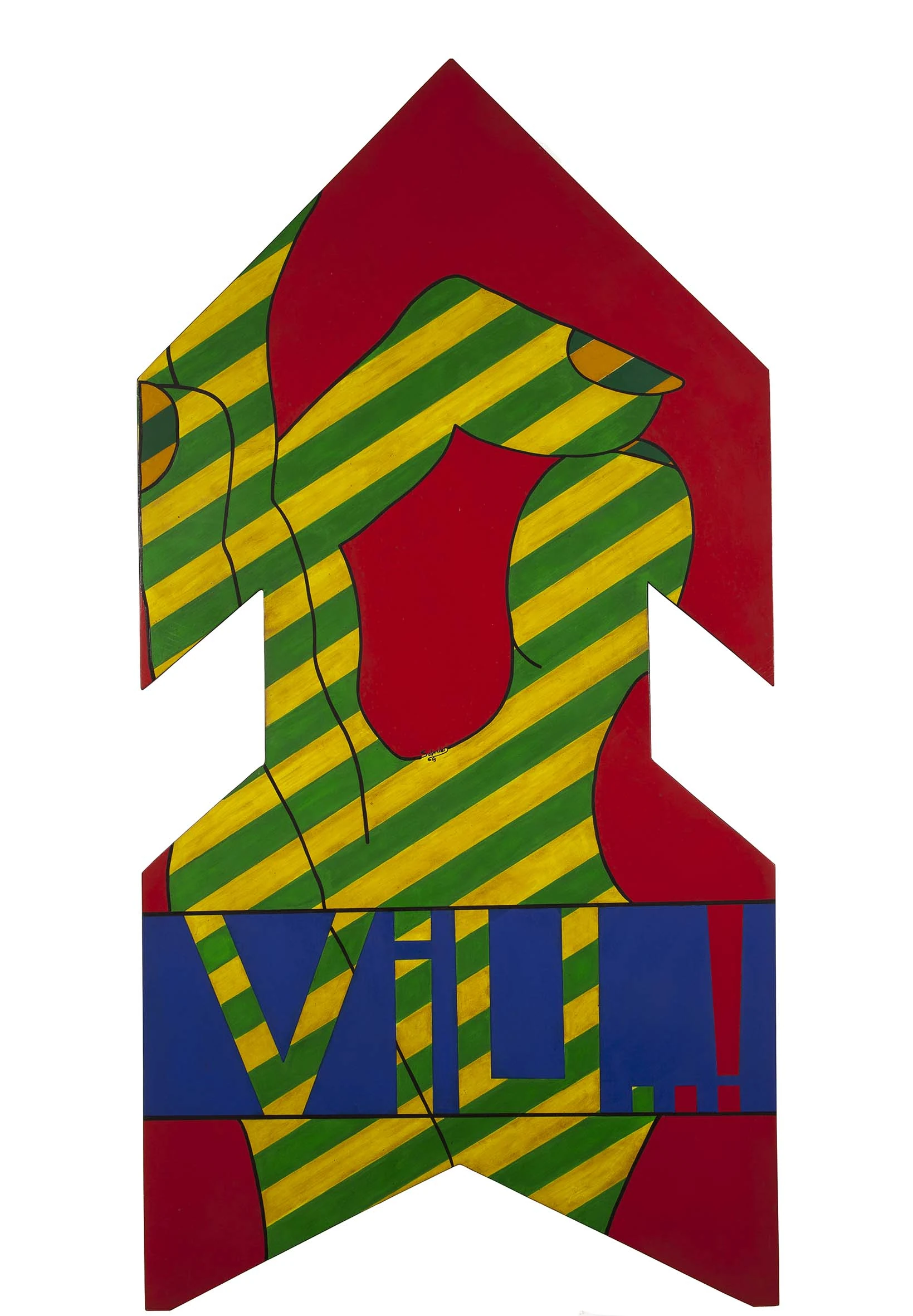
The exhibition opens with landmark works from the 1960s and 1970s, including “Viu…!” (1968), which directly confronts the Brazilian military dictatorship. Mattar describes Salvador’s early development: “From his very first works in the 1960s, Gilberto knew how to fuse constructive rationality with an organic visual impulse. His early graphic and pictorial experiments reveal a political consciousness intertwined with the plastic act — color as discourse, line as denunciation.”
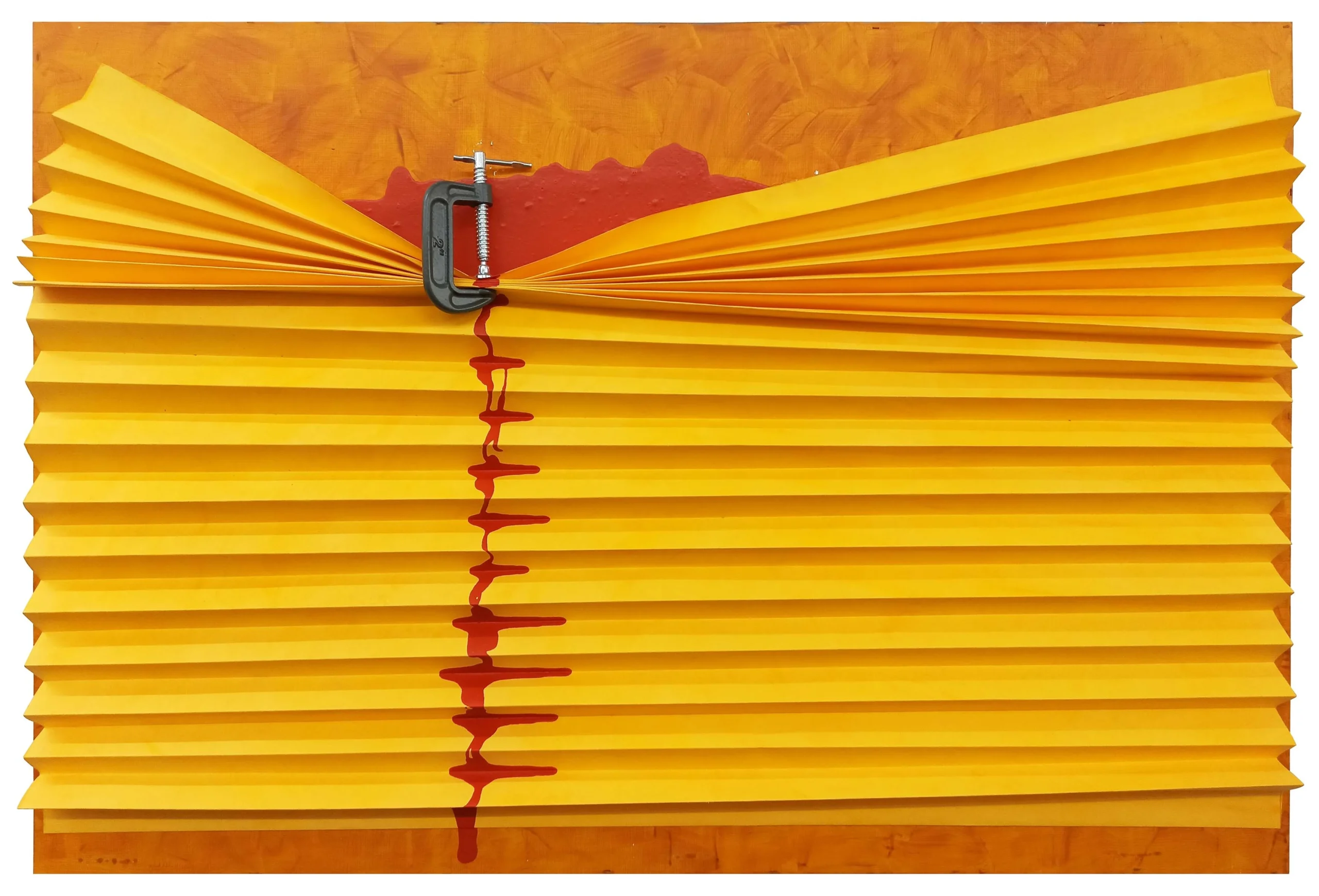
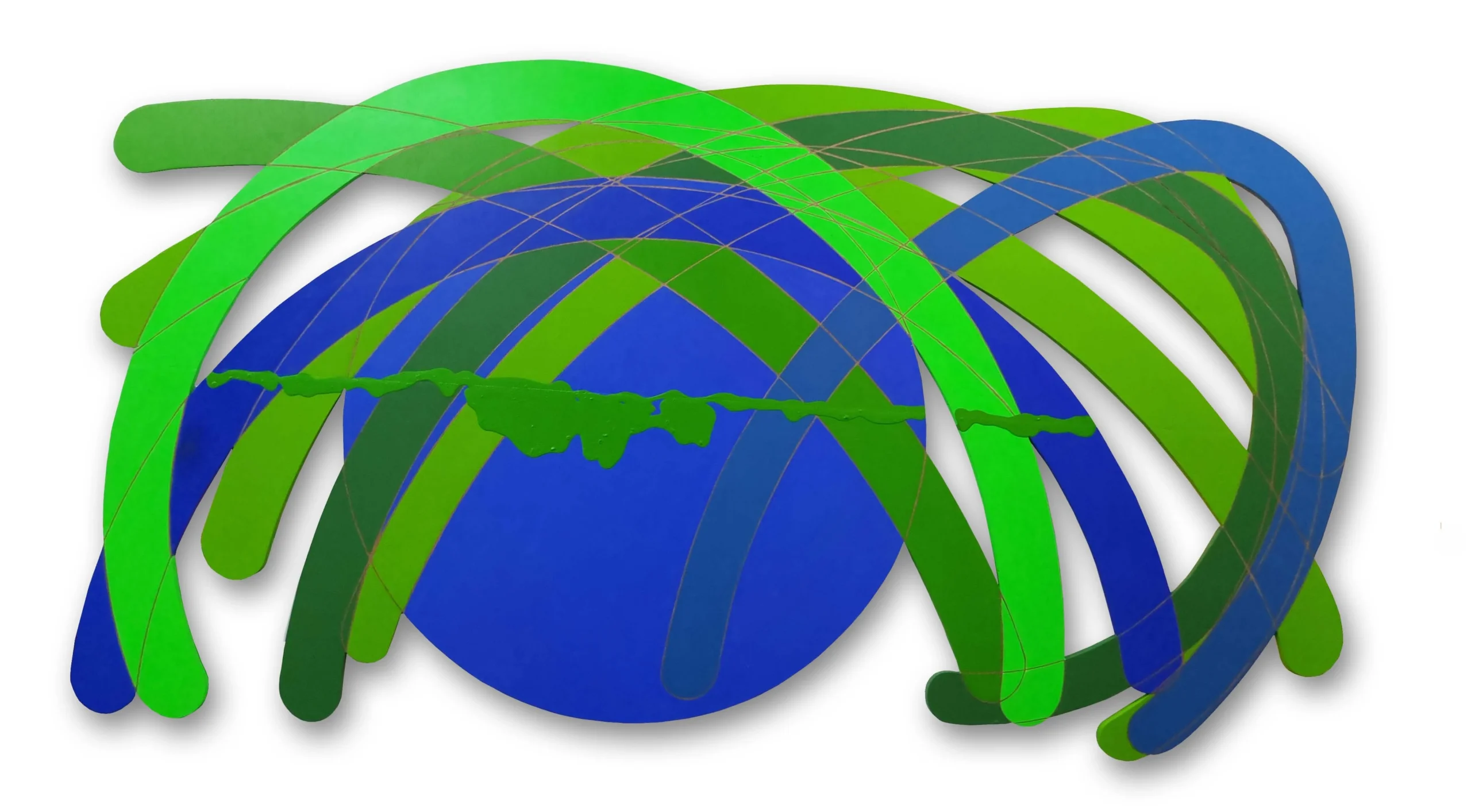
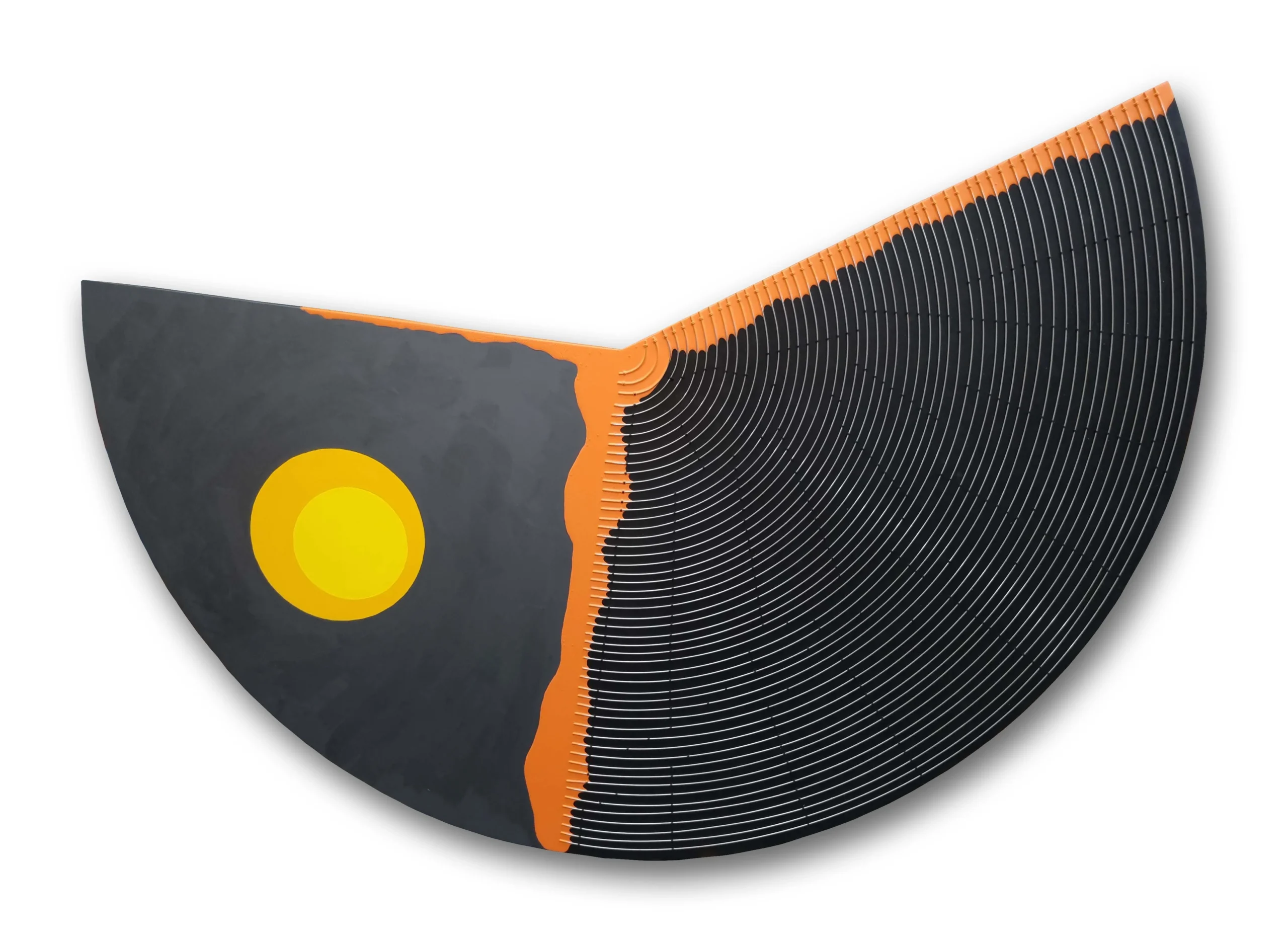
Salvador’s training in architecture and urban planning runs through every phase of his work. Acrylic sheets, metal, paint, and construction materials appear in compositions that balance geometric precision with organic tension. As Mattar notes, “Gilberto incorporates different materials in an absolutely harmonious way — it is a work very rich in materials, across all phases of his career.”
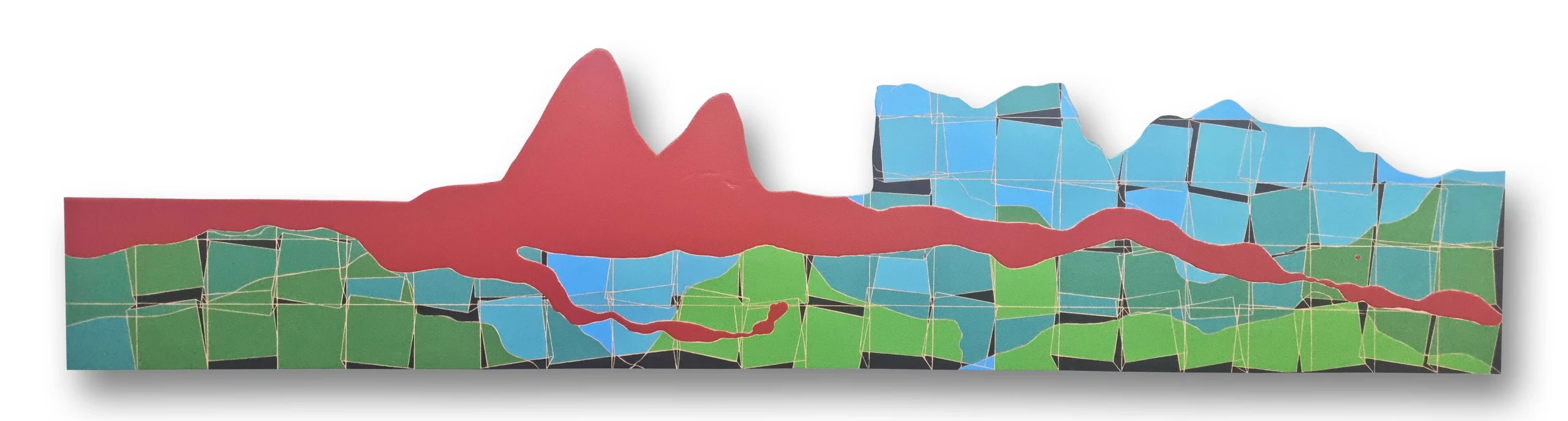
Cutouts and vibrant color are two of Salvador’s most immediate signatures. He traces their origins to childhood memory: “When I was a child, one of the things that impressed me most were the posters outside movie theaters — a scene printed on wood and cut out as if it were coming to life. That element repeated itself throughout my career and, at the same time, gained a very strong painterly element: chromaticism, vibrant colors that relate to our tropical reality. Tropical Brazil is colorful; our flora is colorful.”
Rio de Janeiro inside the work
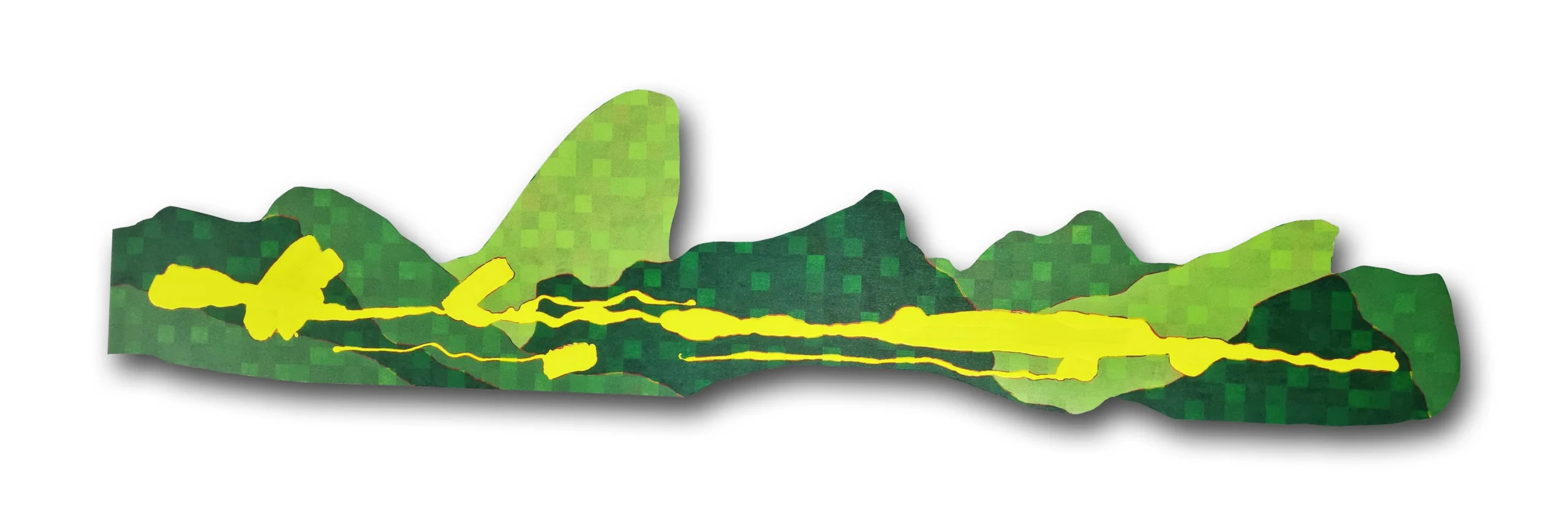
One of the exhibition’s most compelling sections features works inspired by Rio’s landscape. Salvador describes them: “These are cut-out landscapes that begin with the silhouette of the Two Brothers hills, move to the mountains, take in Sugarloaf and the Saco do Mamanguá inlet in Paraty. There is also a painting that renders Sugarloaf in a dramatic way — black, gray, in graphite. These works reference the drawings Thomas Ender made when he came to Brazil with Princess Leopoldina in the 19th century.”
Series and material experiments
A group of works featuring grid patterns — visual echoes of the tiled floors of swimming pools where Salvador spent hours as a child — creates striking tridimensional effects through wooden cutouts. A separate series presents nine yellow works inside acrylic boxes, incorporating plumb bobs, tennis balls painted black, and hammered lead plates. “The lead plates are hammered and sewn onto wood to give an organic material quality,” Salvador explains.
The final gallery features a work in light-polarizing acrylic displayed against a black wall, making its luminous effect unmistakable. “This type of acrylic seems to be emanating light due to the characteristics of its molecular structure — light appears to be emanating from the work. I use this material almost like a glaze,” says the artist.
Accessibility as artistic statement
Salvador created two tactile sculptures specifically for this exhibition — works visitors are invited to touch. “I think it is fundamental for the public to have this experience,” he says. The gesture carries particular weight coming from an artist who has navigated the art world for six decades from a wheelchair.
Why “Visceral Geometry”?
Mattar explains: “What strikes me most about his work — and why I gave it this title — is that constructivism and geometry are absolutely permanent in Gilberto’s work, even in his earliest pieces, which carry more of a Pop Art spirit. But there is always a counterpoint: an organic form present throughout all of his work.”
The final room also screens a series of videos documenting Salvador’s process and presenting works not on display — including watercolors made with coffee and a collection of metal engravings — deepening the portrait of an artist with over six decades of uninterrupted output.
Visitor information
Gilberto Salvador – Visceral Geometry
Exhibition: Through March 1, 2026
Venue: Paço Imperial Cultural Center – 2nd floor
Address: Praça XV de Novembro, 48 – Centro – Rio de Janeiro – RJ
Hours: Tuesday through Sunday and holidays, noon to 6 p.m.
Admission: Free
Curator: Denise Mattar
Sponsor: Itaú
Production: Tisara Arte Produções
Photo: Divulgação
Gostou do nosso conteúdo?
Seu apoio faz toda a diferença para continuarmos produzindo material de qualidade! Se você apreciou o post, deixe seu comentário, compartilhe com seus amigos. Sua ajuda é fundamental para que possamos seguir em frente! 😊