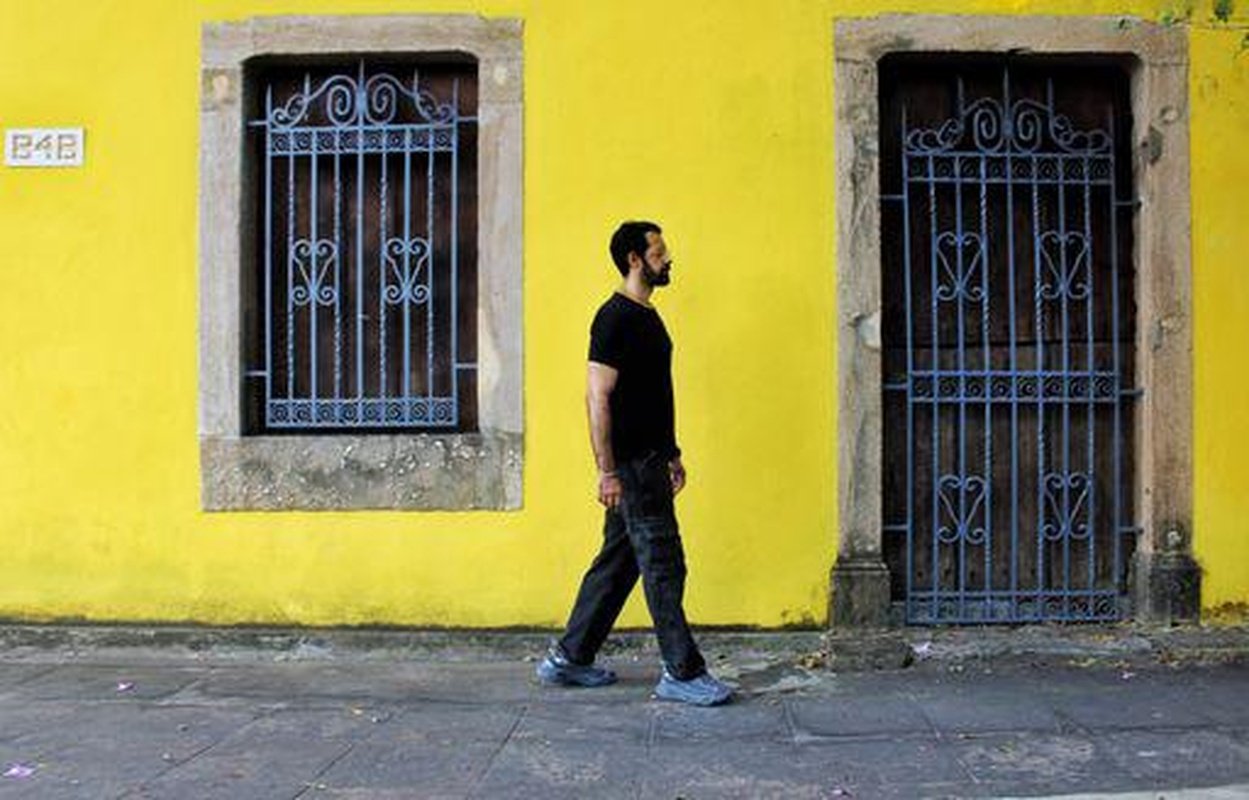
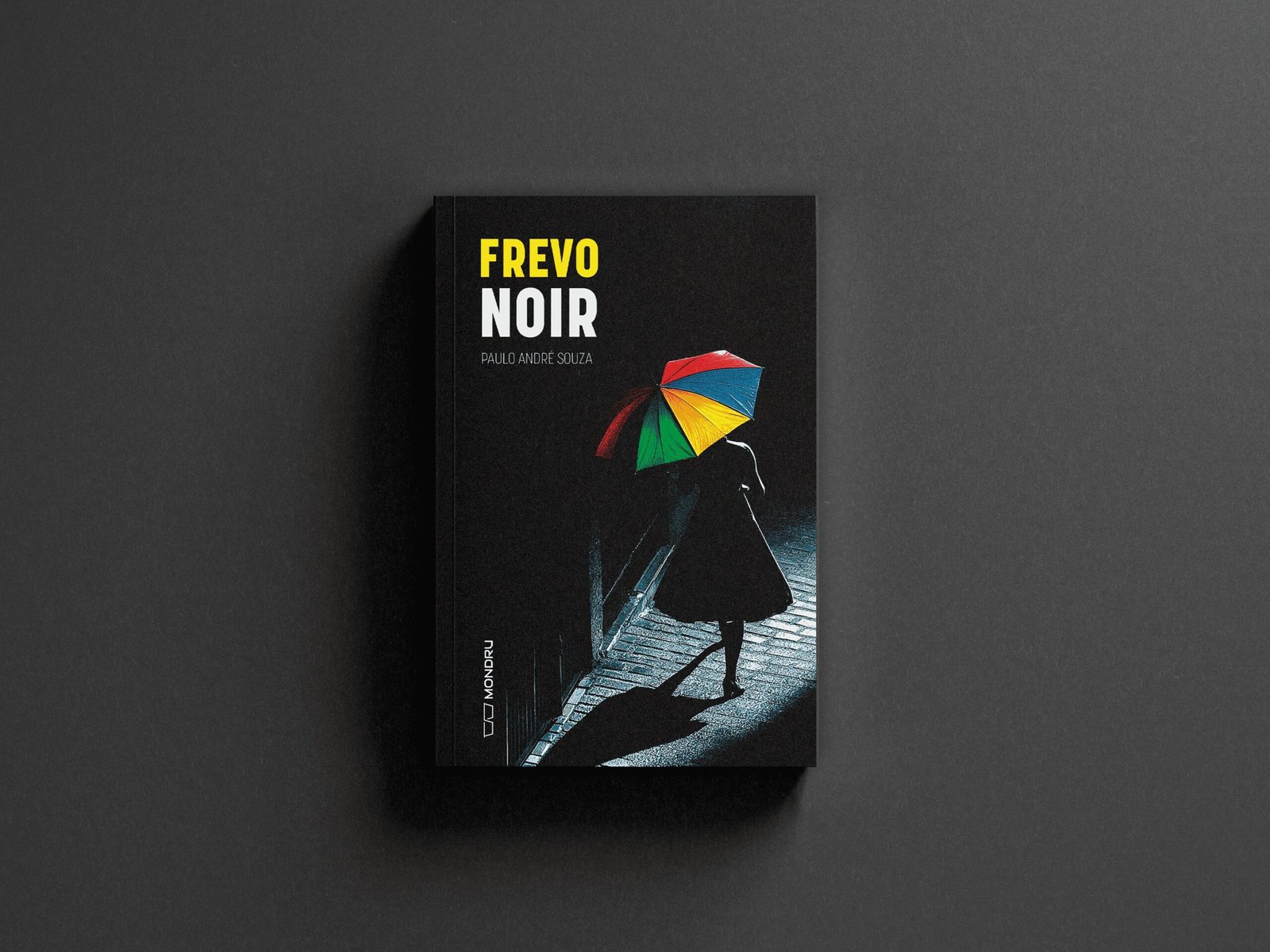
In 16 stories, Paulo André Souza turns Recife’s Carnival into a metaphor for inequality, crime, and existential paradox in his debut book “Frevo noir.”

Much like in the films of Kleber Mendonça Filho — where Recife throbs between modernization, decay, and silent violence — the city also asserts itself as the central character in Frevo noir (Editora Mondru, 144 pp.), the debut collection by Pernambuco-born writer Paulo André Souza. Using Carnival as a narrative metaphor, the author crafts 16 short stories that expose a capital city marked by inequality, crime, passion, and existential paradox, where celebration and tension exist in permanent friction.
Rather than a backdrop, Recife functions as a living organism: it breathes frevo, exhales contradiction, and lays bare the social fractures underlying each story. A Federal Police detective and creative writing scholar, Paulo André channels the city’s rhythms — its drumbeats, silences, and shadows — into a literature that speaks to social thriller, existentialism, and a contemporary urban tradition.
A City That Suffocates and Sets You Free
Trained as a lawyer and holding a specialization in Criminal Sciences, the author draws on his lived experience in Recife alongside his studies in Creative Writing at PUCRS and participation in workshops at the Centro Cultural Raimundo Carrero. The book’s cover notes were written by novelist Conceição Rodrigues.
Living in a city that breathes carnival amid so much deprivation, I tried to trace the narrative thread from that paradox. These are characters in a rite of expansion or escape (of festivity), in a city (in a world) that suffocates them. Crimes, passions, and mysteries are states of existence in which that paradox is most clearly revealed.
At its core, the book is an ode to contradiction. Across the narratives, the author confronts the myth of Brazilian cheerfulness while exposing the violence born of social inequality. Through crime, suspense, and distrust, Paulo André builds an existentialist atmosphere defined by fury and a craving for justice.
Four Pulses, Sixteen Stories
The 16 stories are organized into four sections — titled Pulsação 1, 2, 3, and 4 — and stand out for their gripping plots and sharp, ironic dialogue. A prime example is “Mapas de mergulho para ogivas nucleares” (“Dive Maps for Nuclear Warheads”), in which two characters exchange inside jokes to ease the weight of a tense, potentially catastrophic situation.
The genre navigates the social thriller — or “criminal literature” — transcending the conventions of classic detective fiction. The stories delve into loneliness, racial segregation, chronic insecurity, and punitivism. In “O filósofo e o homem da meia-noite” (“The Philosopher and the Midnight Man”), jazz becomes the central element for exploring philosophical questions about existence.
Throughout, the stories draw on icons from literature and popular culture — including Hilda Hilst, Pink Floyd, and Nietzsche — lending the characters greater depth and identity. A fantastical vein runs through the collection, with crabs marching from the mangroves to the sea as a national songbook plays like a soundtrack across the pages.
My style was built from an attempt to reconcile the excesses of colloquial, plot-driven narration with a concise, image-driven use of language. Thematically, the choices revealed themselves as ‘realistic fantasies’ — a facet, a touch, of magical realism.
Influences and a Planned Trilogy
Paulo André’s literary influences include Machado de Assis, Rubem Fonseca, Raimundo Carrero, and Ana Paula Maia. His creative formation also draws from song lyrics — from Luiz Gonzaga to Engenheiros do Hawaii and Chico Science & Nação Zumbi — and from the cinematic atmospheres of Hitchcock, Tarantino, and Kleber Mendonça Filho. The Vaga-Lume book series, read in childhood, was pivotal in awakening his vocation for writing.
The author envisions Frevo noir as the first installment of a short story trilogy. “I chose the short story because it is perhaps the most challenging form, and at the same time filled with shortcuts for beginning the search for new questions about existence. New doubts and new possible worlds,” he explains.
Excerpts from the Book
“He spat out the sentence, tapping steel cigarette butts in the ashtray the maître had just brought over. […] He blinks in my direction, orders another bottle of wine and says, almost a whisper, old man, go in peace, everything’s fine.” (from the story “A ética de Sade” / “The Ethics of Sade”)
“Who am I chasing? My destination is the building. My abstraction smells of juicy mango. The scent of falling mango and beer. Bugles and drumbeats faded into the refrain of distant death rattles. […] Only the frevo echoing its steps named bolts, scissors, hinges, screws.” (from the story “Admiro claraboias em simetria com o chão” / “I Admire Skylights in Symmetry with the Ground”)
Event Info
- Book: Frevo noir
- Author: Paulo André Souza
- Publisher: Mondru
- Pages: 144
- Purchase via publisher’s website: https://mondru.com/produto/frevo-noir
- Purchase directly from the author on Instagram: @p.a._souza