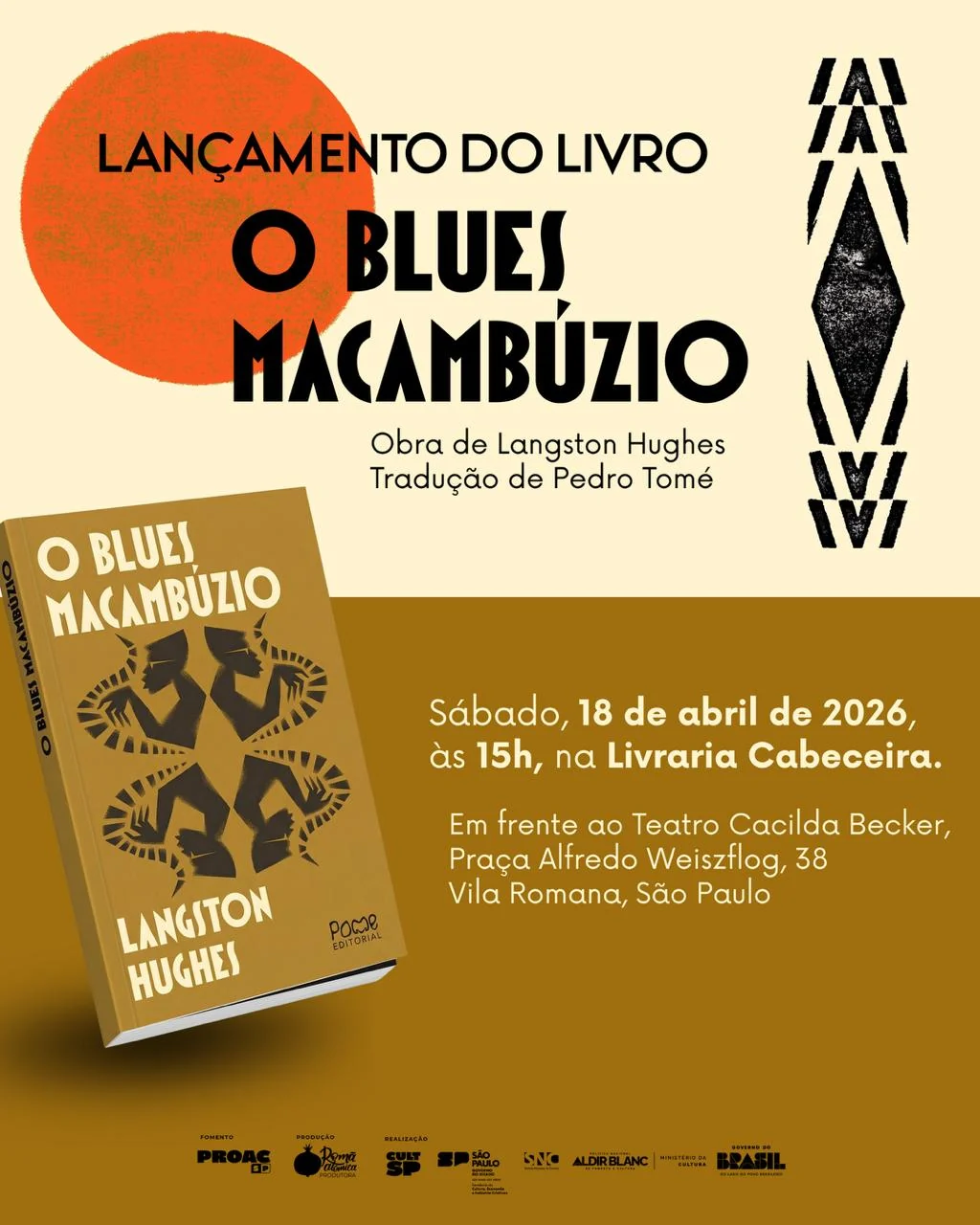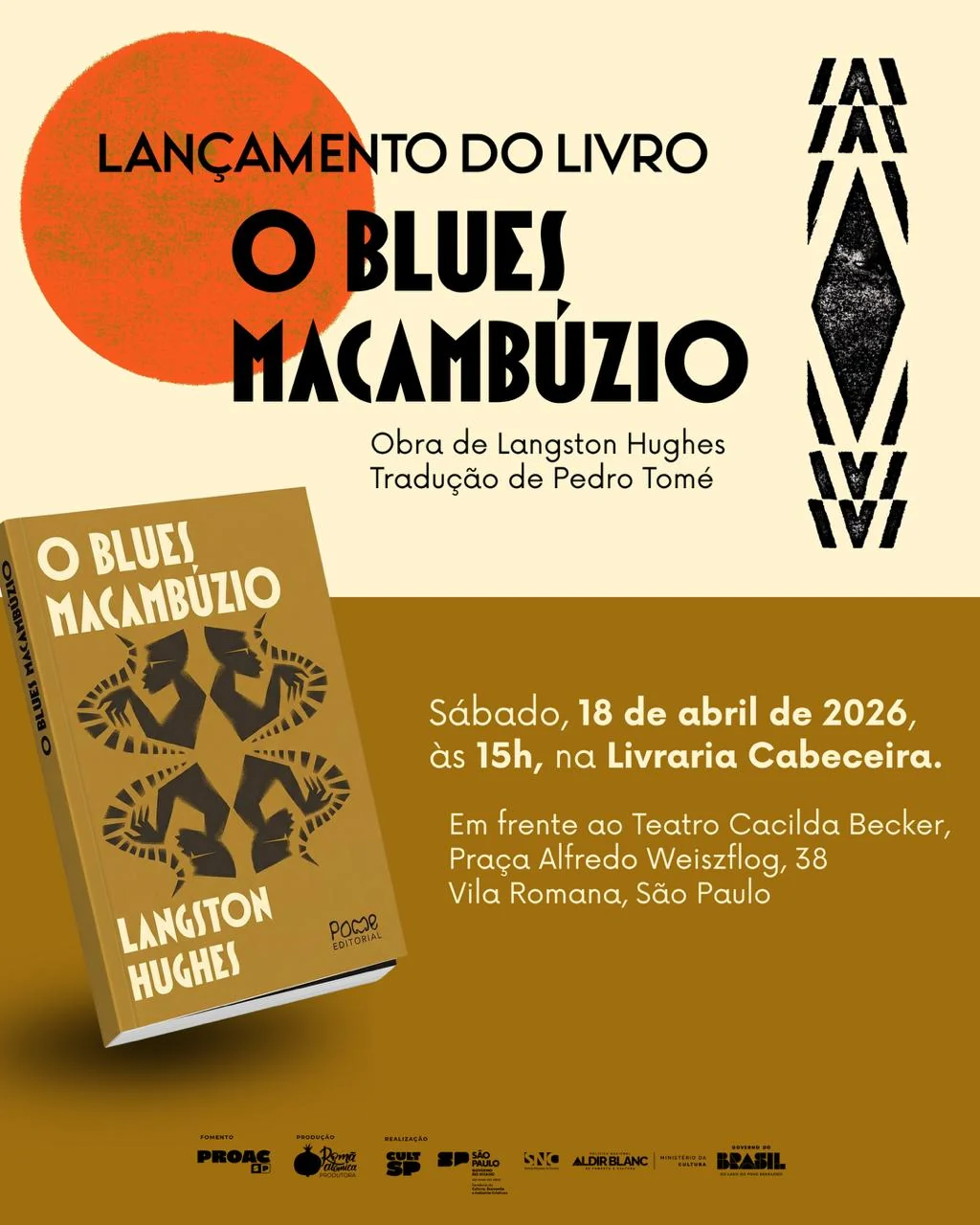
One hundred years after its release, The Weary Blues lands in Portuguese. The book launch takes place in São Paulo on April 18, with a promotional price of R$ 30.

This marks the first-ever Portuguese translation of a work by Langston Hughes (1901–1967), one of the defining voices of the Harlem Renaissance. Originally published in 1926, the collection was born as a direct response to racial discrimination and segregation faced by Black Americans — and its themes remain as urgent as ever.
From Harlem to São Paulo
The launch event takes place on Saturday, April 18, 2026, at 3 PM, in front of the Teatro Cacilda Becker, at Praça Alfredo Weiszflog, 38, Vila Romana, São Paulo. The initiative is part of the project Do Blues à Poesia: A Obra de Langston Hughes (From Blues to Poetry: The Work of Langston Hughes), supported by the São Paulo State Secretariat of Culture through grant Edital Fomento CultSP – PNAB nº 39/2024.
The translation was crafted by Pedro Tomé and published by Româ Atômica. The 144-page collection blends jazz, blues, and poetry to paint vivid portraits of Black life in Harlem: loneliness, marginalized labor, the American dream, and the struggle for belonging.
A Milestone of the Harlem Renaissance
Hughes stood at the heart of the Harlem Renaissance, the cultural and literary movement that reshaped New York in the 1920s and 30s. His poetry broke from Eurocentric standards by embracing everyday Black speech and affirming Black culture as legitimate art — a radical stance for its time.
“Langston Hughes was one of the central voices of the Harlem Renaissance, forging a poetics defined by musicality and the rejection of Eurocentric standards. By valuing everyday language and asserting Black culture as art, he brought the daily lives of Black people to the center of literature. His work addresses inequality and resistance, and remains relevant today in dialogue with contemporary racial debates, inspiring reflection on identity, social justice, and ancestry.” — Éder Augusto Marcos, project creator
A Bridge Between Two Countries
For project creator Éder Augusto Marcos, bringing Hughes to Brazilian readers is more than a centennial tribute. “The project builds bridges between Brazil and the United States by reflecting on racial identity through art, bringing together music, literature, and resistance. By examining our similarities and differences, we deepen our understanding of the Black community and strengthen art as a tool for social transformation,” he explains.
The book is already available for pre-sale at: https://www.romaatomica.com.br/
Event Info
- Event: Book launch — O Blues Macambúzio (The Weary Blues) by Langston Hughes, translated by Pedro Tomé
- Date: Saturday, April 18, 2026, at 3 PM
- Venue: In front of Teatro Cacilda Becker — Praça Alfredo Weiszflog, 38, Vila Romana, São Paulo
- Pages: 144
- Price: R$ 30 (launch promotional price); regular price R$ 65
- Purchase: https://www.romaatomica.com.br/