
Alice Puterman turns six years of trauma into visceral poetry. “Candura” arrives at Flip 2026 as a testimony of female survival and mental health.
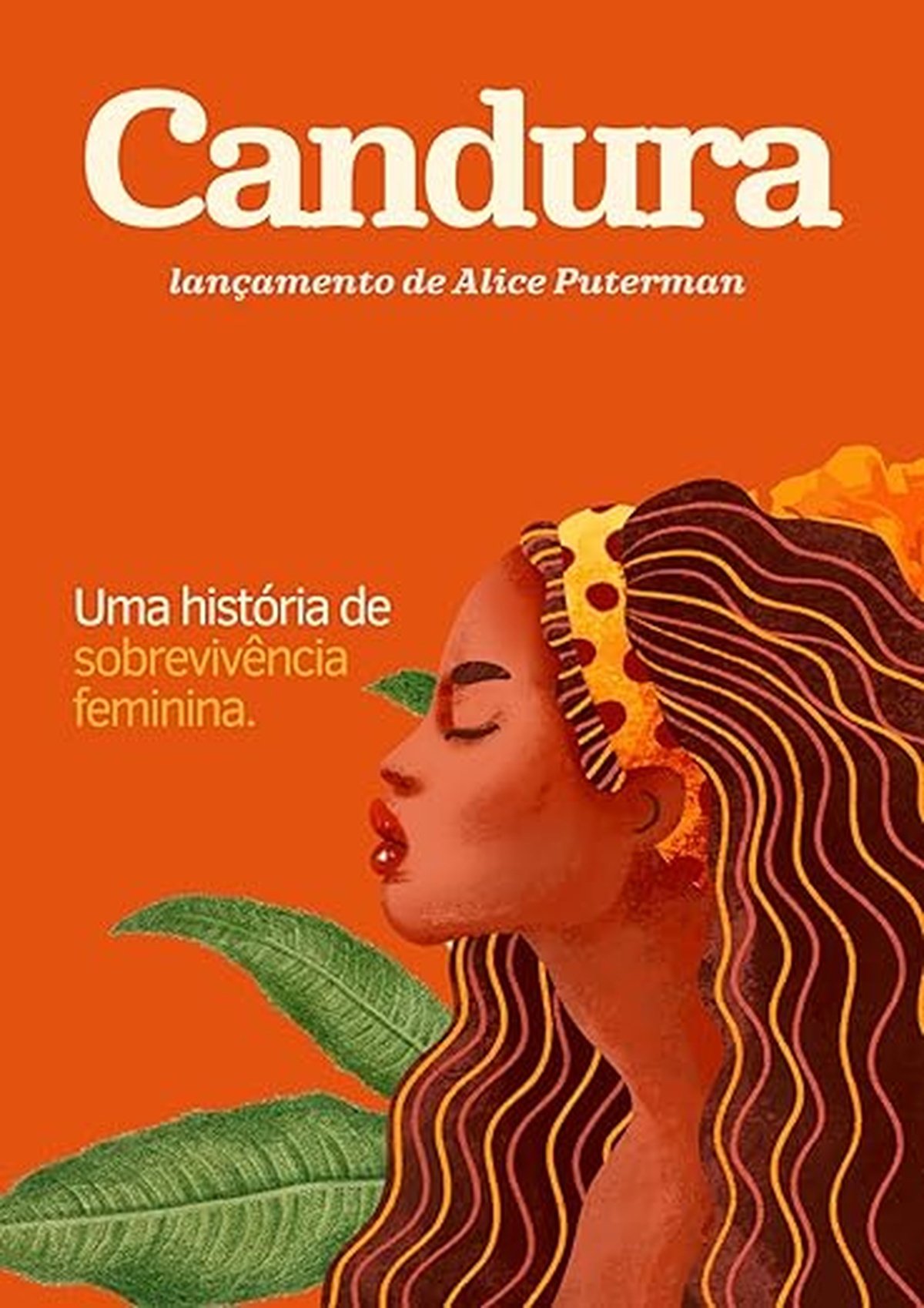
Some books are born from the desire to tell a story. Others, from the need to keep breathing. Candura, the debut collection by Alice Puterman, published by TAUP (Toma Aí Um Poema), belongs to the second kind. Written over six years, it arrives as a lyrical testimony of what it means to survive as a woman in Brazil, where sexual violence statistics continue to rise.
“I cannot say where violence begins in my life, but the violence I inflict upon myself ends with these pages,” the author writes in her preface. The book begins taking shape when Alice was 17 and survived a gang rape. Shortly after, the pandemic found her alone, and writing became her way of processing the trauma.
From pain to diagnosis
Diagnosed with Post-Traumatic Stress Disorder, Alice kept writing — not with publication in mind, but to create a space where pain could exist. “Rape is a subject one cannot speak about. So I hope my book is the place where all of our pain can exist,” she explains.
Mental health is a central axis of the work. Alice writes about suicide attempts, hospitalizations, and electroshock therapy, as well as the process of learning to live with her diagnosis. “I tried / to kill myself / ten times / but / I tried / to live / so much more / and so I discovered / that these bones / shine / like Chinese porcelain,” she writes in one of the final poems.
The body as territory
Throughout the collection, the female body appears as an occupied and violated territory — but also as a space of resistance. “The first man who saw my naked body / did not say it looked like a work of art / did not touch it with love / but instead / he felt at home / brought guests / and threw a party,” Alice writes. The house is a recurring metaphor: the body that must be rediscovered after invasion.
“Once I redecorate the walls, the house will be different / but it is not / it is the same one they broke into and ransacked.”
The strength of candor
The title may seem surprising given the rawness of the poems. The author explains: “Candura: the quality of one who is naively believing. Lovable. Pure. Women are taught to be candid. And that, theoretically, is where our weakness lives.” Alice, who is autistic — a group disproportionately targeted because of that very trait — rejects that notion entirely. “No matter how many blows strike me, it is only through it — candor — that I am still standing.”
Her poetry offers no easy answers and refuses the role of victim. “Masculine force holds no interest for me — that is violence. I want to speak of women who lift cars to save their young, those who, through love, give and receive life,” she states in the preface.
About the author
Alice Monteiro Puterman was born in Petrópolis, Rio de Janeiro state, in 2002, and currently lives in Rio de Janeiro. A pedagogy undergraduate with a background in Literature at UERJ, she also specializes in inclusion education. Autistic with selective mutism in childhood, she learned to write at age three, and words have been her primary language ever since. She is currently working on a new poetry manuscript.
“I finally see myself as a survivor, and no longer a victim. I allow myself to accept that candor is the strongest and most vulnerable part of me. And there is no contradiction in that,” she concludes.
Candura will be launched at Casa Gueto during the Festa Literária Internacional de Paraty (Flip) 2026, scheduled for late July.
Event Info
- Title: Candura: uma história de sobrevivência feminina
- Author: Alice Puterman
- Genre: Poetry
- Publisher: TAUP (Toma Aí Um Poema)
- Year: 2025
- Pages: 94
- Available at: https://bit.ly/4rUZ6VO
Gostou do nosso conteúdo?
Seu apoio faz toda a diferença para continuarmos produzindo material de qualidade! Se você apreciou o post, deixe seu comentário, compartilhe com seus amigos. Sua ajuda é fundamental para que possamos seguir em frente! 😊