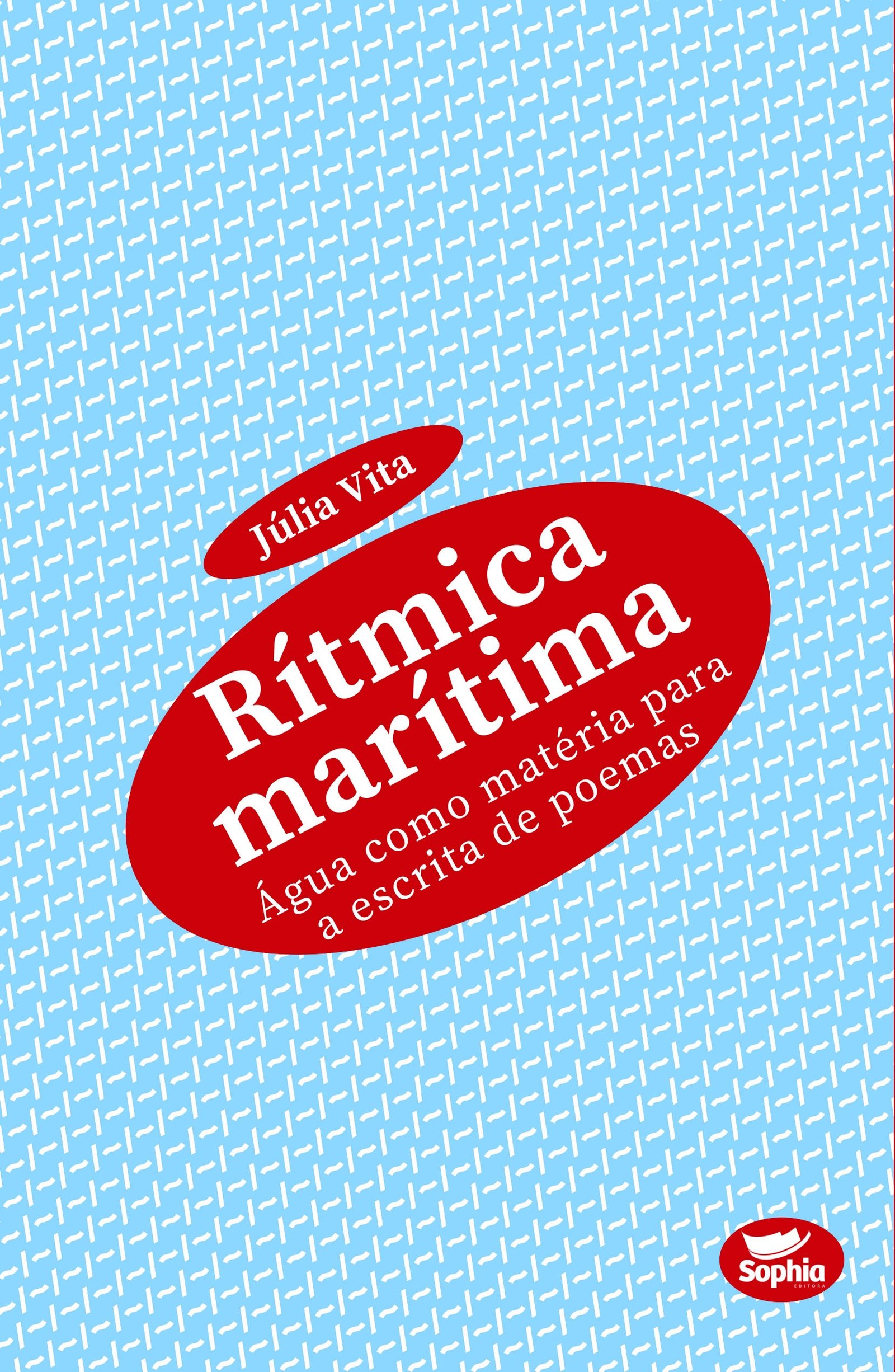
“Rítmica marítima” by Júlia Vita blends theory, feminism and ecology to show how water shapes poetic rhythm across 40+ Brazilian authors.

The water that writes
Sophia Editora has released “Rítmica marítima: água como matéria para a escrita de poemas” (Maritime Rhythmics: Water as Material for Writing Poems), by poet, researcher and editor Júlia Vita. The book grew from her master’s thesis in Contemporary Arts Studies at the Universidade Federal Fluminense (UFF) and investigates the deep connection between water and the foundations of poetic rhythm in contemporary Brazilian poetry.
The research emerged from the author’s own creative process. “This research stems from the process behind my first poetry book, ‘Alga viva’, which was built around the aquatic sensations that permeate my writing”, explains Júlia Vita. The book was previewed at the Festa Literária Internacional de Niterói (Flin).
Three axes, one ocean of ideas
The book unfolds across three complementary movements. In the first, the author traces the origins of the concept of rhythm — from its mythical association with the “flow” of water, derived from the Greek rhythmós and the verb reo (to flow), to the linguistic reformulations of Émile Benveniste and Henri Meschonnic. “By delving into the etymology of the word ‘rhythm’, which led me to encounter water over and over again, I quickly discovered there was a linguistic refutation that challenged the explanation that the term derived from the ‘flow’ of waves”, she reveals.
In the second axis, Júlia brings together the thinking of Octavio Paz and Gaston Bachelard to explore how breath, body and voice engage with the movement of water. “The poet creates by analogy: the mobile dynamics of language allow the poet to build their own rhythmic universe, drawing on the same universal forces of attraction and repulsion”, she reflects, quoting Paz.
The third part dives into Bachelardian material imagination, exploring water as a generator of poetic images. “Water operates in the world with a reflective function distinct from static mirrors: waters reflect the world by returning images bathed in themselves”, the author observes. In this section, she also examines how environmental disasters — such as the Mariana and Brumadinho dam collapses and the oil spills on the Brazilian coast — produce rhythmic ruptures in poetry.
Feminism and ecology as method
One of the book’s most original contributions is the gender lens woven throughout the analysis. The researcher foregrounds poems by women authors, positioning herself within a Latin American intellectual tradition that claims nature as a rights-bearing subject. “I expand the understanding of what counts as a subject, to include the poetic discourse of aquatic matter itself”, she states.
Functioning also as an annotated anthology, the book analyzes works by more than forty poets, including Ana Cristina Cesar, Marília Garcia, Olga Savary, Orides Fontela and Prisca Agustoni, among other significant voices. Also featured are poets with whom Júlia personally collaborated in editing and preparation: Bárbara Mançanares, Beatriz Rodrigues, Bruna Vilaça, Brunna Côrtes, Bruno Jalles, Bruno Pacífico, Camille Perissé, Danielle Freitas, Érica Magni, juliana C. alvernaz, Laura Redfern Navarro, Nathália Ranny and Rodrigo Cabral.
Between academia and creation
The work represents a meaningful step toward dissolving rigid boundaries between artistic creation and academic production. “I am interested in emphasizing this point, circulating the updated result after my defense, so that it also contributes to breaking down certain barriers that still hinder dialogue between fields”, the author notes.
The book features a back cover text by writer Mar Becker; a preface by Gabriel Morais Medeiros, PhD in Literary Theory and History (Unicamp) and editor at Ofícios Terrestres Edições; an afterword by Bruno Jalles, historian, PhD in Philosophy of Art from UFF and poet; and a flap text by juliana C. alvernaz, poet and professor at the Department of Languages and Literature at UFES.
“With rare sensitivity and an attention that operates with exuberance in the flows of water as matter between theory and poetry, Júlia Vita offers us, with ‘Rítmica marítima’, a powerful work — a bibliographic contribution for poets, writers and researchers alike.” — Mar Becker, writer, back cover text
About the author
Júlia Vita (Niterói, 1995) holds a master’s degree in Contemporary Arts Studies from UFF. A writer, artist, teacher and editor, she runs Laboriosa Produções Poéticas. She published the poetry collection “Alga viva” (Córrego, 2019), awarded in the Cultura nas Redes grant (SECEC-RJ) in 2020, the same year she received the Prêmio Erika Ferreira (SMC-Niterói). As a professional editor, she has worked with the Grupo Editorial Record and publishers including Ofícios Terrestres, Patuá and Sophia.
Event Info
- Event: Book launch of “Rítmica marítima: água como matéria para a escrita de poemas”
- Venue: Livraria da Travessa – Botafogo (Rua Voluntários da Pátria, 97, Botafogo), Rio de Janeiro
- Date: April 15, 2026
- Time: 7 PM
- Admission: Free
- Author: Júlia Vita
- Pages: 166
- ISBN: 978-65-88609-55-2
- Genre: Non-fiction
- Publisher: Sophia Editora
- Year: 2025
- Where to buy: https://www.sophiaeditora.com.br/ritmica-maritima-agua-como-materia-para-a-escrita-de-poemas-de-julia-vita