
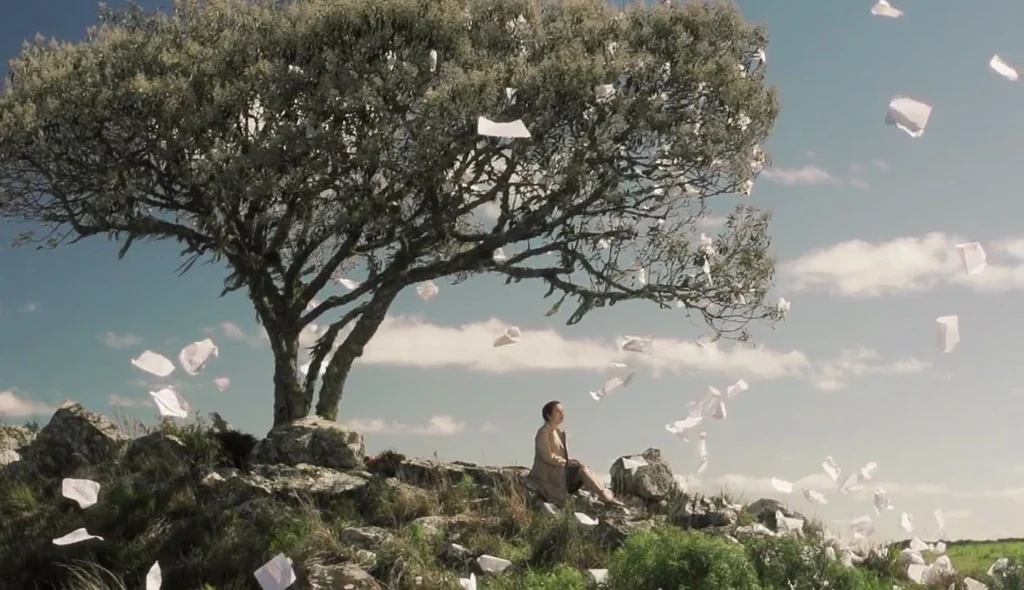
From March 12–15, Cinemateca Capitólio in Porto Alegre screens 15 films by female directors from Rio Grande do Sul — all free admission.
The film cycle “A Leoa Vai à Caça” (The Lioness Goes Hunting) opens at Cinemateca Capitólio, in the historic center of Porto Alegre, shining a light on decades of work by female filmmakers from Rio Grande do Sul. Screenings run March 12–15 at 5 PM and 7 PM, all with free admission.
A movement taking shape
Conceived by Betânia Furtado and Renata de Lélis, the showcase brings together 15 films — short, medium, and feature-length — directed by Black, Indigenous, white, and trans women. The program highlights the pioneering spirit of directors who carved out space for representation in Brazilian regional cinema.
This showcase presents itself as the beginning of a movement. It reveals how much there is still to research, map, restore, screen, and recognize in cinema made by women in Rio Grande do Sul. Betânia Furtado, co-organizer
Co-organizer Renata de Lélis adds: “By bringing together works made since the 1980s, the showcase proposes a historical arc connecting different generations of filmmakers. These works reveal a cinema made with urgency, precariousness, and courage — often on the margins of major centers and official circuits — but deeply attuned to the social, political, and cultural transformations of its time.”
Honoring Ítala Nandi
The inaugural edition pays tribute to Ítala Nandi, a trailblazer and the first female director from Rio Grande do Sul to make a feature film in the state. Her documentary “In Vino Veritas” (1981), shot in Caxias do Sul, opens the program on Thursday at 7 PM. The showcase’s very name draws inspiration from an unfinished film by Ítala.
Full program
Thursday, March 12 — 7 PM
“O Brinco” (1989, 6min) — dir. Flávia Moraes. A gifted earring ends up on the wrong ear, triggering a chain of surprising revelations.
“In Vino Veritas” (1981, 63min) — dir. Ítala Nandi. The director returns to her hometown of Caxias do Sul to revisit her roots and the history of Italian immigration in the Serra Gaúcha region, with grapes and wine as guiding threads.
Friday, March 13 — 5 PM
“Bola de Fogo” (1997, 45min) — dir. Marta Biavaschi. A couple spends Carnival weekend at a paradise beach where a small fishing community faces transformation with the arrival of tourists.
“O Último Poema” (2015, 72min) — dir. Mirela Kruel. A documentary exploring the 25-year correspondence between Helena Maria and legendary Brazilian poet Carlos Drummond de Andrade, rendered in surprisingly poetic and tender images.
Friday, March 13 — 7 PM
“Léo” (2015, 15min) — dir. Mariani Ferreira. Rodrigo refuses to accept his younger brother’s homosexuality — and must face the consequences. Filmed in Porto Alegre and funded by Brazil’s Ministry of Culture.
“Mulher do Pai” (2015, 94min) — dir. Cristiane Oliveira. Ruben and Nalu live near the Brazil-Uruguay border. When he realizes his 16-year-old daughter has grown up, an unsettling new closeness emerges between them.
Saturday, March 14 — 5 PM
“Hoje Tem Felicidade” (2005, 14min) — dir. Lisiane Cohen. Rui desperately wanted to be happy. Even if it meant going to the extreme.
“A Noite do Sr. Lanari” (2002, 11min) — dir. Flávia Seligman. Based on the short story “Cabecita Negra” by Argentine writer Germán Rozenmacher, the film examines authority during the years of Latin American dictatorships.
“A Invenção da Infância” (2000, 26min) — dir. Liliana Sulzbach. Being a child does not mean having a childhood.
“As Bicicletas de Nhanderu” (2011, 45min) — dir. Patrícia Ferreira Yxapy. An immersive documentary produced by the Mbyá-Guarani Cinema and Video Collective about life, spirituality, and conflict in the Koenju village in São Miguel das Missões (RS).
Saturday, March 14 — 7 PM
“Quero Ir para Los Angeles” (2019, 19min) — dir. Juliana Balhego. Maria, a young Black university student, plans her first international trip to Los Angeles — and discovers that personal effort alone is not always enough.
“Antes que o Mundo Acabe” (2009, 100min) — dir. Ana Luiza Azevedo. Teenager Daniel navigates seemingly unsolvable problems until a letter from the father he never knew begins to change everything.
Sunday, March 15 — 5 PM (screening + panel)
“Logos” (2025, 11min) — dir. Britney Federline. After a hospital stay, Britney embarks on a road trip where time blurs and she attempts to understand her relationship with people, affection, and her own body.
Following the screening, the panel discussion “Public Policies for Women in Audiovisual” brings together the showcase’s directors and Sofia Ferreira, director of the State Cinema Institute (Iecine).
Sunday, March 15 — 7 PM
“Café Paris” (2004, 9min) — dir. Adalgisa Luz. A girl who drinks too much coffee and has never been to Paris.
“O Caso do Homem Errado” (2017, 77min) — dir. Camila de Moraes. This documentary reconstructs the story of Júlio César de Melo Pinto, a young Black worker executed by the Military Brigade in 1980s Porto Alegre. The case gained national attention after the press published photos showing Júlio César alive as he was placed in a police vehicle — and dead from gunshots when he arrived at the hospital 37 minutes later. The film features testimony from photographer Ronaldo Bernardi, widow Juçara Pinto, and prominent voices in the Brazilian human rights and Black rights movements.
Event details
Film Showcase “A Leoa Vai à Caça”
When: March 12–15, 2026, screenings at 5 PM and 7 PM
Where: Cinemateca Capitólio — Rua Demétrio Ribeiro, 1085, Centro Histórico, Porto Alegre, Brazil
Free admission
More information: https://www.instagram.com/mostra.aleoavaiacaca/
Photo: Besouro Filmes
Gostou do nosso conteúdo?
Seu apoio faz toda a diferença para continuarmos produzindo material de qualidade! Se você apreciou o post, deixe seu comentário, compartilhe com seus amigos. Sua ajuda é fundamental para que possamos seguir em frente! 😊