
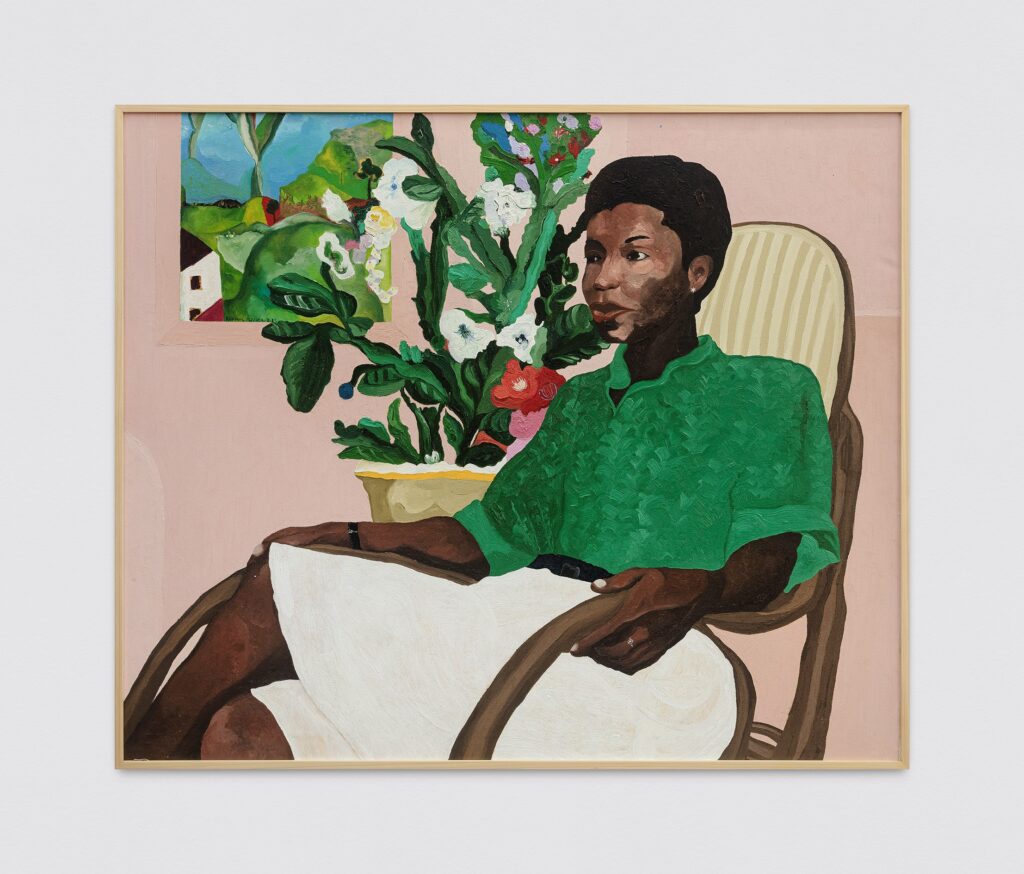
Galeria Estação opens 2026 with “Rafael Pereira: A Cabeça de Zumbi” (Mar 5–Apr 11), featuring 22 paintings plus the Nbimda series.
Opening to the public on March 5 and running through April 11, “Rafael Pereira: A Cabeça de Zumbi” launches Galeria Estação’s 2026 program. The exhibition highlights the growing complexity and poetic force of São Paulo-based artist Rafael Pereira, 39.
Over the years, Pereira traveled across several Brazilian states, spent 14 formative years in Teófilo Otoni (Minas Gerais), and now lives in Caraguatatuba on São Paulo’s north coast. In this new presentation, he brings together memory, identity, and subjectivity.
After “Lapidar Imagens”
Since “Lapidar Imagens,” his first solo show at the gallery in 2023, the artist has moved through a clear maturation cycle. He expanded his visual vocabulary by revisiting key layers of his path, from training as a gemstone cutter to the experience of moving through the country.
“Since Rafael joined Estação in 2023, we’ve closely followed his consistent process of growth. He gained confidence, repertoire, and awareness of his own work. Between ‘Lapidar Imagens’ and this new solo show, his work became denser.”
The statement comes from Vilma Eid, Galeria Estação’s founding partner. She argues that institutional support helped the artist feel freer to take risks, deepen processes, and broaden his language.
22 works and Nbimda
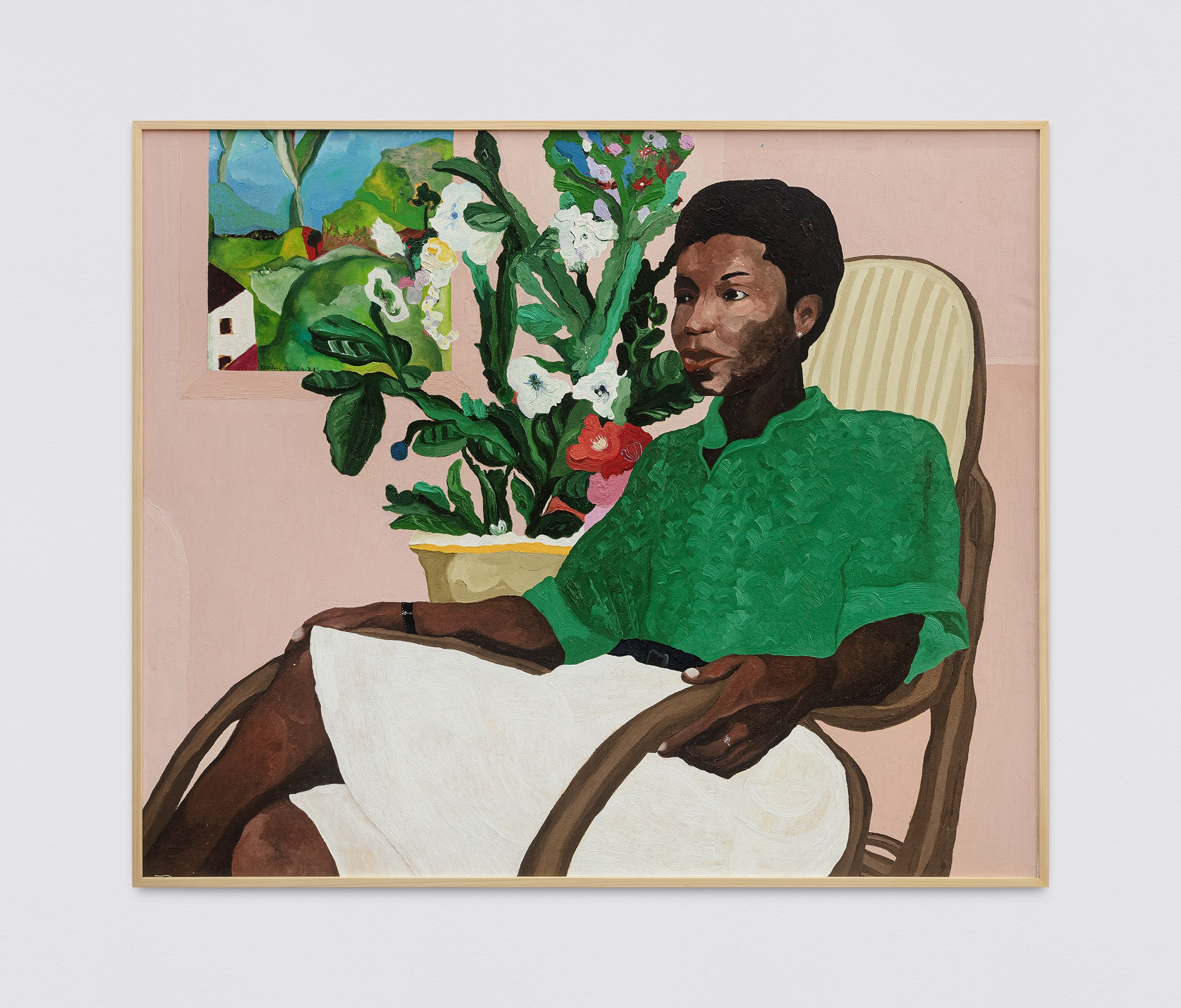
Made across 2024–2025, the new paintings bring a multicolored universe of portraits, landscapes, and symbolic elements. Pereira describes the production as the result of deep self-listening and a deliberate choice to slow down.
“Today I feel my work happens in a different time. Before, I had urgency, a need to produce all the time, almost as if I had to prove something. Now I understand these processes must be slower, that painting needs time to mature—just like I do.”
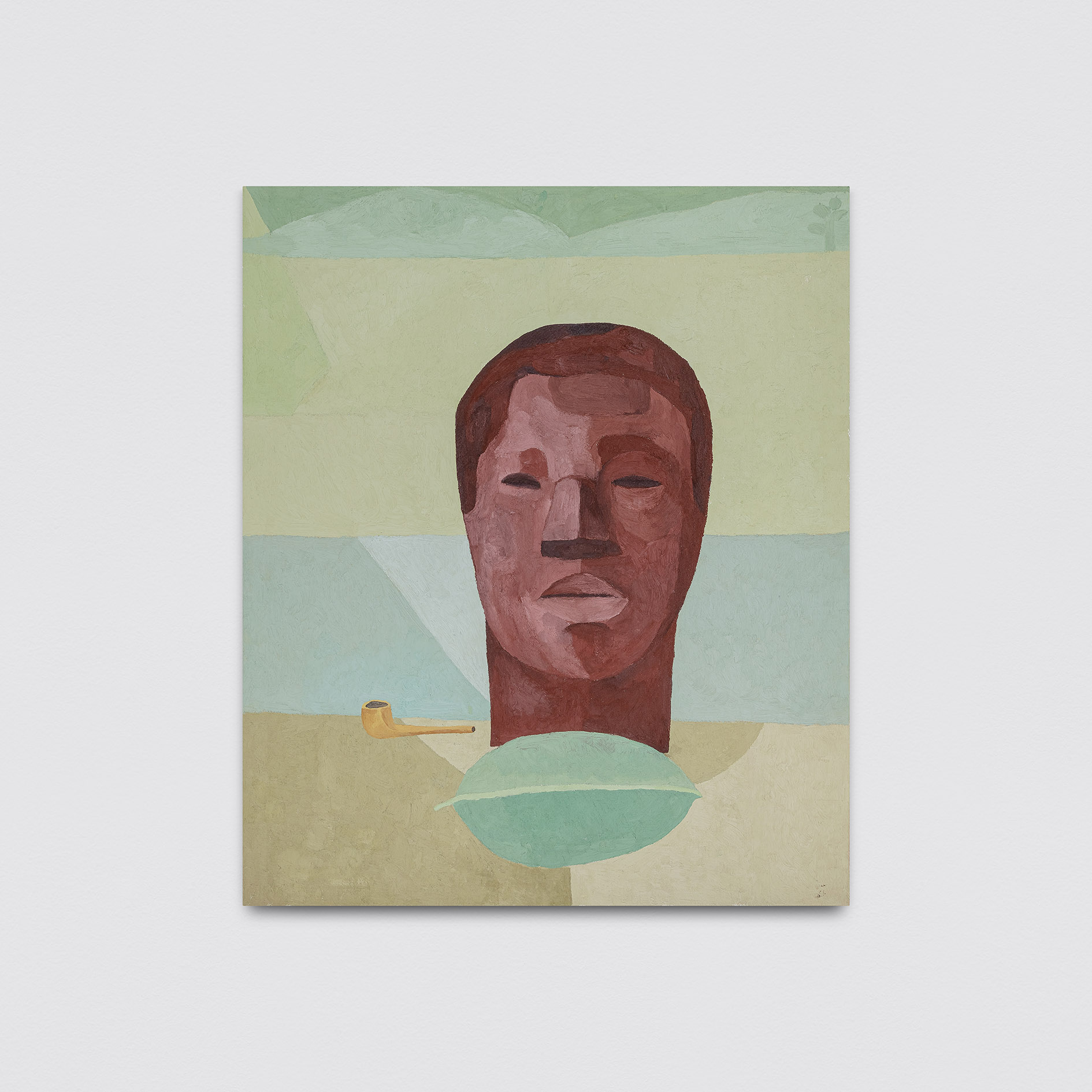
Organized into two sections, the exhibition presents 22 paintings on the second floor—20 portraits and two still lifes—and shows the Nbimda series on the mezzanine. The series includes 16 paintings of heads in varied sizes, each representing a divinity (nkisi) worshipped in Angola-rooted Bantu candomblé.
Catalogue text by Renato Menezes
In the exhibition catalogue, art historian Renato Menezes emphasizes the symbolic centrality of the head as a link between body, ancestry, and the divine. In his view, the ancestral head theme structures Nbimda and expands how Pereira’s work can be read.
“What for Europeans appeared solely as physiognomy—an emanation of personality—reveals itself in Pereira’s painting as a link to the divine: the head, orí for the Yoruba and mutuê for the Bantu. The head is where an individual’s vital force resides; it holds the connection to nkisi, the ancestral energy and individual destiny each subject carries at birth. The ancestral head organizes the Nbimda series.”
By celebrating and re-signifying Afro-diasporic ancestry, Pereira also states his intention to deepen discussions around race. Rather than accept reductive readings, he pushes toward a Black subjectivity that is intimate, layered, and contradictory.
“I don’t want my work to be read only through a racial cut. I don’t want a smiling Black body to be treated as an event while a smiling white body is just an image. What interests me is building a Black subjectivity that is complex, intimate, and contradictory.”
Menezes notes that this recent output—driven by intuitive pictorial gesture—extends possibilities already suggested in “Lapidar Imagens.” In the catalogue, he describes how Pereira absorbs traditional portrait codes while inventing faces from imagination, accessing memory and reinvention.
“At first, his work may seem to result from absorbing the codes of traditional portraiture and, from there, imagining futures, reconstructing stories, and inventing identities. On the other hand, the artist creates physiognomies from imagination, as a reckoning with history and a way to reach a layer of memory neutralized by trauma: intuition is an ancestral technology.”
Techniques and residency
The show also reveals an expanded set of techniques explored during Pereira’s formative period, including oil pastel stick on paper. Part of the work was produced in March 2025 during an artistic residency in Goiânia (Goiás) at Sertão Negro Ateliê e Escola de Artes.
The project was created by visual artist and educator Dalton Paula and film professor-researcher Ceiça Ferreira. Located in a quilombo in the neighborhood known as Setor Shangri-lá, it connects Afro-Brazilian cultural traditions with contemporary art practices, including ceramics, printmaking, capoeira angola, agroecology, and a film club.
Vilma Eid says the residency was decisive, both technically and through exchange with other artists. She adds that opening 2026 with Pereira reflects the current reach of his work and the strength of his audience.
Service
Exhibition: “Rafael Pereira: A Cabeça de Zumbi”
Dates: March 5 to April 11, 2026
Venue: Galeria Estação
Address: Rua Ferreira Araújo, 625 – Pinheiros, São Paulo
Opening (vernissage): 05/3 (Thursday), from 6:00 pm
Hours: Monday to Friday, 11:00 am to 7:00 pm; Saturdays, 11:00 am to 3:00 pm; closed Sundays.
Phone: 11 3813-7253
Gostou do nosso conteúdo?
Seu apoio faz toda a diferença para continuarmos produzindo material de qualidade! Se você apreciou o post, deixe seu comentário, compartilhe com seus amigos. Sua ajuda é fundamental para que possamos seguir em frente! 😊