
Free season in São Paulo brings “Jacinta”, a powerful play about the real story of a Black woman embalmed and displayed for 30 years at Brazil’s most traditional law school.
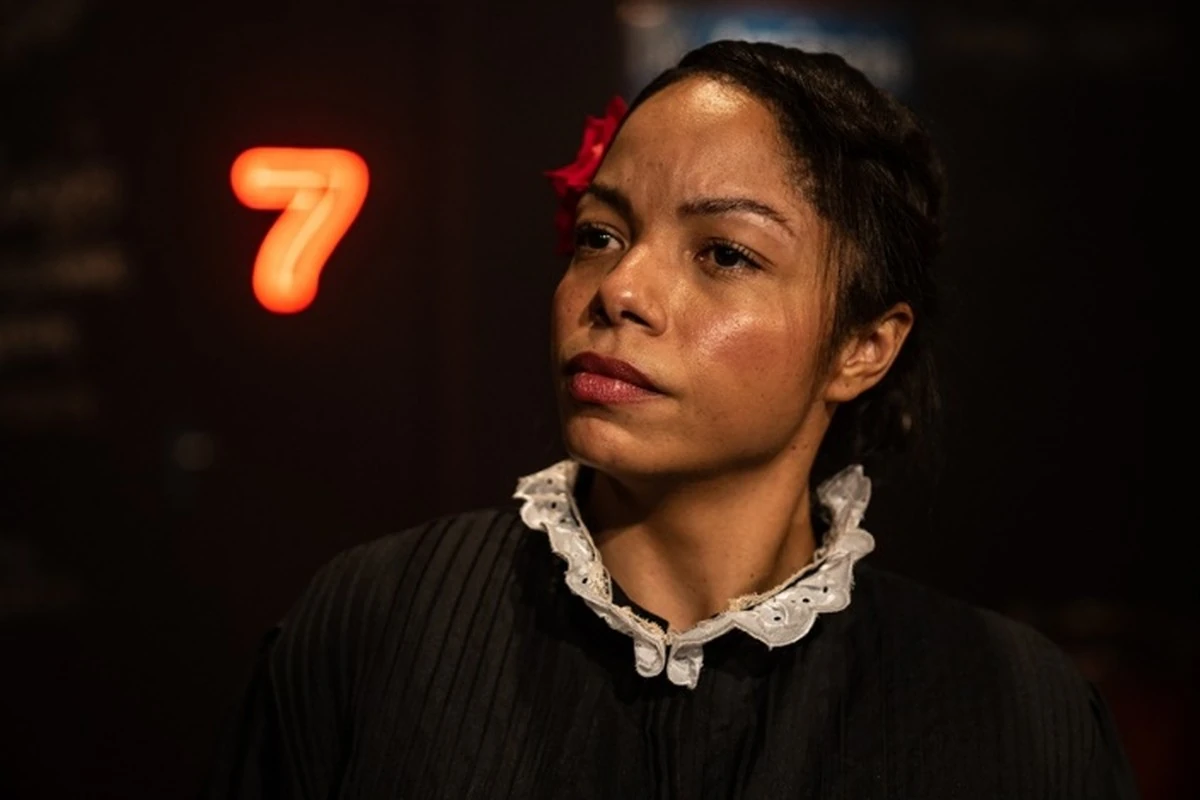
The play Jacinta – You Only Die When They Say Your Name for the Last Time, by Cia do Pássaro, returns to the stage in March and reopens a deep wound in Brazilian history. The production rescues the story of Jacinta Maria de Santana, a Black woman whose body was embalmed and exhibited as a “scientific curiosity” for nearly three decades at the Law School of Largo São Francisco, in downtown São Paulo.
The new run takes place at the company’s own venue, Espaço Cia do Pássaro – Voo e Teatro (R. Álvaro de Carvalho, 177 – Anhangabaú, São Paulo/SP), from March 7 to 29, 2026, with performances on Saturdays at 8 p.m. and Sundays at 7 p.m. There will be no performance on Saturday, March 21, and an extra show is scheduled for Sunday, March 29, at 3 p.m.
Memory, erasure and stage reparation
Written and directed by Dawton Abranches, the play is based on true events. At the beginning of the 20th century, Jacinta, a poor Black woman with no stable occupation, used to walk around the streets of central São Paulo. One day she felt ill and collapsed on Rua Dutra Rodrigues, near Luz Station. Sent to Santa Casa de Misericórdia, she died on the way and never received a proper burial.
Her body was handed over to forensic doctor and legal medicine professor Amâncio de Carvalho, who decided to embalm Jacinta and keep her on display at the Law School. There, her remains were turned into a teaching object and were even used in student hazing rituals for around 30 years, in a stark example of how scientific racism dehumanized Black bodies.
While Jacinta remained almost anonymous for decades, Amâncio de Carvalho had his name given to a street in Vila Mariana, one of São Paulo’s whitest neighborhoods. This contrast highlights how historical erasure affects Black figures, while those who enforced oppressive systems are often publicly honored.
Rescue Trilogy and Black protagonism
“Jacinta” is the second work in Cia do Pássaro’s Rescue Trilogy, a project focused on bringing back to public memory emblematic Black figures who were pushed to the margins of Brazilian history. The first piece, “Baquaqua – Extraordinary Dramatic Document”, revisited the life of Mahommah Gardo Baquaqua, an African man who was enslaved and passed through Brazil in the 19th century.
On stage, actress Gislaine Nascimento and actor Alessandro Marba are joined by musician Camila Silva, who plays a live soundtrack on the cavaquinho, connecting the play to the universe of samba. The production embraces elements of popular theatre, creating moments of comic relief without losing sight of the gravity of racism and historical violence.
The narrative unfolds in a poetic tone. As Gislaine tells Jacinta’s story, she is constantly watched by the figure of Exu Tatá Caveira, played by Alessandro Marba, a presence that bends time and space and enables a symbolic encounter between the performer and the character. This device opens a space where spirituality, politics and memory intertwine.
Scientific racism, eugenics and today’s Brazil
By revisiting Jacinta’s case, the play also addresses the rise of eugenic thinking in the early 20th century and its echoes in Brazilian society. The piece recalls that many students and alumni of Largo São Francisco later took public stances supporting the impeachment of President Dilma Rousseff, inviting the audience to reflect on how legal and political elites are formed.
The dramaturgy draws on works such as “O Pacto da Branquitude” by Cida Bento; “Performances do tempo espiralar: Poéticas do corpo-tela” by Leda Maria Martins; “Tornar-se negro” by Neusa Santos Souza; as well as studies by Sueli Carneiro and Rosane Borges. These references place Jacinta’s story within broader debates on whiteness, Black subjectivity and strategies of resistance.
The scenography evokes the spaces of the university, the spiritual realm of Calunga and the theatre itself, creating a threshold where Jacinta can symbolically return. For Abranches, the notion of calunga, rooted in Bantu traditions, also speaks to a feeling close to longing and the need to reconnect with the dead.
Touring history and audience outreach
“Jacinta” premiered in September 2023 and has already toured several cultural centers. The show has been presented in CEU units in São Paulo, took part in Sesc RJ’s PULSAR Project with a season at Sesc Copacabana, and visited cities in the countryside of São Paulo State such as Santo André, Araraquara, Franca, Tatuí, Cubatão, Piracicaba and Sesc Registro.
Committed to reaching diverse audiences, Cia do Pássaro combines artistic research with accessibility and free admission. The 2026 season of “Jacinta” is entirely free, with tickets available one hour before each performance, and offers Brazilian Sign Language (Libras) interpretation in all sessions. The venue is accessible to wheelchair users and people with reduced mobility.
More information about the Rescue Trilogy and the company’s activities can be found on Instagram at @cia_do_passaro.
Synopsis
Based on a true story, the play follows the posthumous path of Jacinta Maria de Santana, a Black Brazilian woman who died on the streets of São Paulo and had her body embalmed, displayed as a scientific attraction and used in hazing rituals for almost thirty years at the Law School of Largo São Francisco. The production is part of Cia do Pássaro’s “Rescue Trilogy”, which aims to bring back to light Black historical figures erased from official narratives.
Service
JACINTA – YOU ONLY DIE WHEN THEY SAY YOUR NAME FOR THE LAST TIME
Duration: 90 minutes
Age rating: 14+
Accessibility: Libras interpretation in all performances
The venue is accessible to wheelchair users and people with reduced mobility.
Season: March 7–29, 2026
Performances: Saturdays at 8 p.m.; Sundays at 7 p.m.
No performance on March 21 (Saturday).
Extra show on March 29 (Sunday) at 3 p.m.
Venue: Espaço Cia do Pássaro – Voo e Teatro
Address: R. Álvaro de Carvalho, 177 – Anhangabaú, São Paulo/SP
Tickets: Free – Pick up tickets 1 hour before – Limited seating
Phone: +55 (11) 94151-3055
More information: Instagram @cia_do_passaro
Photo: Publicity
Gostou do nosso conteúdo?
Seu apoio faz toda a diferença para continuarmos produzindo material de qualidade! Se você apreciou o post, deixe seu comentário, compartilhe com seus amigos. Sua ajuda é fundamental para que possamos seguir em frente! 😊
