Hollow bodies, synthetic grass, and stretch film: “Forma e Farsa” opens at the Museu da Escola Catarinense (MESC) in Florianópolis, Brazil, on February 19 and runs through March 6, 2026.

An open studio inside the museum
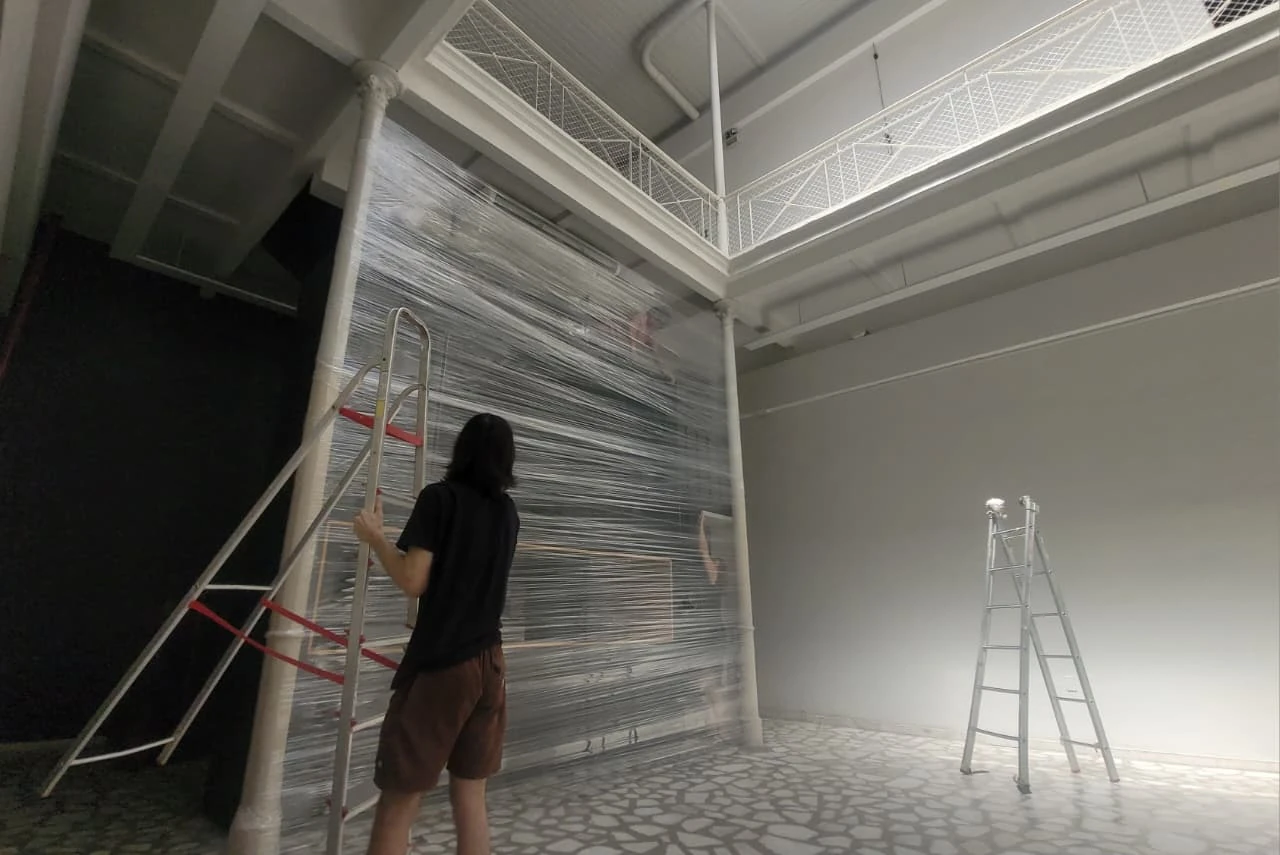
The site-specific installation by visual artist Lucas Flygare will be built in real time — and the public is invited to watch. From February 19 to 25, Flygare carries out an artist residency in the museum’s hall, turning the assembly process itself into a live event.
Visitors during that week can watch the work take shape and engage in direct conversation with the artist. It is a rare chance to witness a major installation being born.
Between monument and ruin
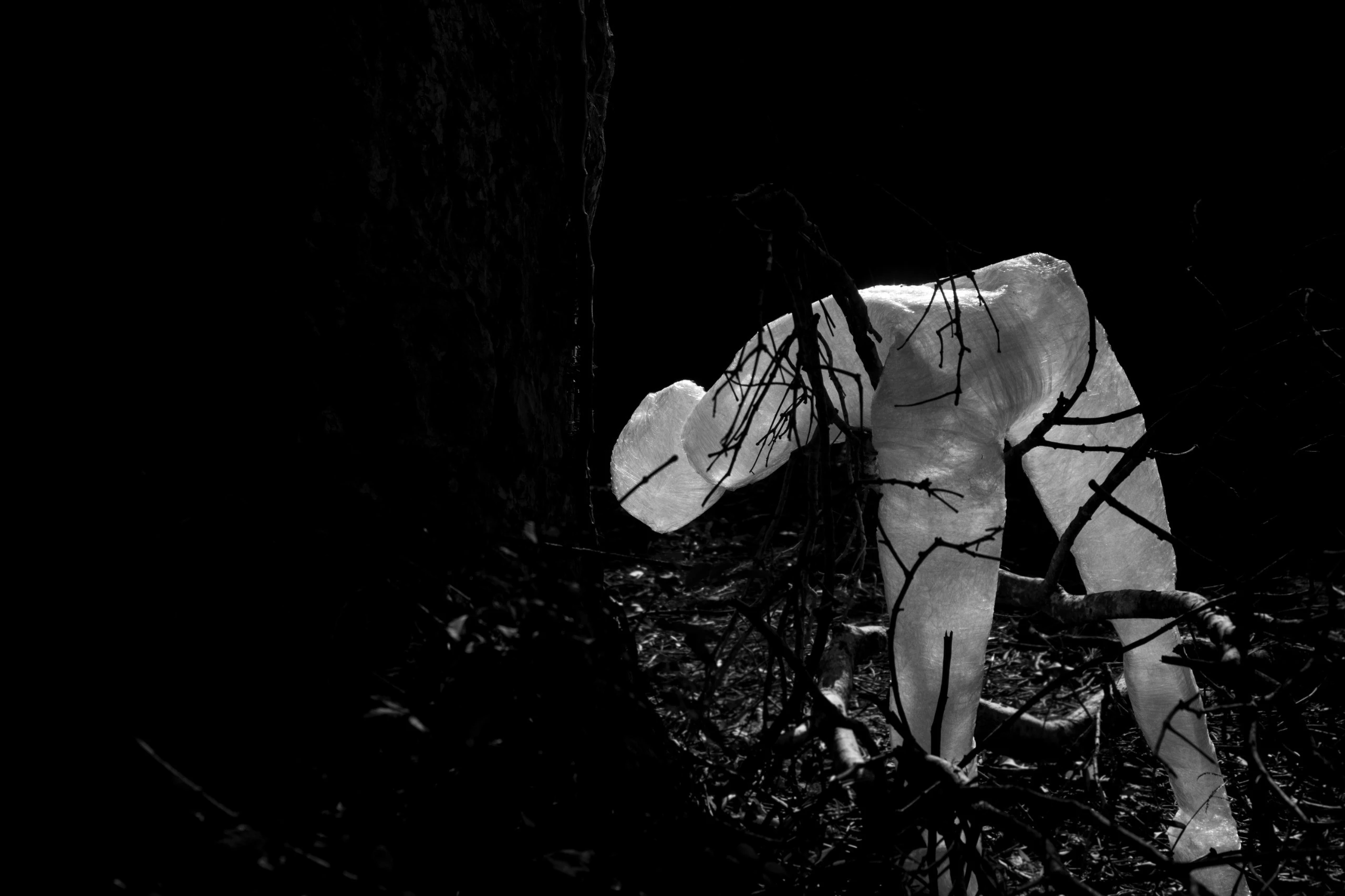
The installation combines stretch film, synthetic grass, and sculptural objects made from reclaimed wood, ceramics, and recovered materials. Together, they form an environment populated by hollow bodies and hybrid figures — unstable structures that seem to act, announce something, or perform functions that never quite complete themselves.
“Gestures repeat without producing progress, bodies hold their position, objects promise usefulness and offer ruin. Between the monumental and the precarious, between spectacle and exhaustion, the works attempt to build a silent theater in which form exposes its own mechanisms.” — Lucas Flygare, visual artist
For Flygare, farce is not a flaw — it is a method. Repetition, staging, and wear organize the internal logic of the work. The structures insist on operating even when they no longer deliver full meaning.
Architecture as the work’s backbone
Despite its many sculptural elements, “Forma e Farsa” functions as a single work. What holds it together is the relationship between the museum’s architecture, the materials, and the bodies. “The installation invites visitors to move through this unstable field, where the staging persists and the mechanisms that organize bodies and objects become visible,” says Flygare.
The MESC hall was selected for its generous scale. As the artist explains: “The entrance hall offers a wide scale and an architecture that allows thinking the installation in larger dimensions, creating possibilities that would hardly be viable in any other space in the city. It is an environment that favors experimentation and visual impact.”
Curatorship and artistic research
The exhibition is curated by Lucila Horn, who has followed Flygare’s research since 2023, when he held a solo show at the Galeria Municipal Pedro Paulo Vecchietti in Florianópolis. “Since then, I have deepened both the conceptual aspects and the material experiments that now come together in this show,” the artist shares.
Although this is Flygare’s first exhibition at the museum, the connection runs deeper: one of his works is already part of the MESC permanent collection.
The project is funded by the Government of the State of Santa Catarina, through the Fundação Catarinense de Cultura (FCC), with resources from the Federal Government and the Política Nacional Aldir Blanc cultural policy program.
Talks with sign-language interpretation
Two public talks are scheduled alongside the exhibition: one on February 25 and another on March 5, 2026, both at 6 PM. Both sessions will include Brazilian Sign Language (Libras) interpretation.
Visitor Information
Exhibition: Forma e Farsa — Lucas Flygare
Curatorship: Lucila Horn
Venue: Museu da Escola Catarinense (MESC) — Rua Saldanha Marinho, 196, Centro, Florianópolis, SC, Brazil
Dates: February 19 – March 6, 2026
Artist Residency (open assembly): February 19–25, 2026
Public Talks: February 25 and March 5, 2026, at 6 PM — with Libras sign-language interpretation
Opening Hours: Monday–Tuesday, 1–7 PM; Wednesday–Friday, 10 AM–7 PM; Saturday, 10 AM–5 PM
Photo: Press Release