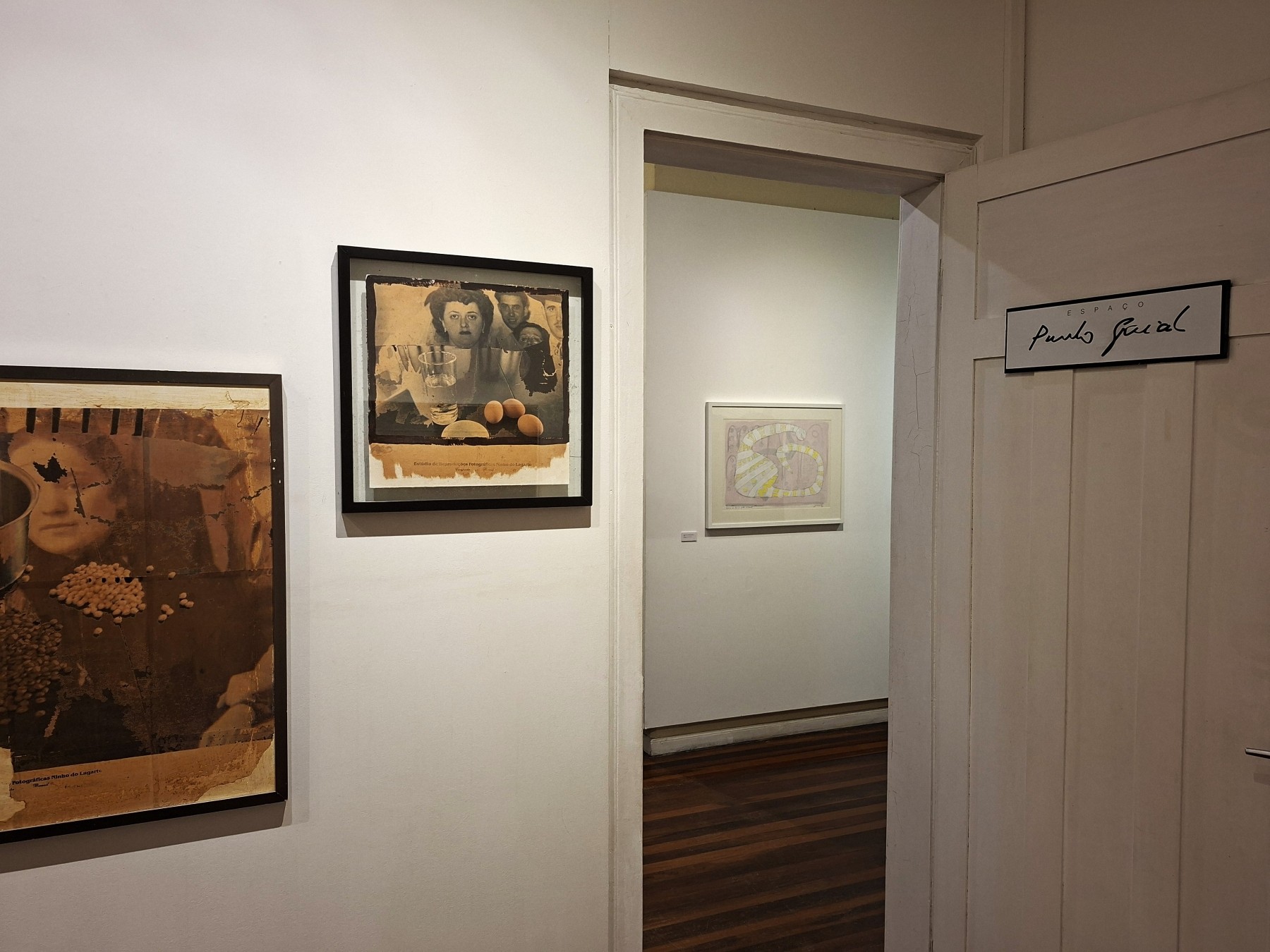
The “Prolific Matter” exhibition gathers about 50 works by Paulo Gaiad (1953-2016) at Fundação Cultural Badesc in Florianópolis, exploring materials like plaster, metal, and paper across all exhibit spaces.

Material and language exploration
Objects, photographs, and drawings form the show, honoring the artist who settled in Florianópolis in the 1980s.
Curated by Thays Tonin, Victoria Beatriz, Rainara Sofia, Georgia Bergamin, Estela Camillo, and Eduarda Andrade, it stems from research in the Paulo Gaiad Artistic Archive, preserved by his family in his former studio.
The works uncover layers of three decades of production, featuring experiments with materials, forms, and techniques.
The curatorial narrative focuses on recurrence, spotlighting repeated symbols like crosses, nudes, snakes, and lizards, plus repurposed images and materials.
Victoria Beatriz notes the title evokes multiplication and unfolding, with layered creations building ongoing dialogue.
Gaiad embraced wear and corrosion, foreshadowing matter’s clash with time.
Visiting hours and education programs
The exhibition runs until February 19, 2026, at Rua Visconde de Ouro Preto, 216, downtown Florianópolis, Monday to Friday, 1pm to 7pm.
Fundação Cultural Badesc hosts free art-education activities to build audiences and boost cultural access.
Art educator Victoria Beatriz emphasizes practices that foster critical thinking, linking contemporary visuals to daily life.
Open to public and private school students, universities, social centers, NGOs, special groups, associations, teachers, and the community, with a minimum of five people.
Register via email fundacaoculturalbadesc@gmail.com, subject “Agendamento Ação Educativa”, or at fundacaoculturalbadesc.com under Arte + Educação Agendamentos.