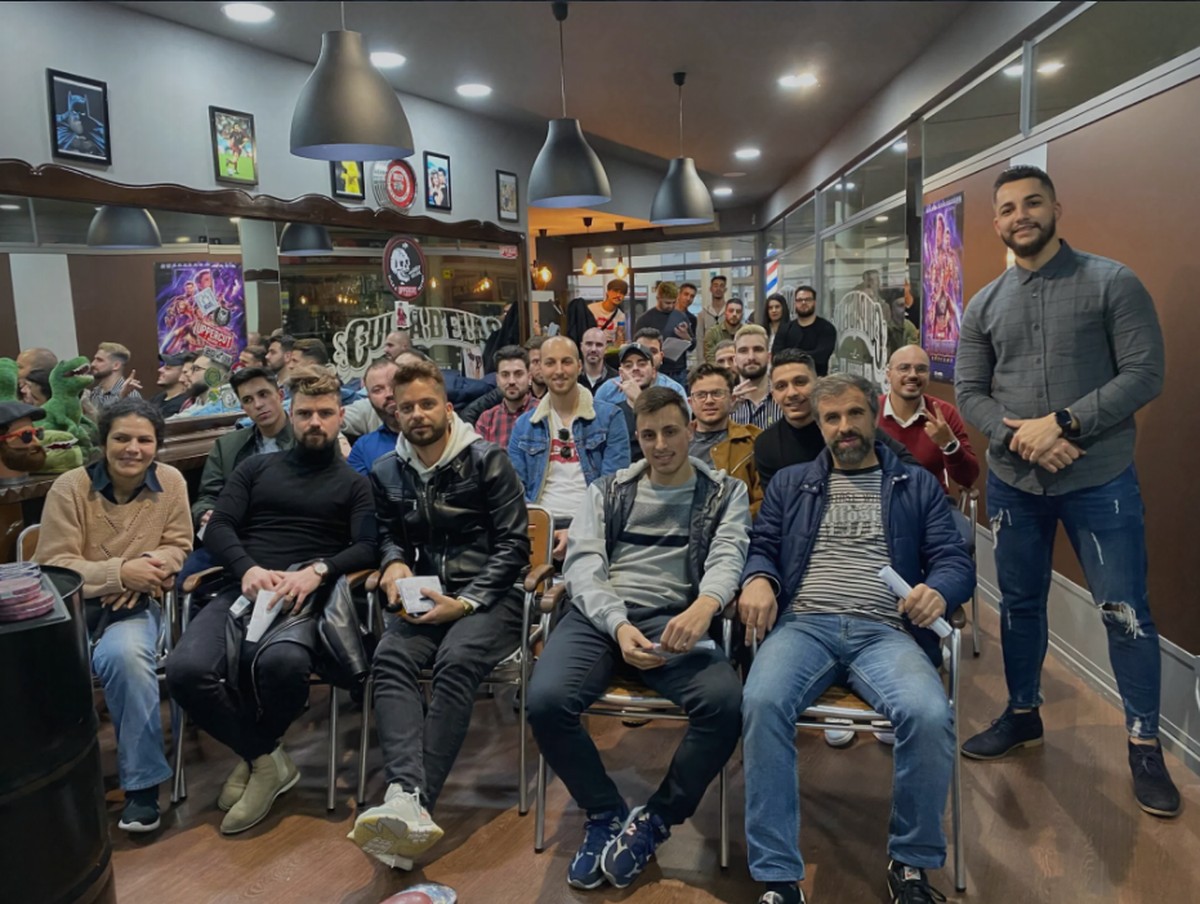
Men’s beauty market grows, turning barbershops into complete spaces for self-care and lifestyle experiences.

The global men’s grooming market is expanding rapidly. Valued at US$ 30.8 billion in 2021, it is projected to grow 9.1% annually through 2030, according to Grand View Research. In Brazil, this movement is even stronger — the country ranks fourth worldwide in cosmetics consumption, according to Abihpec (Brazilian Association of the Personal Hygiene, Perfumery and Cosmetics Industry).
This shift reflects a broader cultural change, placing aesthetics, well-being, and self-care at the center of men’s daily lives. Modern barbershops have evolved into complete male beauty and social spaces, offering haircuts, coloring, skin and body care, manicures, depilation, massages, and leisure areas such as bars, coffee lounges, and arcade spaces — all in stylish, “instagrammable” settings.
“The modern barbershop is designed to fully welcome men. They come to take care of their look but also to relax and socialize. This completely changed the sector’s standard,” says Raphael Leonel, a barber for over ten years and founder of Leonel Barbearia in Portugal, where he has already trained over 500 professionals.
Leonel, who manages three premium barbershops across different districts in Porto, emphasizes the importance of professional development. He explains that “a barber must master various techniques, understand consumer behavior, and offer a customized experience.”
The range of services has expanded significantly. Popular styles include fade, quiffed back, armored cut, inverted highlights, as well as modern coloring, hair relaxation, smart blow-dry, ozone steam beard, skin cleansing, hydration, body hair removal, and eyebrow design.
“Male grooming has evolved. Men are open to new styles and treatments, but natural results remain the most desired. To keep up, professionals must continue studying and refining their skills,” says Raphael Leonel.
The design of barbershops has also become a competitive advantage. Whether inspired by modern concepts or vintage styles from the 1940s and 1950s, these spaces connect identity and emotion, transforming haircuts into personalized experiences.
The boom in premium barbershops and men’s growing interest in aesthetics are generating new business opportunities. Investing in planning, branding, and communication is essential to succeed in this expanding market.
“The sector continues to grow, and those who invest now can still gain ground. The future belongs to barbershops that combine skill, experience, and professionalization,” concludes Raphael Leonel.
Photo: Divulgação