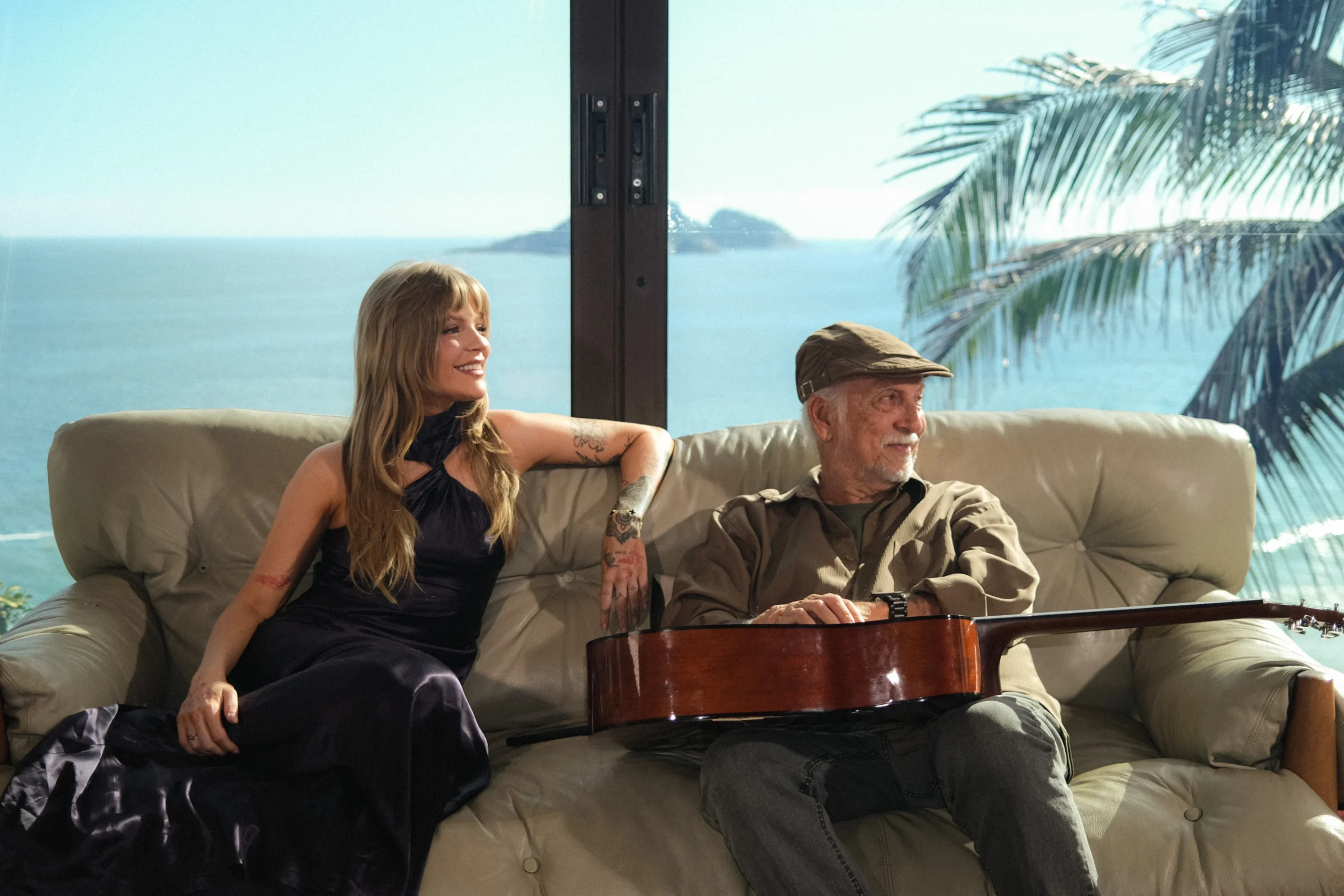
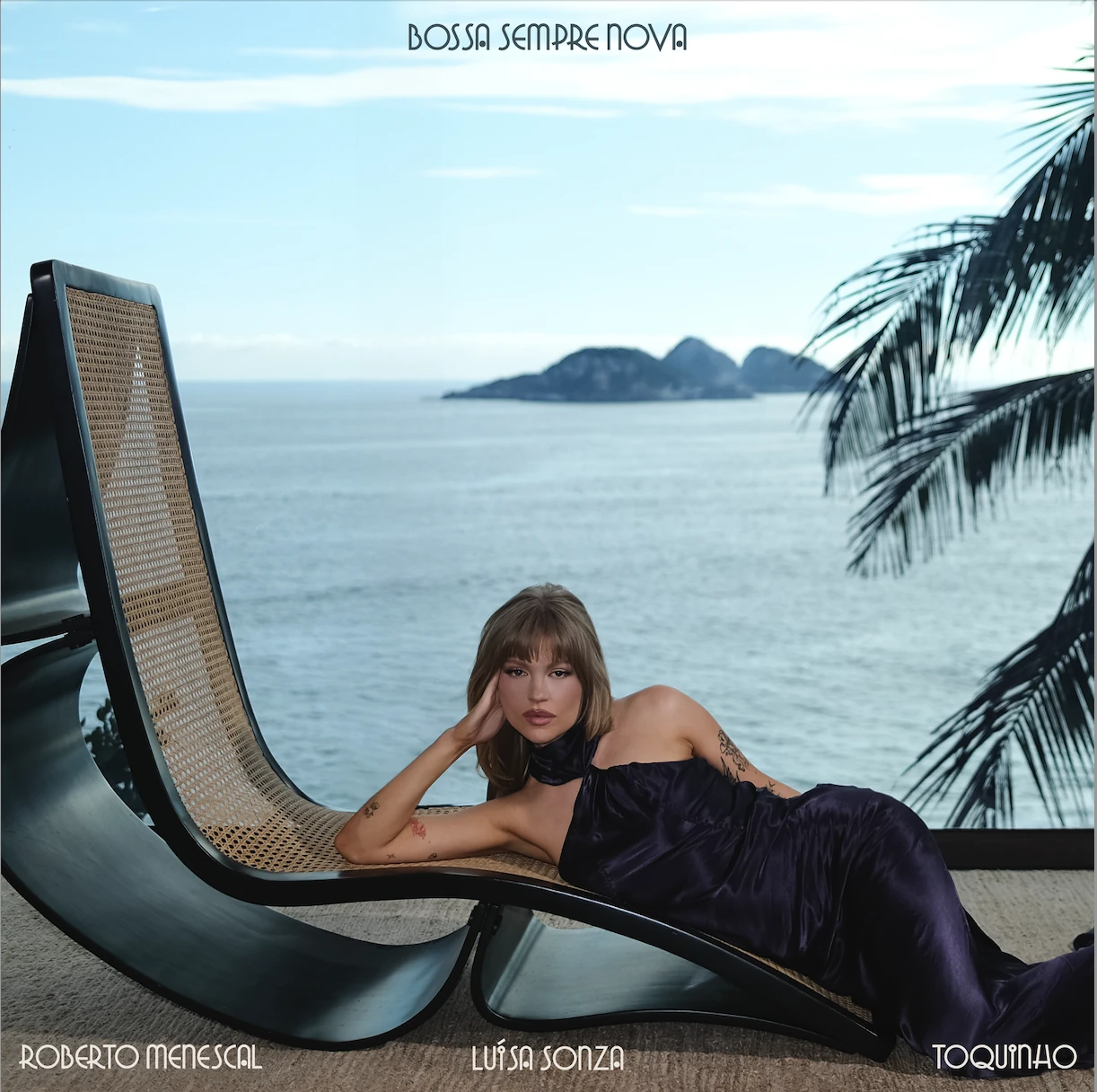
Recorded face to face with minimal editing, Bossa Sempre Nova pairs Luísa Sonza with Roberto Menescal and Toquinho across 14 tracks to kick off 2026.

The relationship that inspired “Chico” may be over, but the 2023 song — which hit number one in Brazil — opened a clear path to bossa nova. Now that spark becomes a full album: “Bossa Sempre Nova” brings Luísa together with two genre-defining names, Roberto Menescal and Toquinho, in a set built to highlight how timeless this sound can feel.
A rare cross-generation session
Menescal, on guitar and acoustic guitar, co-produces eight tracks. He also sings on “Você” and signs his first new composition with Luísa, “Um pouco de mim”. Toquinho, the guitarist known as Vinicius de Moraes’ “last partner”, co-produces the other six recordings, including two songs from his classic collaborations with the poet.
Cut in 2025 with an organic approach — singer and musicians facing each other in the studio, with almost no cuts or edits — the album aims for clarity over polish. Luísa keeps her recognizable tone, but sings with a lighter, more direct phrasing that fits the understated discipline associated with João Gilberto’s bossa blueprint.
Setlist: essentials and deep cuts
Aside from the new “Um pouco de mim” (Sonza and Menescal), the repertoire was chosen by Luísa and moves between staples and lesser-played gems—songs tied to the moment Brazilian music first became global currency.
Four selections come from Menescal’s partnership with Ronaldo Bôscoli: “O barquinho”, “Você”, “Ah, seu eu pudesse” and “Nós e o mar”.
One of the most stripped-down moments is “Diz que fui por aí”, the samba by Zé Keti and Hortêncio Rocha famously recorded by Nara Leão in 1964. Here it arrives as an “only” (with quotes) take: Luísa’s voice over Menescal’s acoustic guitar.
The initial plan to avoid the biggest classics didn’t survive the studio chemistry. The tracklist embraces “Samba de verão” (Marcos Valle and Paulo Sérgio Valle) and Tom Jobim’s “Triste”, a song closely linked to “Elis e Tom” — Luísa’s stated favorite album.
How it came together
Luísa says that around 2022 she became, in her own words, a “bossa rat”—a deep listener who hunts for vinyl even in specialist shops in Japan. At home, she’s watched by Menescal and Jobim—two of her six cats—alongside four dogs.
The human Menescal was the key catalyst. After a Paula Toller show, he told Luísa backstage how much he liked “Chico” and encouraged her to go deeper into bossa territory. The first idea with producer Douglas Moda was to record a “We4 sessions live” with Menescal, but the sessions expanded into a full album—strengthened by Toquinho’s involvement.
After the Rio sessions with Menescal (guitar, acoustic guitar and vocals on “Você”) and a band setup (bass, drums, piano/keys and occasional horns), production was wrapped in São Paulo, where Luísa and Moda are based.
“Um pouco de mim” predates the project. Luísa wrote it during a stay in Los Angeles and had saved it for her next studio album, “LS4”. At Douglas Moda’s suggestion, she sent an a cappella voice note to Menescal, who added guitar, refined the harmony and shaped the arrangement.
Toquinho raises the bar
Once he joined, Toquinho started mapping out his side of the record and, after hearing what was already captured with Menescal, felt the bar was high. He asked for more time to rework arrangements and keep a consistent standard across his six tracks, alternating between voice-and-guitar intimacy and fuller band takes.
At their first studio meeting to find Luísa’s key, Toquinho chose “Águas de março”. That moment made it clear to Luísa and Douglas Moda that another Jobim all-timer—also tied to the “Elis e Tom” universe—had to be included.
Luísa’s voice and Toquinho’s guitar (and vocals) lock in on “Carta ao Tom 74” and “Tarde de Itapoã”, both written by Toquinho with Vinicius de Moraes.
The band tracks include the afro-samba “Consolação” (Vinicius de Moraes and Baden Powell), “Onde anda você” (Vinicius and Hermano Silva, released in 1953), and the closing “Só tinha de ser com você” (Tom Jobim and Aloysio de Oliveira). The finale also connects back to “Elis & Tom” and carries an extra Toquinho link: in 1965, the year Jobim released it, Toquinho recorded an instrumental version.
With its near-live capture, “Bossa Sempre Nova” bets on simplicity to prove bossa still sounds current.
Foto: Divulgação