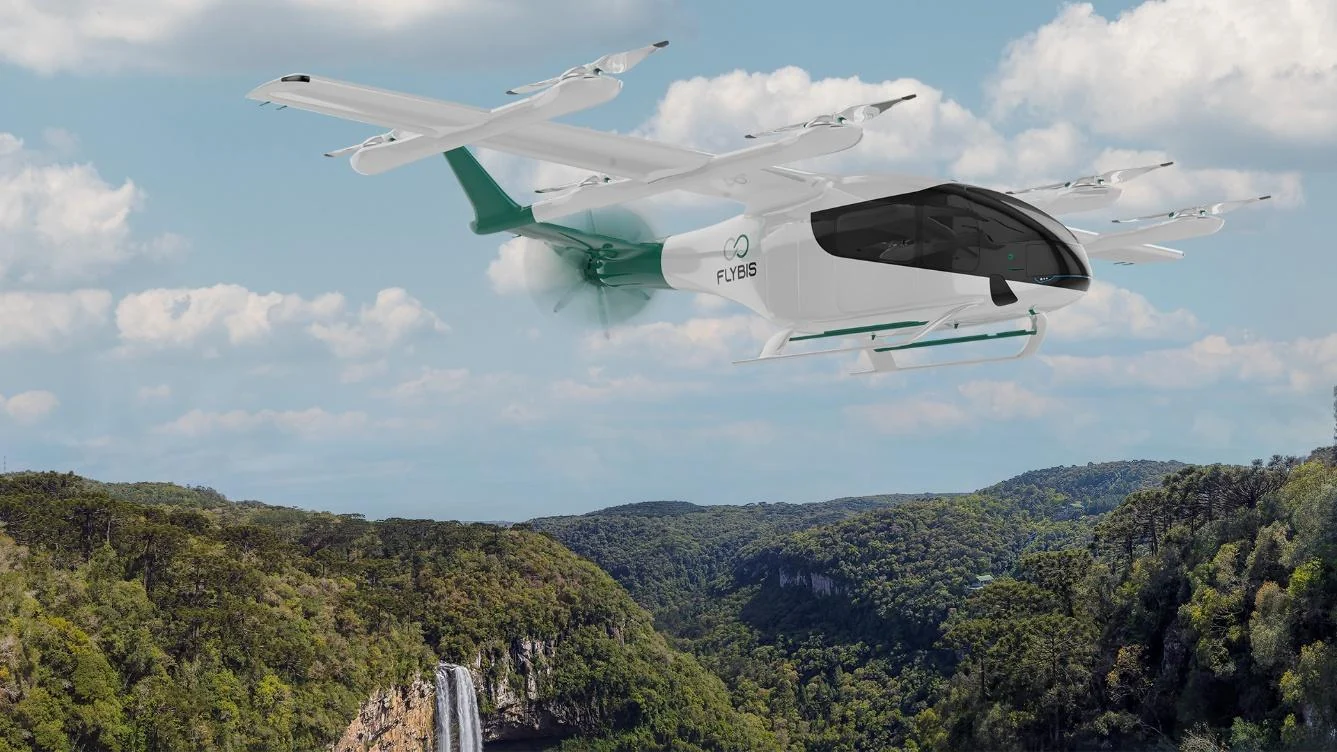
Unveiled at Gramado Summit, the FlyBIS-Sirena deal aims to connect Sirena Gramado to regional airports and wine country with eVTOL flights.
Luxury tourism in southern Brazil is starting to look upward. FlyBIS Air Mobility and Grupo Sirena have signed a Memorandum of Understanding to develop advanced air mobility solutions tied to Sirena Gramado, in a strategic move backed by Invest RS, the Rio Grande do Sul development agency.
The plan is to build an integrated air mobility ecosystem linking the tourism development to regional airports and to Vale dos Vinhedos, the wine region around Bento Gonçalves. The pitch is straightforward: cut travel time, raise the profile of key destinations in Serra Gaúcha and offer a premium transport option designed for high-end travelers, tourism operators and domestic and international investors.
What the deal includes
This is broader than a future air taxi service. The two companies say the partnership combines real-estate planning, advanced air mobility infrastructure and regulatory governance to create an operation that is commercially viable, environmentally conscious and aligned with aviation rules from the start.
- Feasibility analysis and planning for a vertiport integrated into Sirena Gramado.
- Feasibility studies for direct air links between tourist destinations in Serra Gaúcha and regional airports.
- Planning for sustainable energy infrastructure centered on electrification, low environmental impact and ESG goals.
- Operational planning developed with local governments, aviation authorities and development agencies.
The logic behind the project is rooted in one of luxury tourism’s biggest pain points: getting there. For premium travelers, mobility is part of the experience, not an afterthought. That is why the partnership is being framed as a way to improve convenience while also strengthening the region’s competitiveness.
There is also a broader public-interest argument behind the announcement. According to the companies, faster and cleaner connections could support regional development, attract investment and reinforce southern Brazil’s positioning as a hub for upscale tourism, innovation and sustainability.
“This kind of premium tourism corridor represents one of the most consistent use cases for the launch phase of advanced air mobility. The partnership enables the creation of a scalable model, attractive to investors and fully aligned with regulatory requirements, positioning southern Brazil at the forefront of the new sustainable mobility economy.” — Gustavo Zanettini and Carlos Bertotto, founders of FlyBIS Air Mobility
What comes next
The next phase will focus on technical groundwork. FlyBIS and Grupo Sirena plan to carry out technical, economic and regulatory feasibility studies, along with detailed tourism demand assessments. They also expect to coordinate with state and municipal governments, airport operators and travel-sector stakeholders.
That matters because the project is not only about placing new infrastructure on the map. The proposal also calls for robust operating models, high safety standards and an approach that fits the urban and environmental profile of the region rather than clashing with it.
The companies behind it
FlyBIS Air Mobility is positioning itself as a future operator in the advanced air mobility ecosystem, with a focus on electric vertical takeoff and landing aircraft. The company has signed a Letter of Intent with Eve Air Mobility, an Embraer-controlled company, for the acquisition of up to 40 aircraft. Its operations are expected to begin in 2028 in southern Brazil, with expansion plans for other Latin American countries.
Grupo Sirena, meanwhile, was formed by entrepreneurs Dody Sirena and Jaime Sirena. The group combines Dody Sirena’s experience as co-founder and president of DCSet Group, one of Brazil’s largest entertainment groups, with Jaime Sirena’s work at Star Ópera Incorporadora, a holding company born from the restructuring of Emoções Incorporadora and focused on projects that blend biophilia, design, architecture, engineering, efficiency, sustainability and quality of life.
The development at the center of the agreement is Sirena Gramado, a 205-hectare tourism complex located between Gramado and Parque do Caracol in Rio Grande do Sul. Designed around the idea of a “Nature City,” it combines architecture, wellness, entertainment and hospitality in close dialogue with the landscape. The project is managed and developed by Star Ópera, draws on DC Set’s expertise in entertainment experiences and has Club Med as a strategic hospitality partner, responsible for the complex’s all-inclusive resort, the first Exclusive Collection property in Latin America.
“Sirena Gramado was born with the commitment to integrate hospitality, entertainment, well-being and innovation into a complete experience. Advanced air mobility now becomes part of that vision for the future, expanding the region’s connectivity and strengthening its international appeal.” — Jaime Sirena, CEO of Sirena Gramado and partner at Grupo Sirena
If the studies validate the concept, the corridor linking airports, Serra Gaúcha destinations and wine country could become one of Brazil’s most closely watched early use cases for eVTOL tourism travel. More than a technology showcase, the initiative is trying to redefine how destination value is measured in the premium segment.
Event Info
- Partnership: Memorandum of Understanding signed by FlyBIS Air Mobility and Grupo Sirena.
- Announcement: made during Gramado Summit in Gramado, Rio Grande do Sul.
- Institutional support: Invest RS, the development agency of Rio Grande do Sul.
- Goal: connect Sirena Gramado to regional airports and Vale dos Vinhedos, in Bento Gonçalves, through advanced air mobility.
- Scope: studies covering a vertiport, direct air connections, sustainable energy infrastructure and operational planning with governments and aviation authorities.
- FlyBIS: future AAM operator with an LOI for up to 40 Eve Air Mobility aircraft; operations expected to start in 2028 in southern Brazil.
- Sirena Gramado: a 205-hectare tourism complex between Gramado and Parque do Caracol, with Club Med as a strategic hospitality partner.
- FlyBIS website: https://www.flybis.com.br/