Superagui National Park opens the 15 km Ararapira Trail after a \(R\$ 2\) million investment, linking caiçara communities on Paraná’s coast.

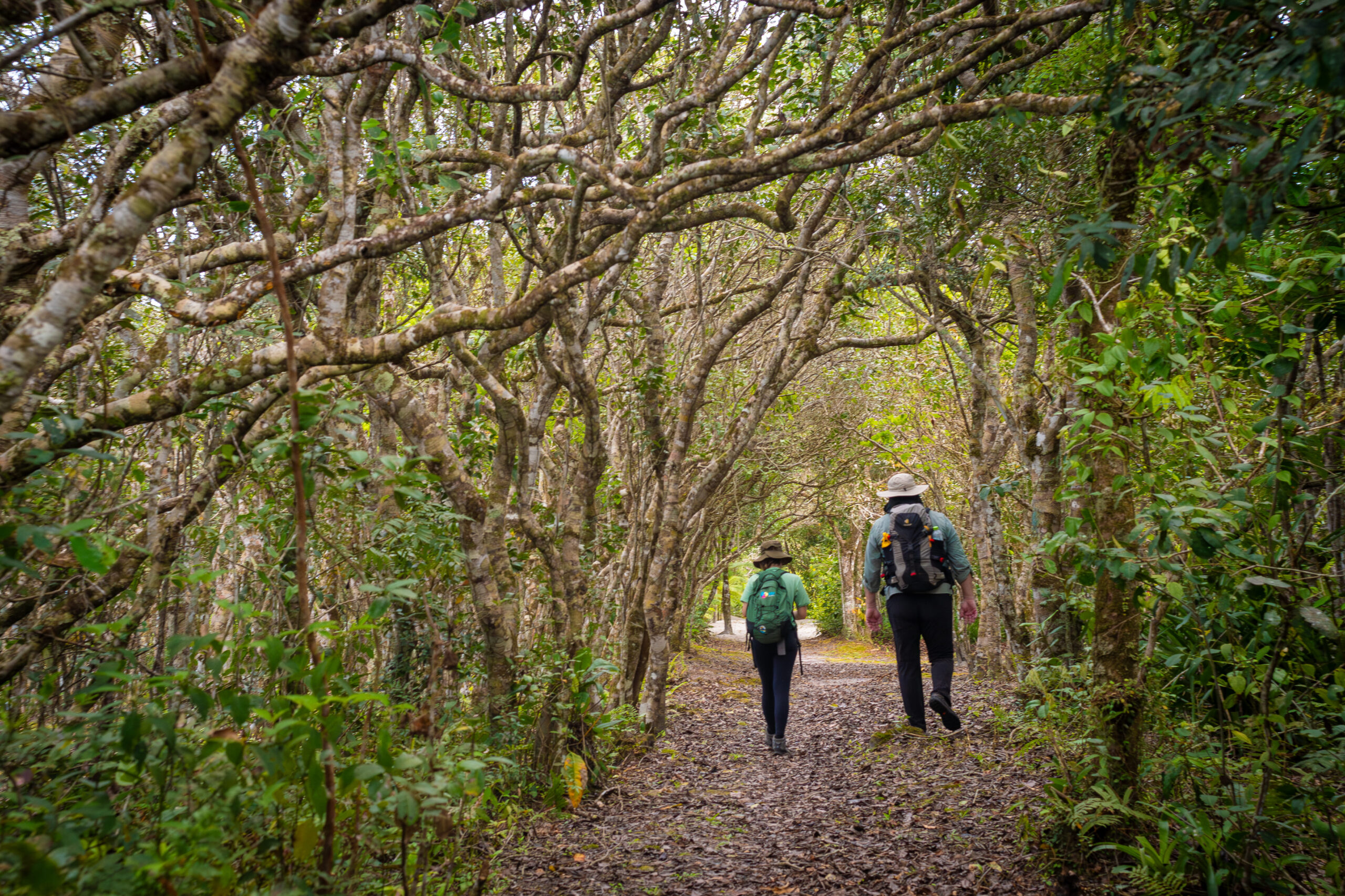
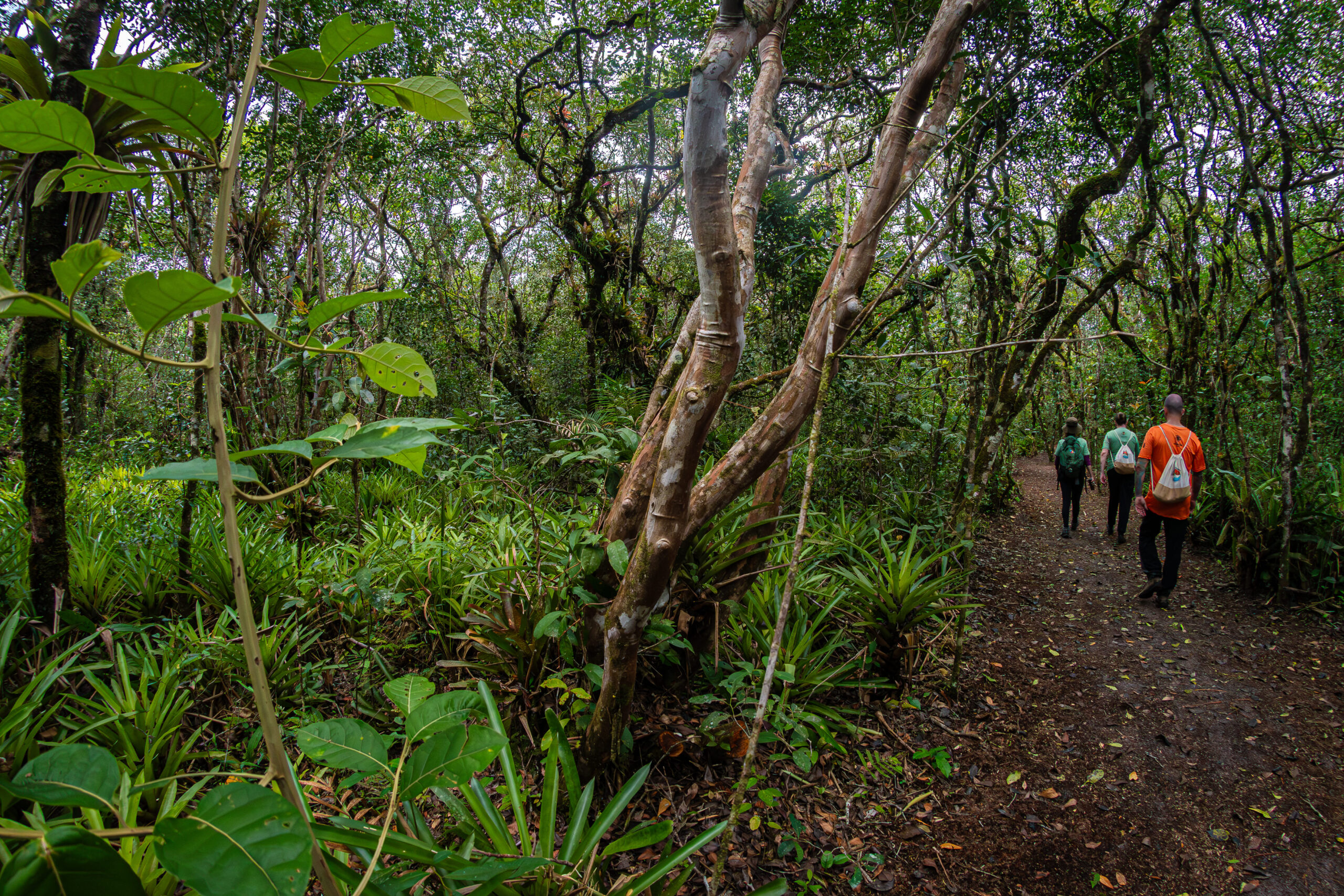
Superagui National Park, on Brazil’s northern coast of Paraná, has inaugurated its first structured bimodal trail, now permanently open to visitors. Funded by the Paraná Coast Biodiversity Program (BLP), the Ararapira Trail stretches for 15 kilometers and becomes part of the Superagui Crossing, an approximately 40-kilometer route that traverses the island from north to south, or the other way around.
The full crossing is made up of three sections: Ararapira Trail (15 km), Praia Deserta (21 km) and the Praia Deserta Trail (3 km). Together, they connect remote beaches, forest areas and traditional communities, under coordination by ICMBio’s Antonina–Guaraqueçaba Integrated Management Unit.
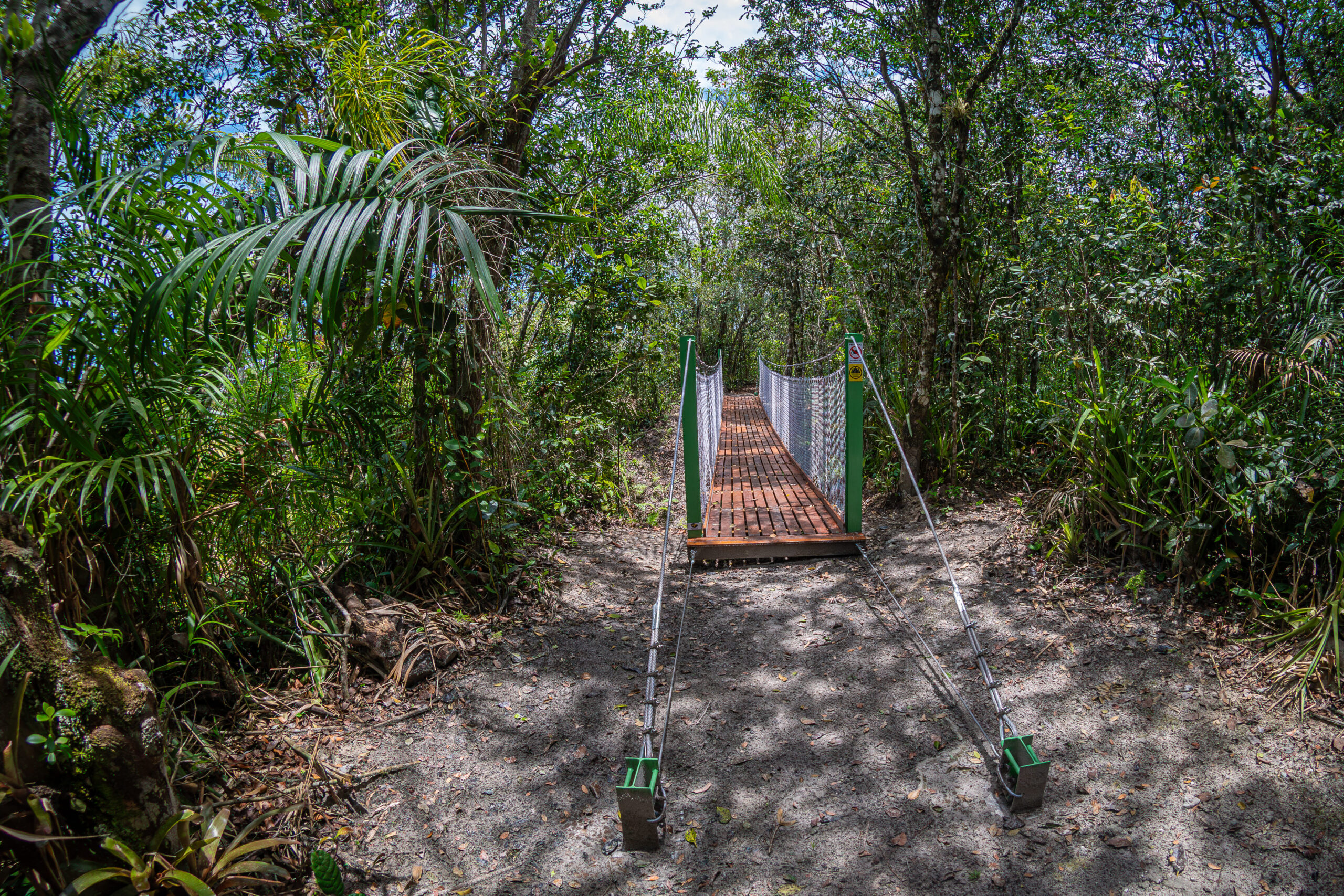
Located in the northern portion of Superagui Island, the Ararapira Trail runs through the Barra do Ararapira community and was designed in two parts. The initial three-kilometer segment includes five suspension bridges. The 11-kilometer segment features two more suspension bridges and a 50-meter boardwalk built to cross flood-prone sections.
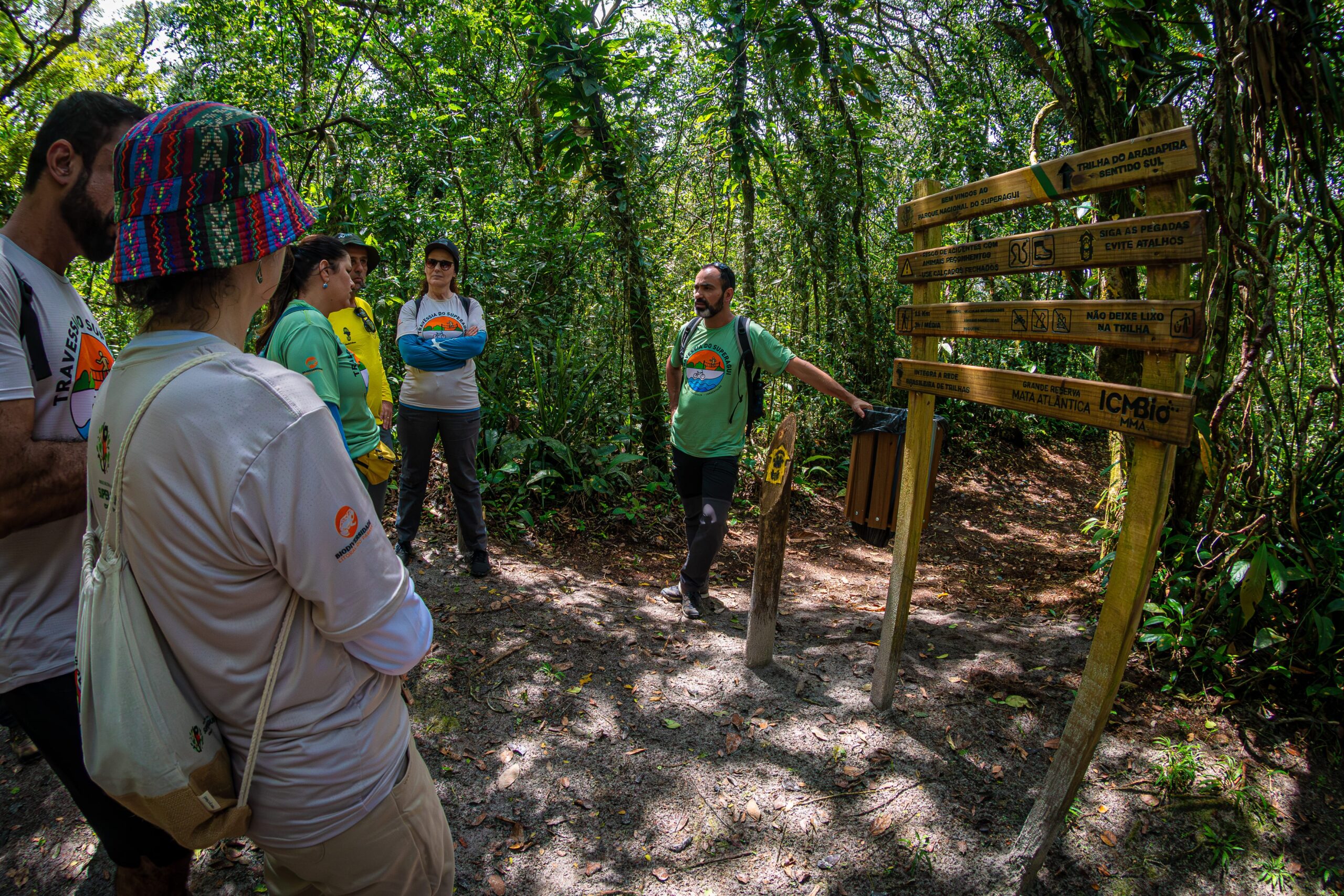
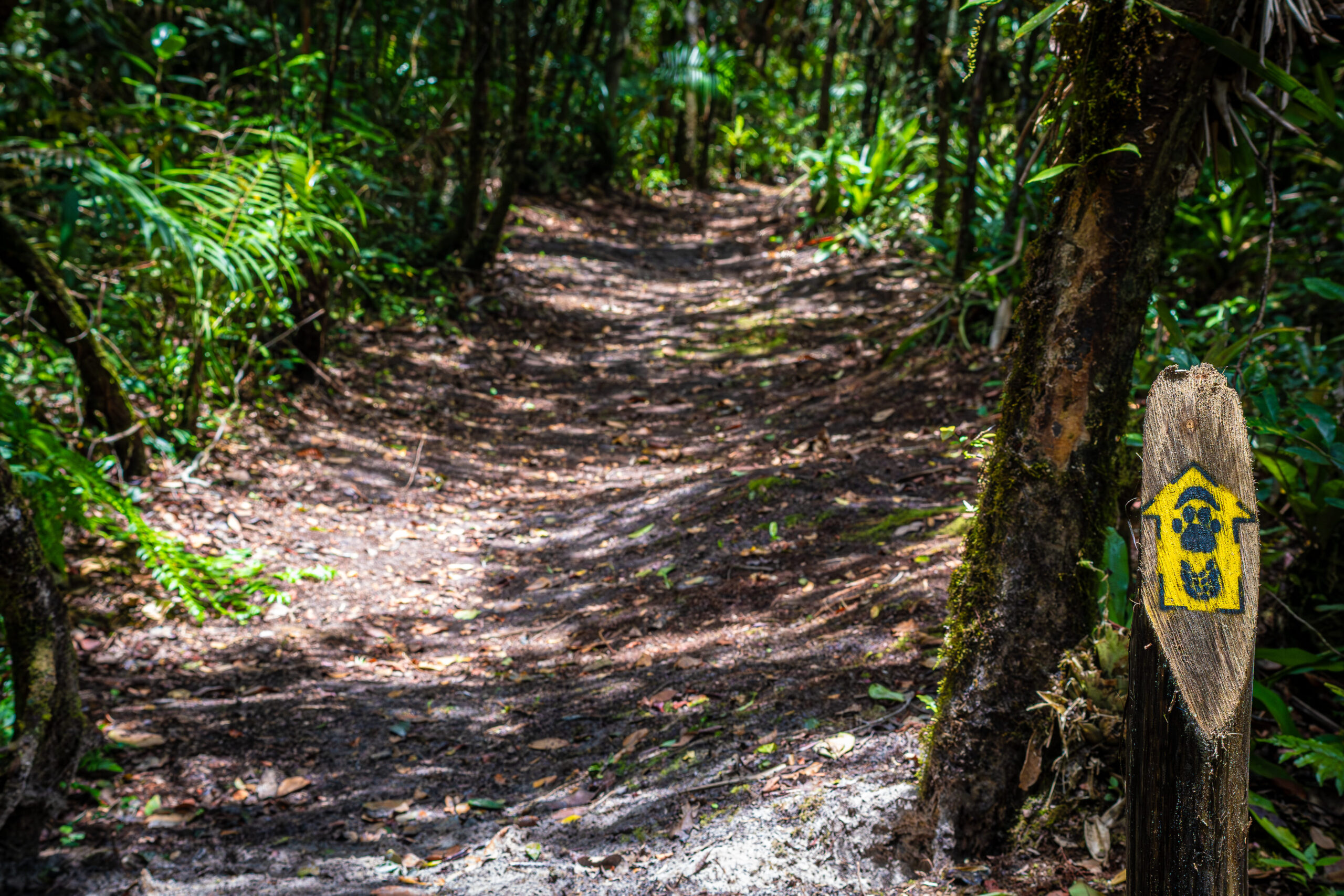
Signage follows the standard adopted by the Brazilian Long-Distance Trails and Connectivity Network (RedeTrilhas). According to ICMBio, the goal is to strengthen sustainable tourism and community-based tourism inside the park.
“This trail is the first structured and signposted tourist attraction open to public visitation since Superagui National Park was created 36 years ago,” says Wagner Cardoso, an ICMBio environmental analyst and the project coordinator.
The route was planned for both hikers and cyclists. Wagner says the new structure allows different visitor profiles to experience the park’s landscapes and biodiversity, increasing a sense of belonging around the protected area.
“A structured trail lets different types of visitors experience the scenic beauty and rich biodiversity of the park, creating a sense of belonging and appreciation for this natural heritage protected by the Conservation Unit,” he adds.
The project received about \(R\$ 2\) million from the BLP to build seven suspension bridges, install a boardwalk in flood-prone areas and implement signage. A new \(R\$ 200{,}000\) contribution is planned to fund an additional bridge that will improve access to Dona Rosa’s Camping Area at Praia Deserta de Superagui.
“SPVS, as an institution that sits on the BLP Council, celebrates the inauguration of the Ararapira Trail at Superagui National Park and congratulates everyone involved, especially ICMBio’s managers who coordinated this effort. As part of the Great Atlantic Forest Reserve Trail, within Brazil’s Long-Distance Trails and Connectivity Network, it is a concrete example of how infrastructure inside fully protected areas enables public-use activities and boosts recognition by local communities,” says Clóvis Borges.
Opening event and local culture
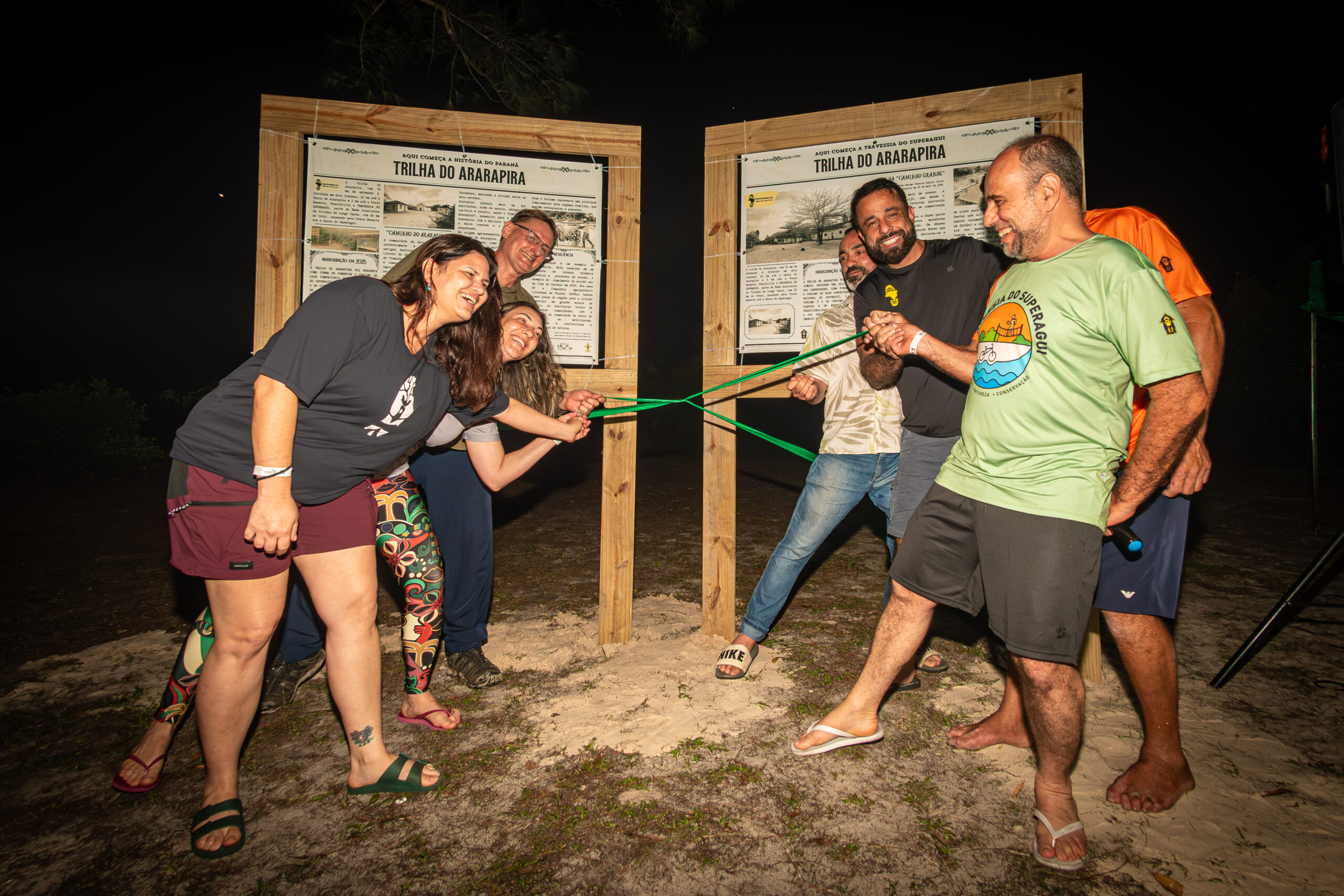
The official opening took place on December 13 in Vila de Ararapira. The program included a group walk along the route and a joint action with residents and local partners, celebrating the delivery of the new trail to both the community and visitors.
The ceremony brought together authorities, environmental agencies and community members, highlighting community-based tourism as a strategy for sustainable development. The event ended with a traditional fandango dance led by the Pereira family, reinforcing local cultural heritage.
Fisherman Márcio José Muniz, an Ararapira resident and owner of a local guesthouse, said reopening the trail resulted from long-standing community mobilization. He explained the initial motivation was to ensure access for residents after a natural opening of the bar affected transport, including routes for education.
“The idea started before the pandemic. At first, we paid out of pocket because we had no funds. Later, we secured resources through ICMBio and the BLP,” he said.
Márcio also highlighted the project’s potential to transform regional tourism, benefiting Guaraqueçaba, Cananéia and surrounding areas.
“It will be a major advance for tourism here, not only for our community but for the whole region of Guaraqueçaba, Cananéia and beyond. Everyone will benefit, and my word is gratitude,” he said.
Resident Waldir Aparecido Pereira, born in Ararapira, said the new trail opens paths for the territory and brings an adjustment to living with tourism, while attracting new visitors to both Barra and Ararapira.
“These days there is tourism and I wasn’t used to living with it, now we’ll have to learn. If you get the chance, do this trail, it’s beautiful. New people will get to know the place through it, both here in Barra and in Ararapira,” he said.
From ICMBio, the agency’s national coordinator for Public Use, Carla Guaitaneli, emphasized the initiative’s broader value for conservation units across Brazil. At the Ministry of the Environment and Climate Change (MMA), Protected Areas Director Pedro da Cunha e Menezes highlighted the collective effort and community engagement behind the project.
“This is much more than opening a trail. It makes people from all over Brazil, from other Conservation Units, like and defend protected areas more. It’s strong, powerful, and it inspires other people and territories,” Carla Guaitaneli said.
“What you are doing here is addition: the community, the municipality, civil society, the university and the private sector. We’ll generate belonging, conservation and development, because the trail is beautiful, and the community engagement is wonderful to see,” Pedro da Cunha e Menezes said during the ceremony.
Camile Lugarini, head of ICMBio’s Antonina–Guaraqueçaba Integrated Management Unit, stressed the connection between people, communities and nature. She said the route is the result of years of collective work and determination.
“Connecting people to nature is our main institutional mission, caring for nature together with people,” she said.
“It was hard work, with a lot of determination, involving the community, environmental agents and the whole team. Each person here has a piece of this trail,” she added.
Camile also said the new trail expands local opportunities, with residents caring for and maintaining the space, strengthening community-based tourism and linking different conservation units.
“The trail brings this opportunity to the community, with people from the region taking care of it, maintaining and strengthening this space, boosting community-based tourism and connecting different protected areas,” she said.
Wildlife, conservation and community tourism
Created in 1989 and covering about 34,000 hectares, Superagui National Park protects Atlantic Forest ecosystems and endangered species such as the black-faced lion tamarin and the red-tailed amazon parrot, while also hosting caiçara communities. Work to reopen the route began in 2019 after a request by the Barra de Ararapira community, amid navigation difficulties following the breach of a sandbar on Cardoso Island.
“The community wanted the trail reopened to make it easier to walk to Ararapira, at the northern end of Superagui Island. We saw the trail’s tourism potential and, together with the community, began planning its structure and signage to enable public visitation,” Wagner said.
The new trail links Barra do Superagui, Barra do Ararapira and Ararapira, reinforcing community-based tourism. ICMBio expects visitation to create demand for lodging, food and local services along both the trail and the full crossing.
“The route will serve as an attraction for visitors to get to know these places, leveraging Community-Based Tourism through demand for guesthouses, meals and services that will arise from visitation on the trail and the crossing,” Wagner said.
With dense forest, mangroves and wetlands, the route may also offer wildlife sightings. Wagner says visitors may occasionally see the black-faced lion tamarin, flocks of red-tailed amazon parrots and, around Ararapira, scarlet ibis in the mangroves.
“Visitors may occasionally spot species like the black-faced lion tamarin or flocks of red-tailed amazon parrots. In the Ararapira region, you can also see groups of scarlet ibis in the mangroves, which are exceptionally beautiful due to their red plumage,” Wagner said.
Informational signs will guide low-impact behavior, linking public use to conservation. Wagner also says the trail brings visitors closer to knowledge, stories and ways of life that shape Paraná’s coast.
“It also brings people closer to knowledge, stories and ways of life that are part of the identity of Paraná’s coast. It’s an opportunity to experience the territory in dialogue with those who live there and care for it,” he added.
Besides the BLP, the project has support from the Great Atlantic Forest Reserve, which created the “footprint” signage adopted by RedeTrilhas. The trail will be self-guided, but visitors may hire local guides as an additional way to strengthen the community economy.
How to get there
From Paranaguá: water taxis travel to Barra do Superagui, where visitors can start the crossing northbound via Praia Deserta.
From the island’s north: boats also reach Ararapira via the Varadouro channel on the Paraná–São Paulo border. From there, visitors can continue on foot or by bike toward Praia Deserta and Barra do Superagui, heading north to south.
About the Paraná Coast Biodiversity Program
Created in 2021, the Paraná Coast Biodiversity Program promotes conservation, research and responsible use of natural resources. It aims to strengthen conservation units and support sustainable development along Paraná’s coast.
The program is funded through a Judicial Settlement Agreement signed after a 2001 oil spill. According to the program, more than \(R\$ 110\) million will go to strategic initiatives over ten years.
Governance is shared by civil society organizations, higher education institutions and ICMBio, under oversight of the Federal and Paraná State Public Prosecutor’s Offices. FUNBIO manages the program financially and operationally. More information: https://www.biodiversidadelitoralpr.com.br/