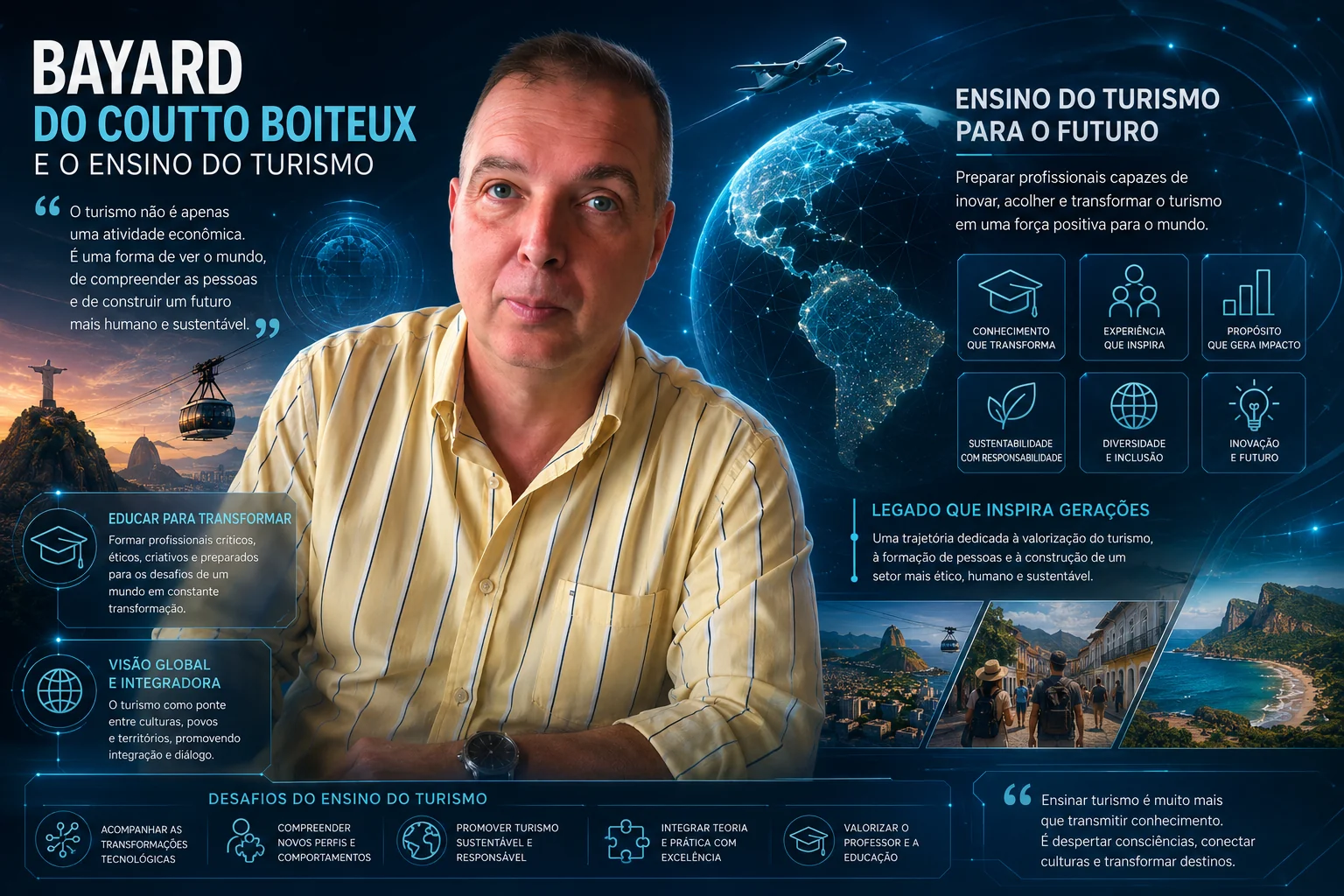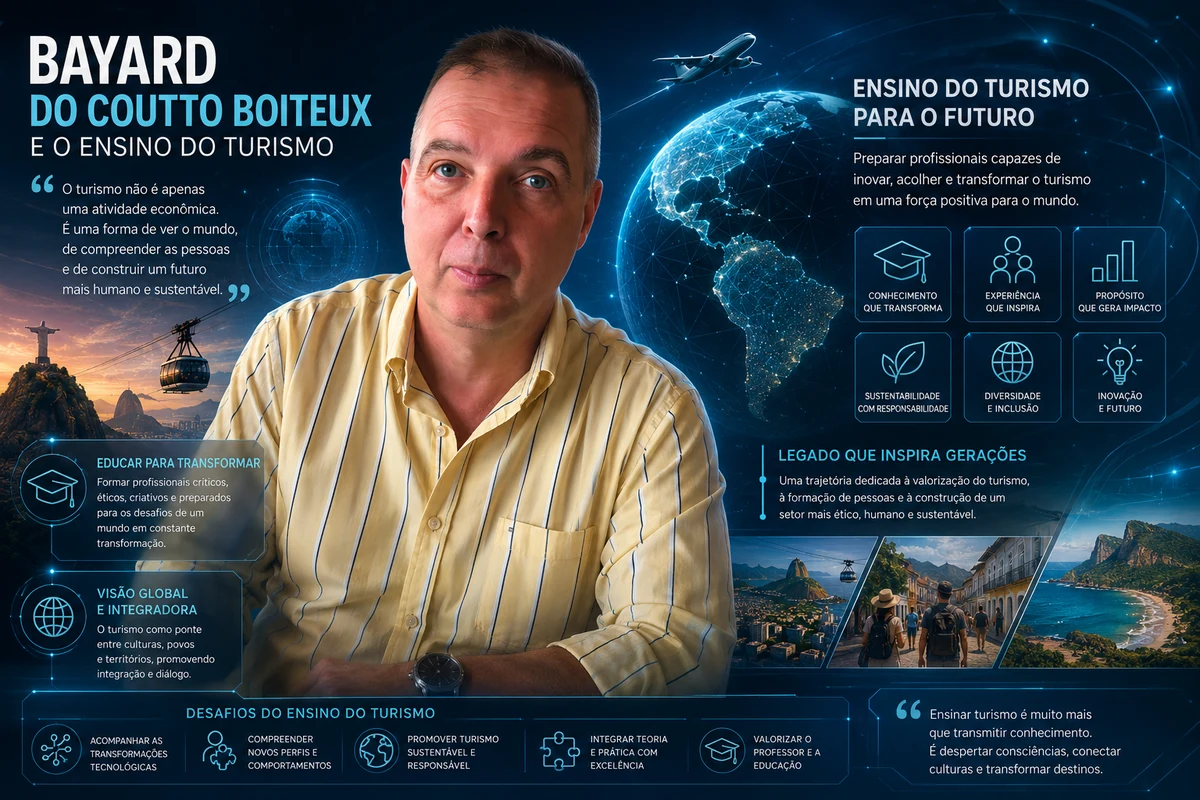
Bayard Do Coutto Boiteux spent decades reshaping tourism education in Brazil, training professionals with ethics, humanity, and strategic vision.
For much of Brazil’s modern history, tourism was treated as a superficial subject — something closer to entertainment than serious academic study. Bayard Do Coutto Boiteux built his entire career pushing back against that notion, and the generations he trained are proof that he succeeded.
More than a profession — a force for change
Throughout his years in higher education, Bayard consistently argued that tourism is a driver of real transformation. Done right, it creates jobs, boosts local economies, preserves cultural heritage, and bridges communities across borders. That belief wasn’t just rhetoric — it shaped how he taught and what he expected from his students.
Those students went on to work in hotels, airlines, travel agencies, cruise lines, cultural institutions, and government agencies. His goal was never simply to train competent technicians. He wanted graduates who could read the world, adapt to change, and act with purpose.
A classroom without walls
Bayard’s classes regularly ventured beyond standard curricula. He brought in discussions about sustainability, cultural identity, social inclusion, and hospitality — because he believed that disconnecting tourism from human concerns was simply wrong. Traveling, he argued, is about experiencing other cultures, understanding differences, and expanding your sense of the world.
He also worked to close the gap between academia and industry. Brazilian tourism education had long swung between overly theoretical approaches and a purely commercial mindset. Bayard advocated for balance: rigorous thinking paired with practical preparation, always grounded in what the sector actually needs.
Why this legacy matters now
In a world shaped by conflict, intolerance, and economic instability, the tourism industry faces growing pressure. That’s precisely why thoughtful tourism education matters more than ever. Training professionals who are ethical, adaptable, and humanistic may be one of the most meaningful contributions universities and educators can make to contemporary society.
Tourism only makes sense when it puts people at the center of everything.
Bayard Boiteux’s legacy extends well beyond diplomas and syllabi. He helped establish tourism as a legitimate field of knowledge in Brazil and demonstrated that education and hospitality are, at their core, inseparable. At a time when immediate results dominate every conversation, his career is a reminder of what truly lasts.
Brazil still has much to learn about honoring its educators. In tourism, few have embodied that mission as fully as Bayard Do Coutto Boiteux.