
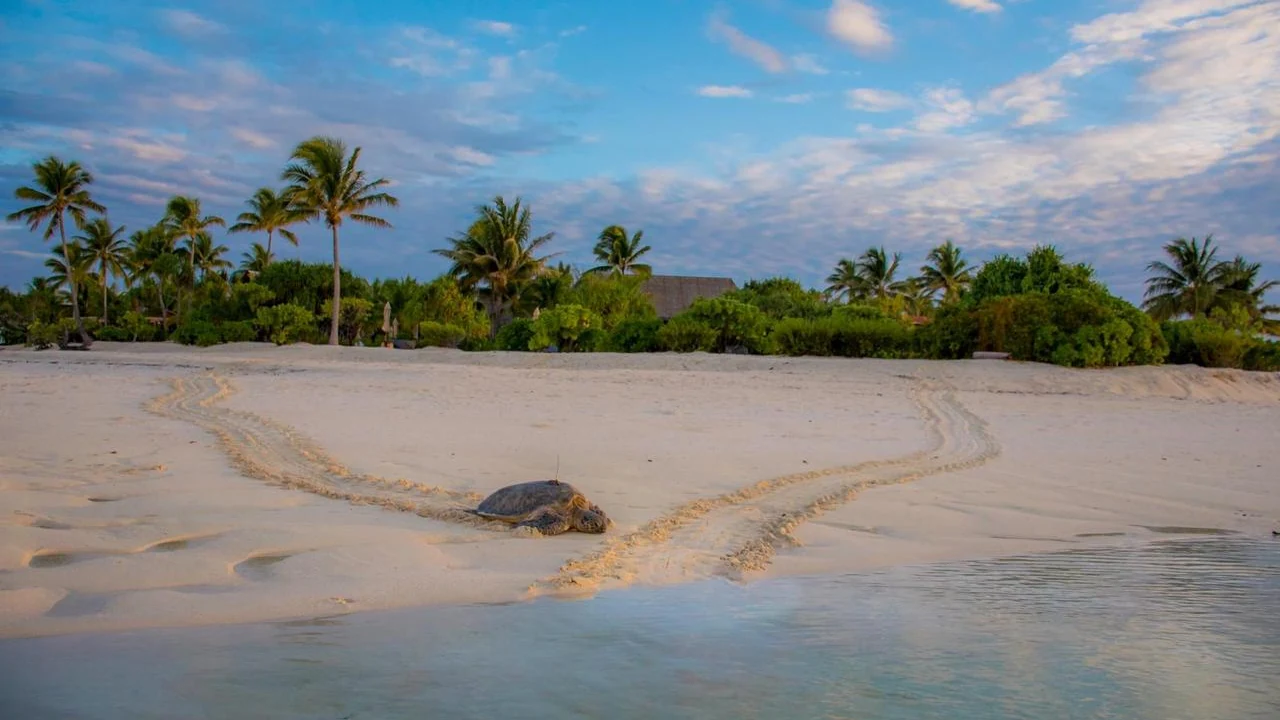
- 430 tracks observed
- 161 confirmed nests
- 15,614 estimated hatchlings
- 113 female sightings, including 19 identified individuals
- 10 new females recorded and 9 returning after 4 to 8 years away
- 227 hatchlings rescued and released, with 17 transferred to a rehabilitation center for specialized care
- Program: Tetiaroa Green Turtle Nesting Monitoring Program
- Leading association: Te mana o te moana
- Partners: The Brando, Tetiaroa Society, DIREN (French Polynesia Environment Department)
- Program launch: February 2006
- Monitoring season: October to April
- Location: Tetiaroa Atoll, French Polynesia
- 430 tracks observed
- 161 confirmed nests
- 15,614 estimated hatchlings
- 113 female sightings, including 19 identified individuals
- 10 new females recorded and 9 returning after 4 to 8 years away
- 227 hatchlings rescued and released, with 17 transferred to a rehabilitation center for specialized care
- Program: Tetiaroa Green Turtle Nesting Monitoring Program
- Leading association: Te mana o te moana
- Partners: The Brando, Tetiaroa Society, DIREN (French Polynesia Environment Department)
- Program launch: February 2006
- Monitoring season: October to April
- Location: Tetiaroa Atoll, French Polynesia
A rare bright spot amid climate crisis
Temperature sensors installed in the nests revealed an encouraging finding: 54% of this season’s hatchlings are male. That balance matters enormously. Rising sand temperatures typically skew hatchling sex ratios heavily female, threatening long-term genetic diversity and the species’ reproductive future.
Dr. Cécile Gaspar, founder of Te mana o te moana, captures the urgency behind every hour of fieldwork:
If temperatures keep rising, there will be no more hatchlings. We are rapidly heading toward an extinction phase if we do not act.
In a video, Dr. Cécile traces the program’s history, shares her passion for sea turtles, and delivers a clear climate warning that drives every action her team takes.
https://app.air.inc/a/ccd014f26
Event Info
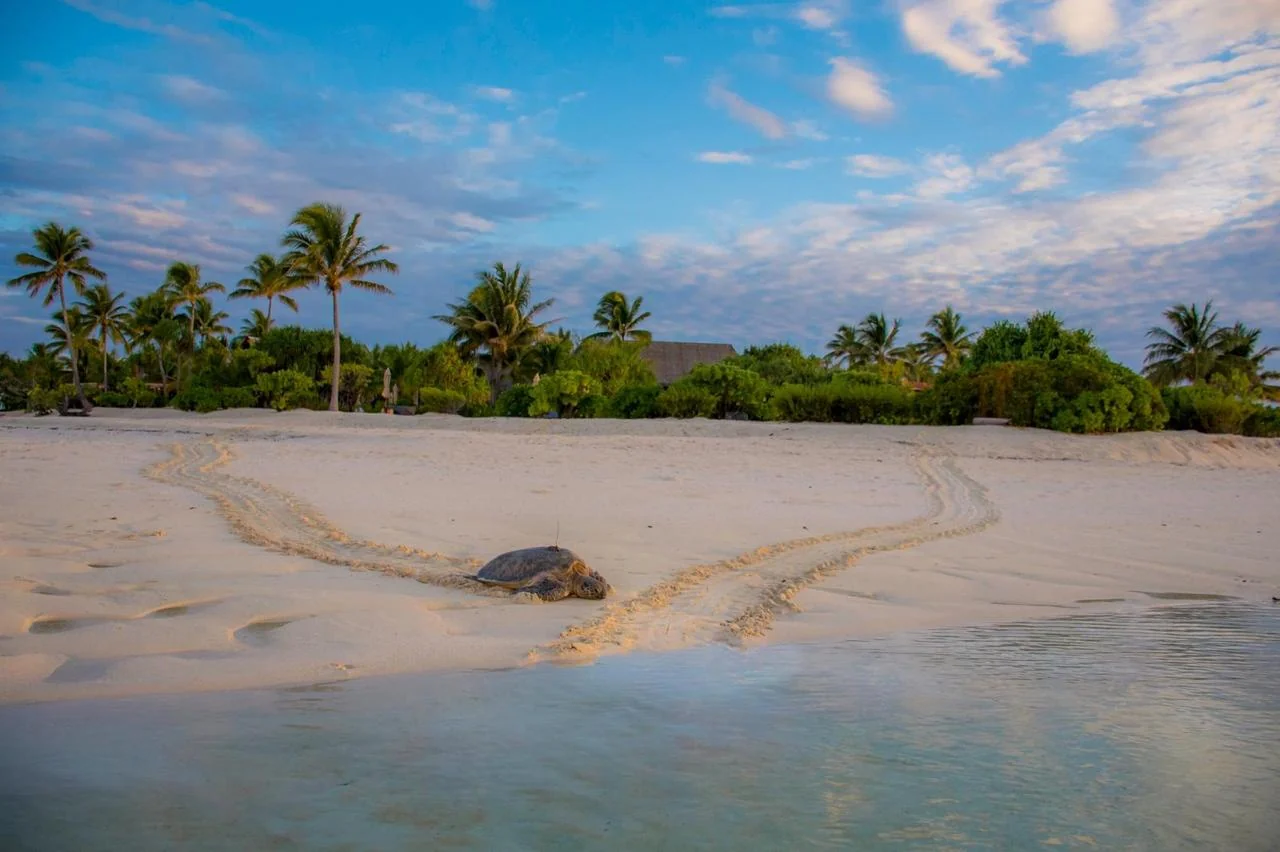
Over 1,400 tracks recorded since 2007 and 15,614 hatchlings estimated last season alone. Meet the program that became a global conservation benchmark.
It started in February 2006, on the nearly deserted beaches of Tetiaroa atoll, in French Polynesia. A scientific team witnessed, for the very first time, the birth of a green sea turtle. Fragile and mesmerizing, the hatchlings made their way to the ocean, leaving tracks that would become invaluable scientific data. That moment marked the launch of the Tetiaroa Green Turtle Nesting Monitoring Program.
The initiative was led by Te mana o te moana — an association dedicated to the protection of sea turtles — with support from French Polynesia’s Environment Department (DIREN). At the time, Tetiaroa was almost entirely uninhabited. Teams combed the beaches day and night, documenting every sign of activity with scientific precision.
A program that grew alongside the atoll
The founding of the Tetiaroa Society in 2010 gave the program new momentum. Then, in 2014, the opening of the eco-resort The Brando proved to be a turning point: monitoring expanded, data became more precise, and conservation efforts grew more effective. From just 10 to 15 nests recorded in the early years, the program has now logged more than 1,400 turtle tracks since 2007.
The 2024–2025 season by the numbers
Each year, between October and April, Tetiaroa’s beaches become the stage for one of nature’s most extraordinary cycles: green turtle nesting. Females return to the very beaches where they were born, driven by instinct and the rhythms of the ocean. The 2024–2025 season delivered remarkable results:
A rare bright spot amid climate crisis
Temperature sensors installed in the nests revealed an encouraging finding: 54% of this season’s hatchlings are male. That balance matters enormously. Rising sand temperatures typically skew hatchling sex ratios heavily female, threatening long-term genetic diversity and the species’ reproductive future.
Dr. Cécile Gaspar, founder of Te mana o te moana, captures the urgency behind every hour of fieldwork:
If temperatures keep rising, there will be no more hatchlings. We are rapidly heading toward an extinction phase if we do not act.
In a video, Dr. Cécile traces the program’s history, shares her passion for sea turtles, and delivers a clear climate warning that drives every action her team takes.
https://app.air.inc/a/ccd014f26
Event Info
