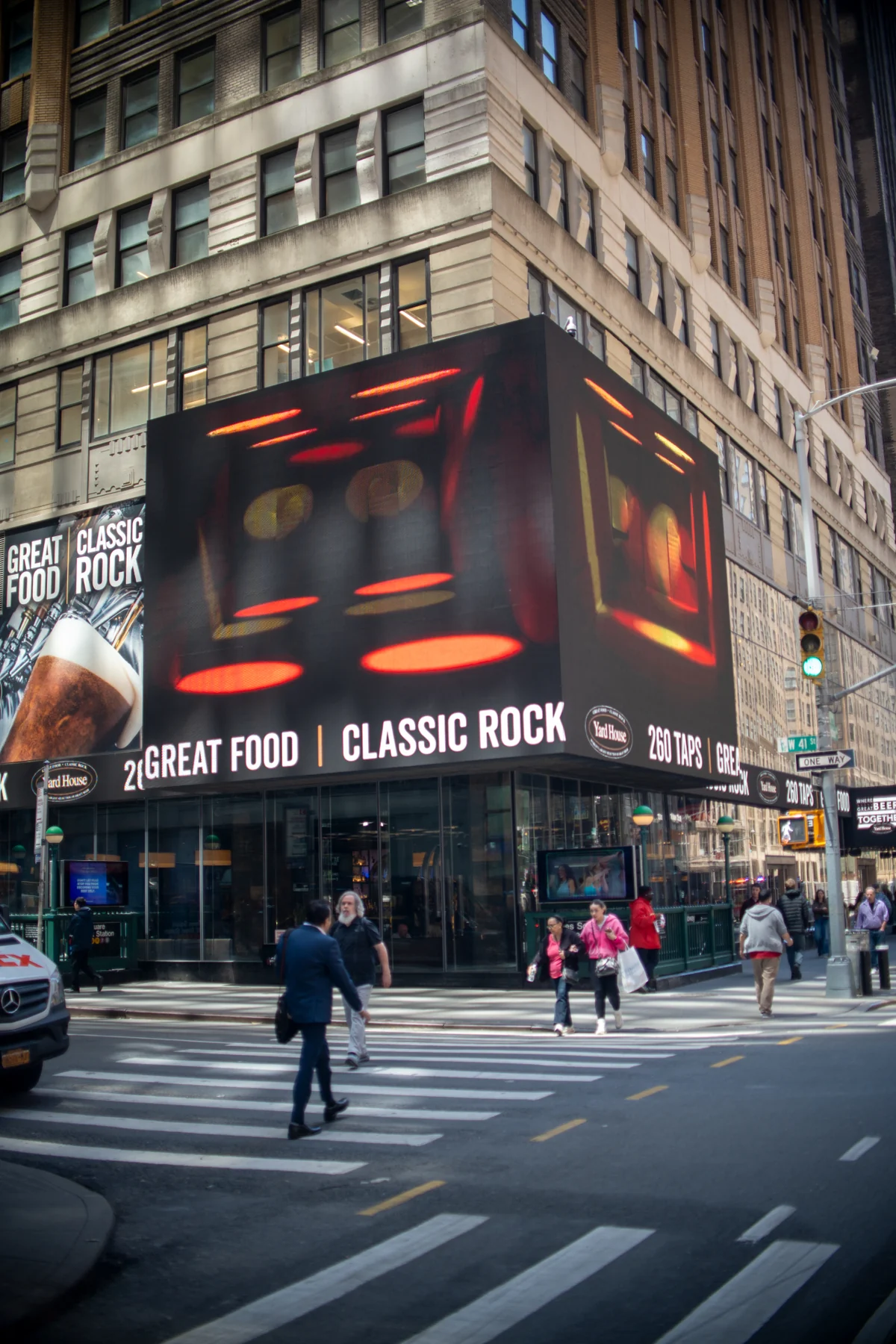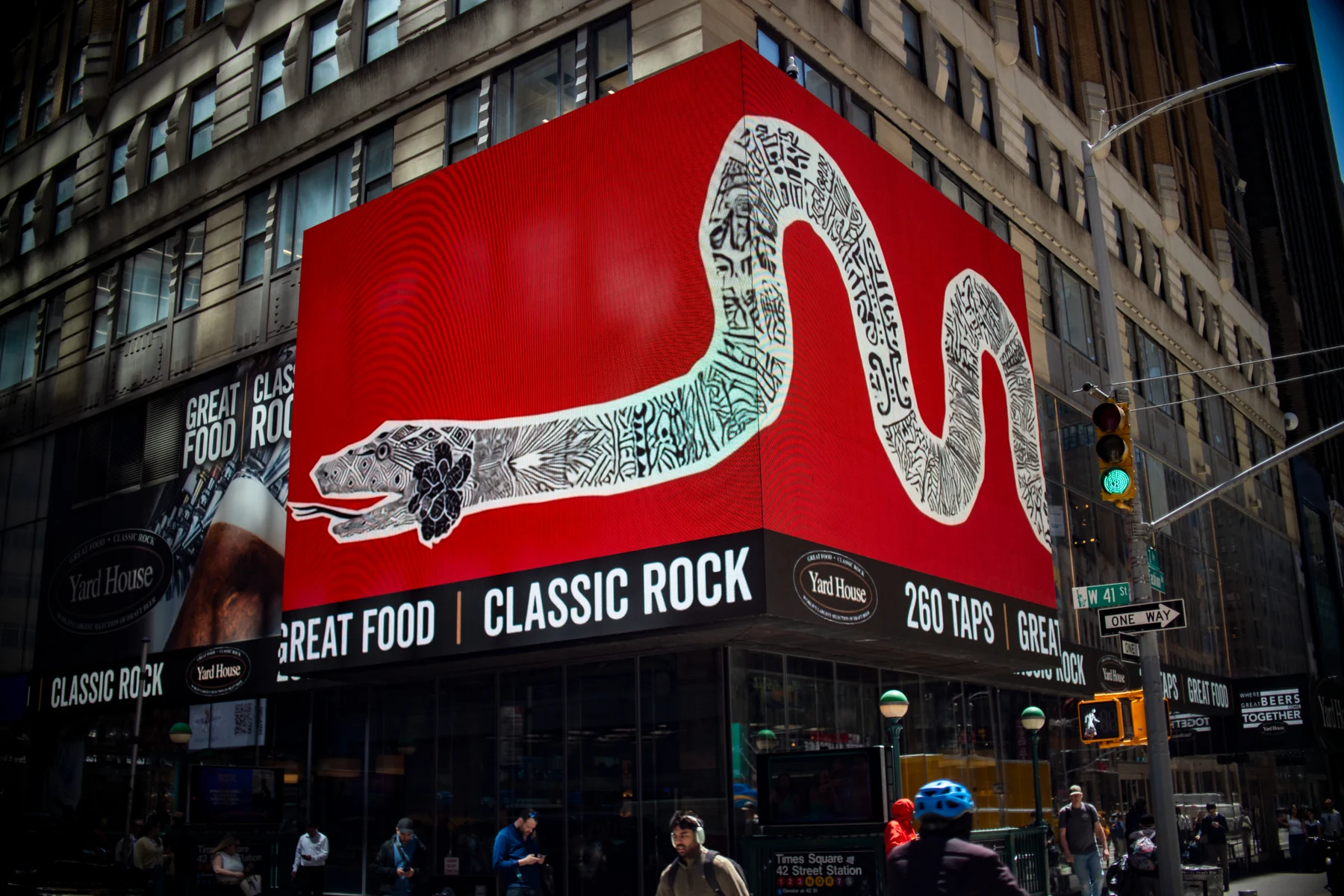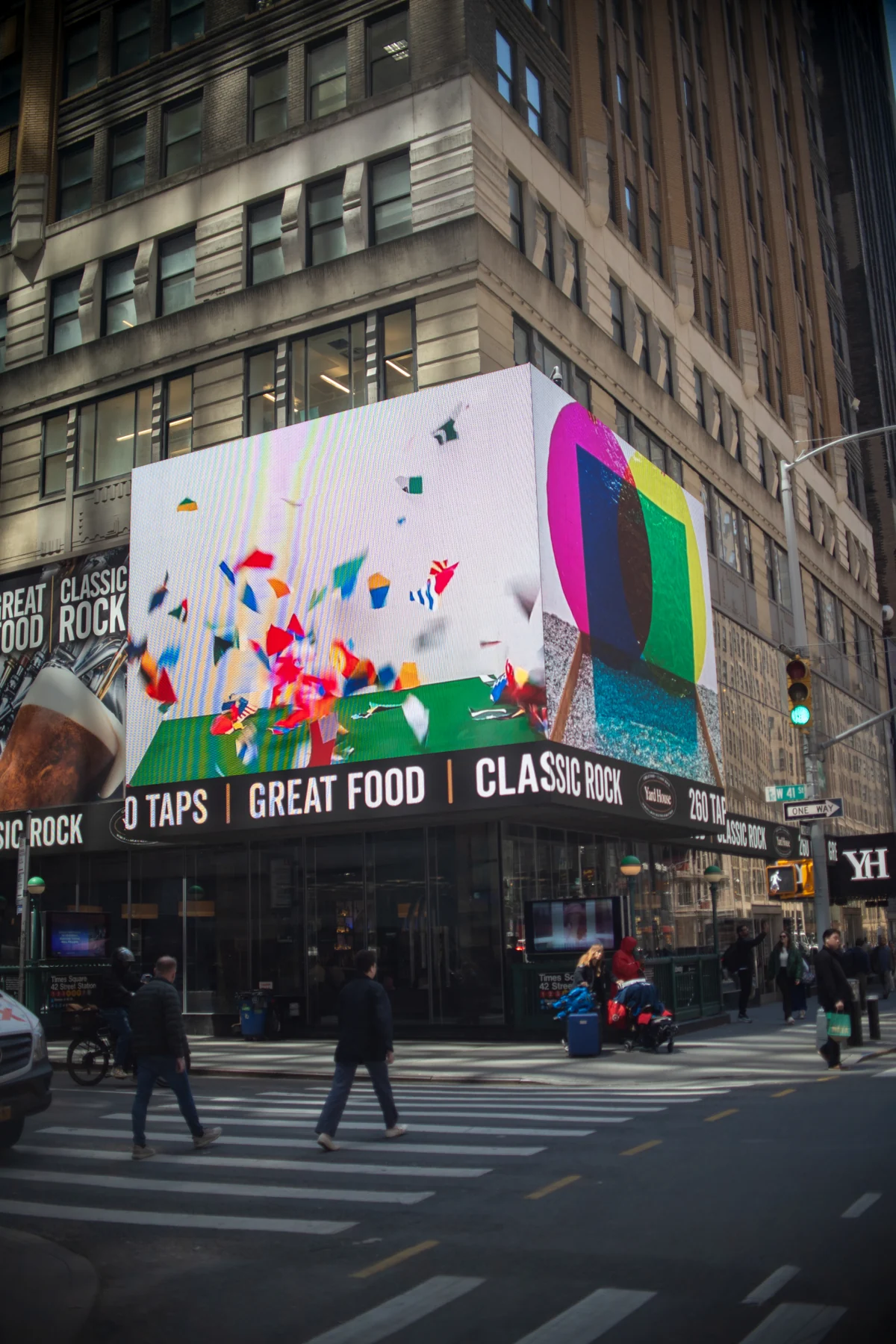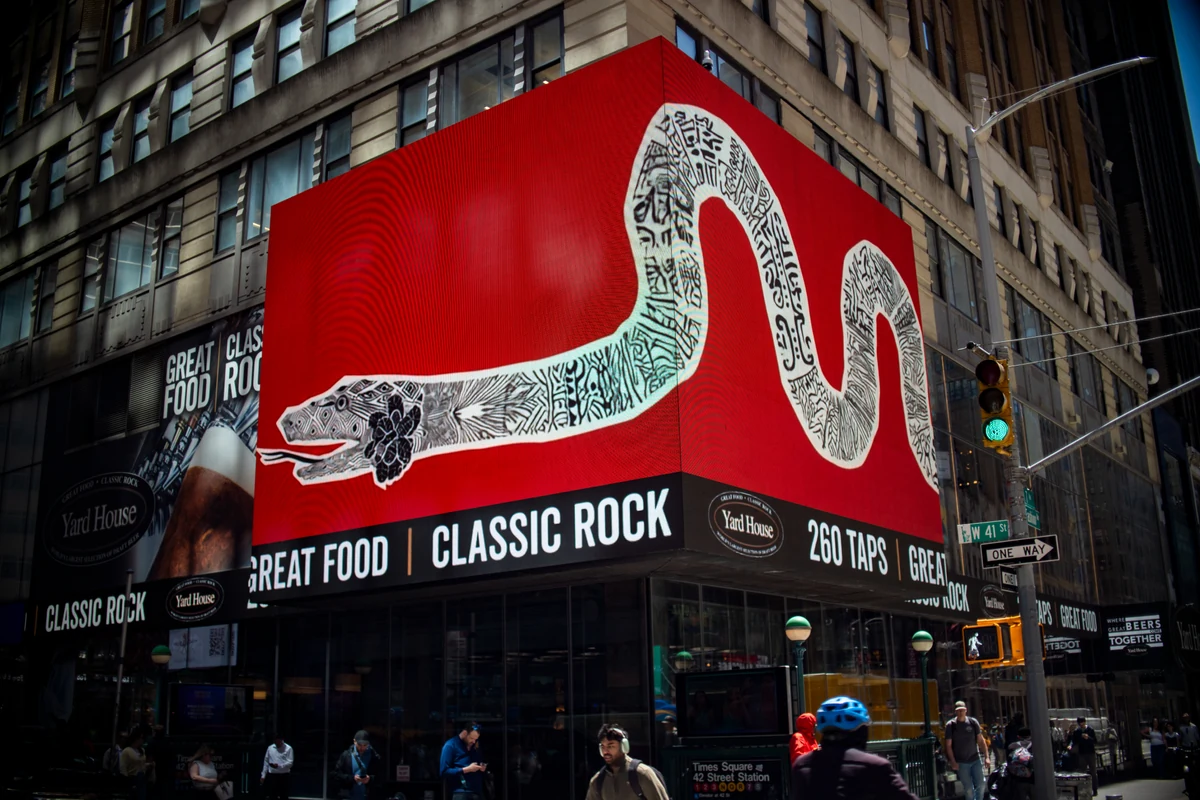
In the heart of New York, Brazilian artworks light up Times Square, expanding the country’s presence in the global contemporary art scene.
Amid flashing ads and constant movement, something unexpected interrupts the visual noise of Times Square. Instead of brands, contemporary Brazilian art appears on massive LED screens, shifting the rhythm of one of the busiest places on Earth.
Throughout May, ArtRio brings its Museu a Céu Aberto project to New York. For two weeks, works by Lucia Koch, Denilson Baniwa, and Rodrigo Cass are displayed across iconic billboards, reaching thousands of viewers as part of the city’s daily flow.
The timing aligns with Frieze New York, one of the art world’s key events. The galleries representing the artists — Nara Roesler, A Gentil Carioca, and Fortes D’Aloia & Gabriel — are participating in the fair and are also confirmed for ArtRio’s upcoming edition in September.
Art in public space
Showing art in Times Square is more than visibility. It’s about inserting new narratives into a space dominated by commercial messaging. Each piece competes with speed, scale, and attention spans measured in seconds.
The initiative is part of ZAZ10TS, a cultural platform that integrates art into New York’s architectural landscape. Works appear every two to three minutes, alternating with advertisements and creating unexpected moments of reflection.
“Bringing Brazilian artists to Times Square expands international visibility and circulation for our contemporary production.” — Vivian Gandelsman
According to ArtRio’s Relationship Manager Vivian Gandelsman, the project aims to extend the boundaries of the fair and turn the city itself into an exhibition space.
A two-way exchange
The collaboration goes both ways. ZAZ10TS has selected three New York-based artists — Ben Hagari, Erik Bergrin, and Uri Katzenstein — to showcase their work in Rio de Janeiro.
Their video pieces will be screened on a large panel at Aterro do Flamengo, as part of the same Museu a Céu Aberto initiative, reinforcing the idea of accessible public art.
This exchange strengthens cultural circulation between cities. Brazilian artists gain exposure in a global hub, while Rio audiences engage with international works outside traditional gallery systems.
In a global art market where Brazil still occupies a limited share, initiatives like this help shift perception — from peripheral presence to active contributor.
By entering Times Square, Brazilian art doesn’t just appear. It intervenes — and leaves a mark.