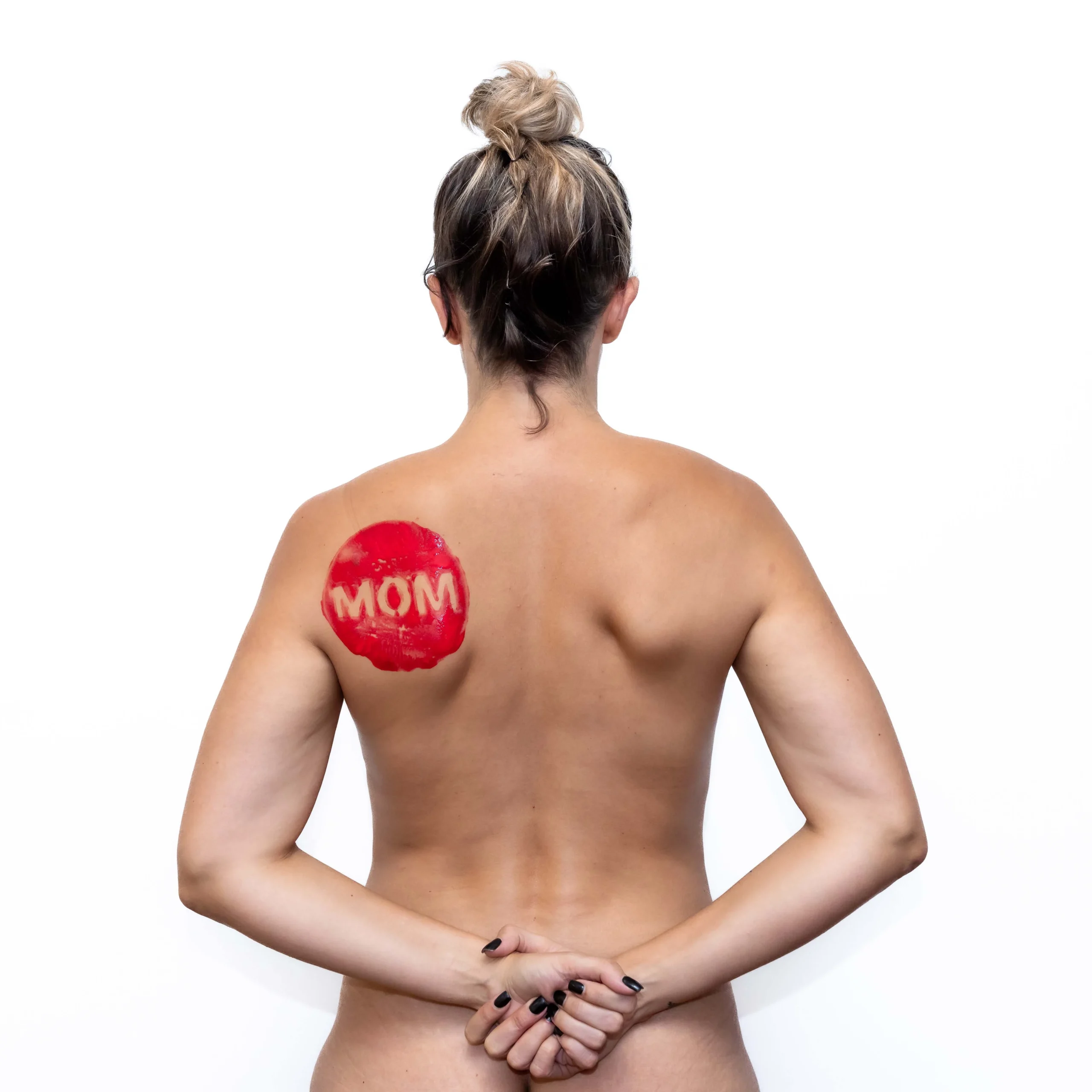
Only Brazilian project selected among 658 proposals, “The uterus is also a fist” opens at Apexart in New York, centering reproductive rights with 11 Latin American artists.The new exhibition “The uterus is also a fist” opens March 27, 2026 at Apexart in New York, bringing the debate on reproductive rights into the heart of the contemporary art circuit.Curated by Brazilian researchers Talita Trizoli and Renata Freitas, the project was the only one from Brazil selected in Apexart’s global open call, which received 658 proposals and is known for its transparent, crowd-sourced selection process.The show features around 30 works in painting, drawing, sculpture, installation, video, performance, printmaking and an electronic game, created by ten Brazilian artists and one Argentina-born artist based in Brazil, all members of the G.A.F. (Feminist Accompaniment Group).
G.A.F. collective and reproductive justice
The participating artists are Guillermina Bustos, Leíner Hoki, Leticia Ranzani, Liane Roditi, Ludmilla Ramalho, Mariana Feitosa, Natali Tubenchlak, Raffaella Yacar, Renata Freitas, Rikia Amaral and Rosa Bunchaft, coming from different Brazilian states such as Pernambuco, Sergipe, Minas Gerais, Rio de Janeiro and São Paulo.By bringing together different generations, racial backgrounds and social realities, the exhibition shows how reproductive rights cut across women’s lives regardless of geography or age.
“Debating reproductive rights goes far beyond choosing whether to continue a pregnancy or not,” say curators Talita Trizoli and Renata Freitas.
For them, reproductive justice also involves access to education and public transport, safe contraception, sexual education in schools, maternal leave, fair working conditions and the material possibility of responsible parenting.They point out that, despite its urgency, reproductive justice remains largely absent from Brazilian contemporary art, often silenced by censorship and institutional resistance, which makes this exhibition an attempt to fill a symbolic gap.
The poem behind the title
The title “The uterus is also a fist” refers to the poem “The uterus is the size of a fist” by Brazilian writer Angélica Freitas, a landmark of contemporary feminist poetry for its direct approach to abortion and violence against the female body.In the poem, the uterus is compared to a measuring unit and also to a kind of karmic weight of feminized embodiment, exposing the tensions between anatomy, social expectations and control over the body.Building on this reference, the exhibition highlights the ambivalences of femininity still tied to anatomy and institutional constraints, especially those that define who gets to decide over their own body.
Works, mediums and narratives
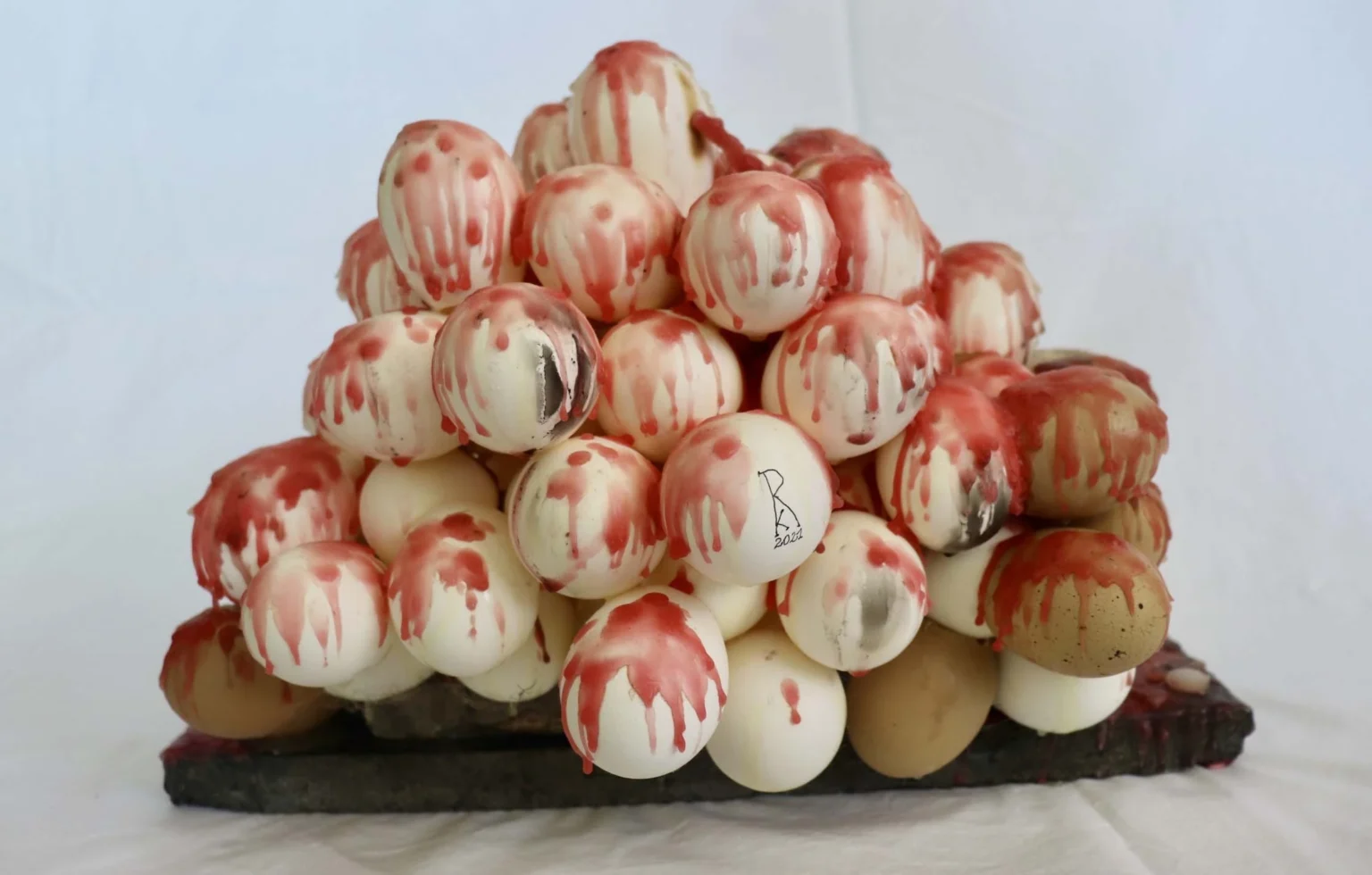
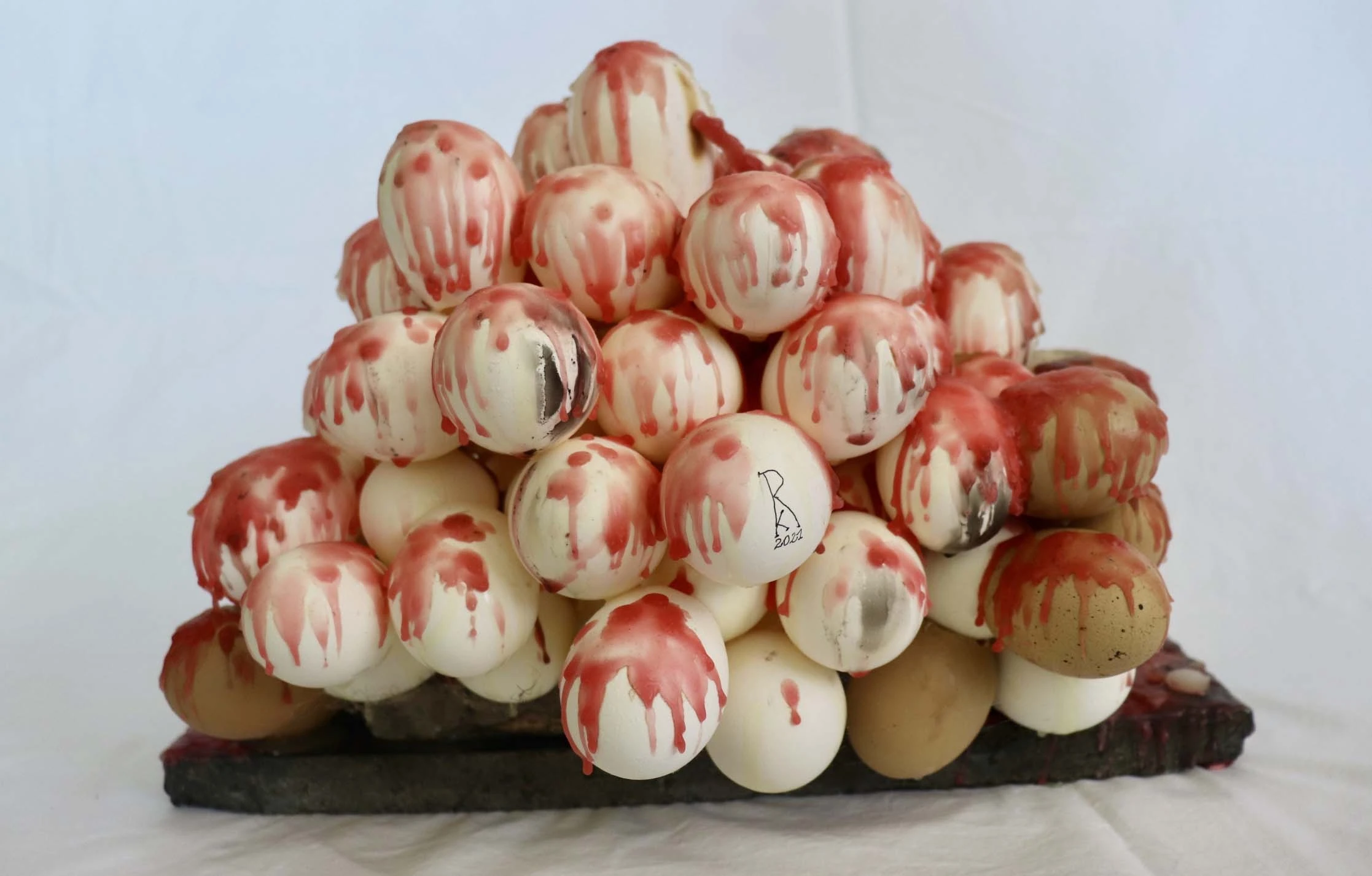
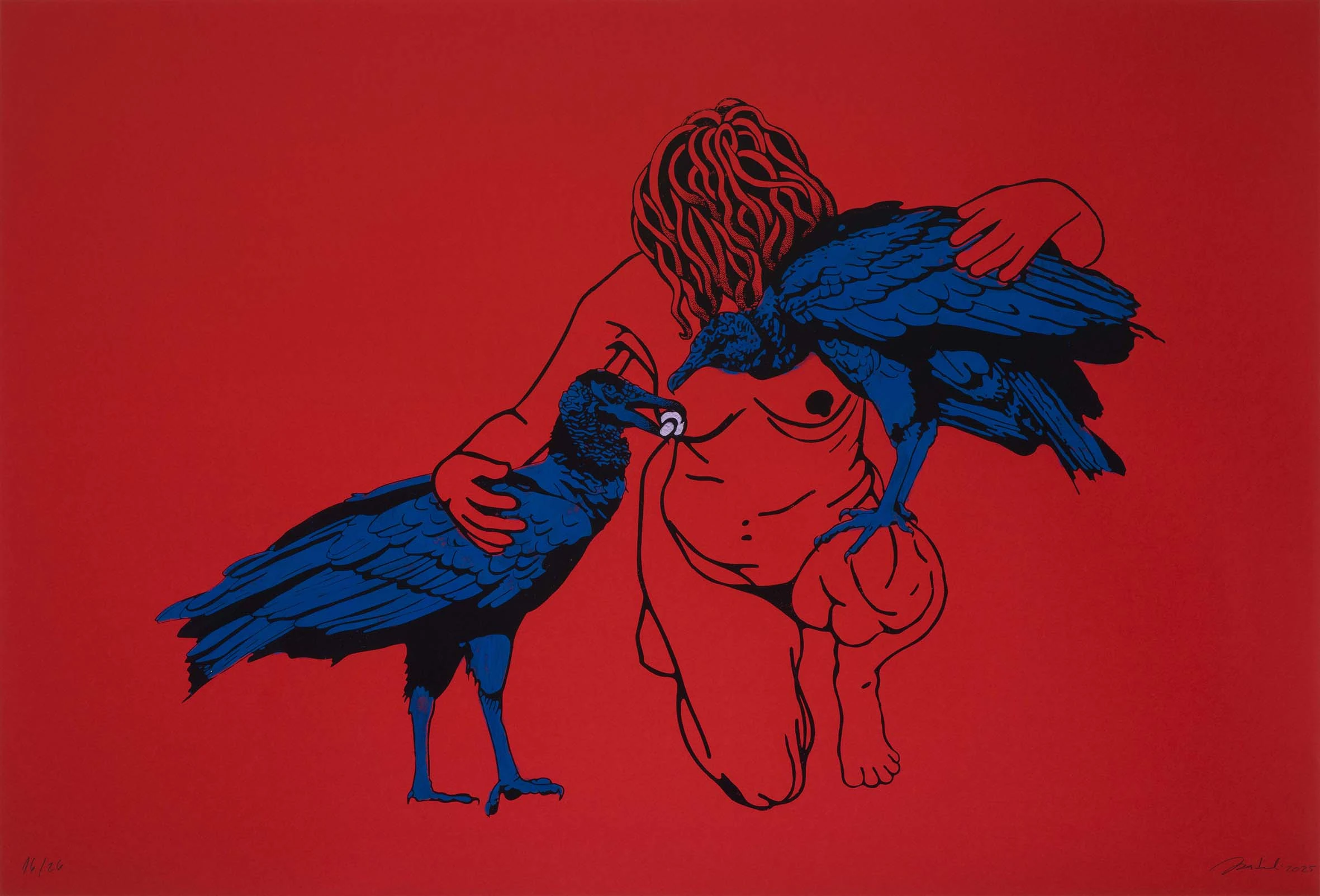
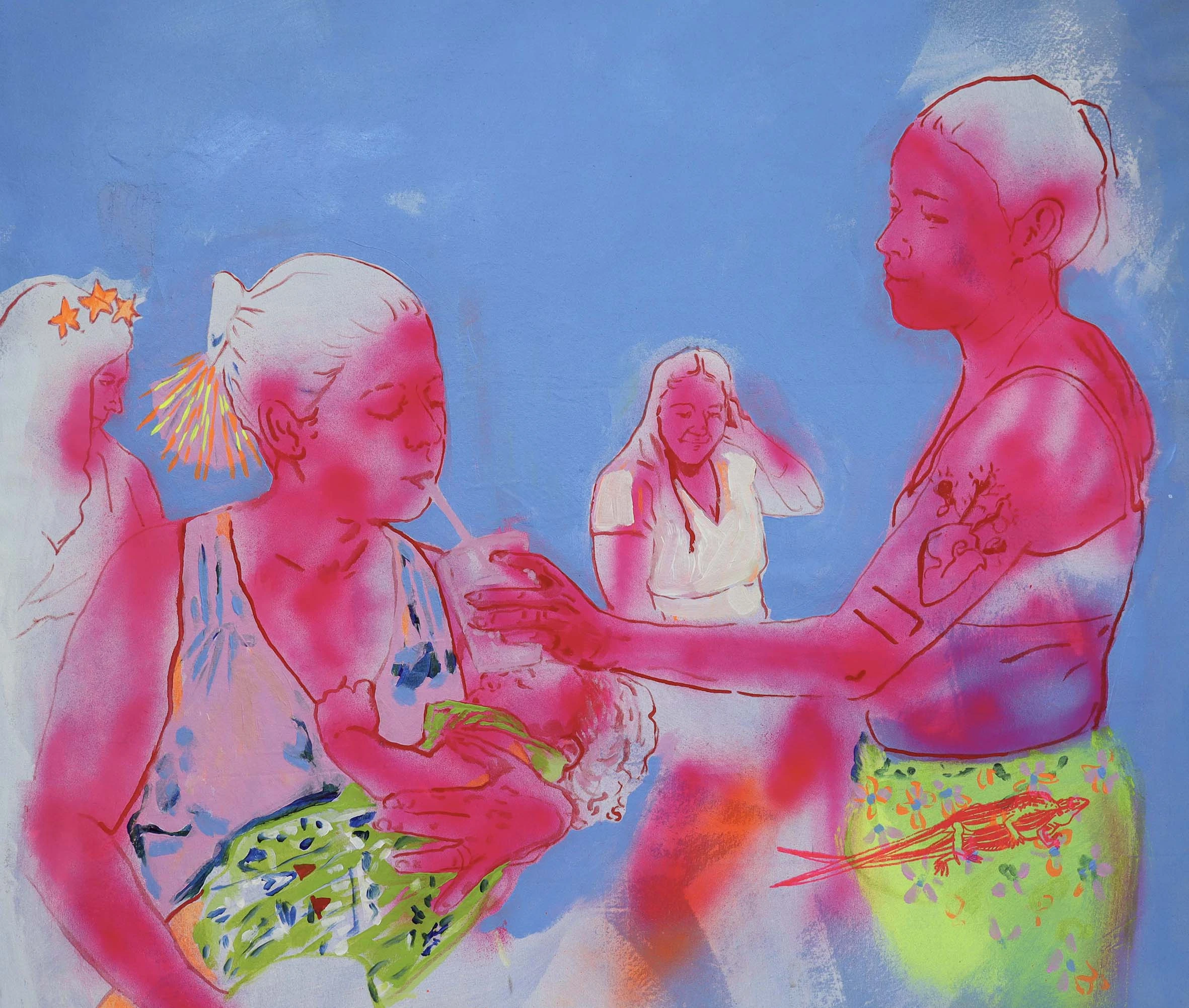
The show brings together works that address reproductive rights from multiple angles, including abortion, spontaneous loss, institutional violence, motherhood, grief, trauma, desire and alternative forms of caregiving.Highlights include “Conditional Autonomy”, an electronic question-and-answer game by Argentina-born, São Paulo–based artist Guillermina Bustos, in which each player must navigate the tension of deciding what to do when facing an unwanted pregnancy under legal, temporal and social constraints.Natali Tubenchlak shows works from the series “Pregnant”, combining images of pregnant animals and children’s bodies, and the new screen print “Necrófagos”, based on an award-winning photograph of an Indigenous woman breastfeeding a child and an animal, here reimagined with a white woman and two vultures feeding from her.The link between the maternal body and animality reappears in Ludmilla Ramalho’s video performance “You cow!”, in which the artist breastfeeds her daughter while wearing a bovine skull on her head, exposing the passage from “holy body” during pregnancy to “cow body” during breastfeeding.In the painting “Bruce Effect”, Rikia Amaral explores a biological mechanism of spontaneous abortion identified in rodents and chimpanzees under environmental stress, and also presents the sculpture “Sekhmet”, referencing the Egyptian goddess through eggs and wax.Rosa Bunchaft’s small pieces “Family Court: Adam’s Rib and the Rod” use cyanotypes of court buildings, floor plans and family portraits to examine family courts from the perspective of a neurodivergent mother affected by Brazil’s Parental Alienation Law.She also exhibits the self-portrait “Like the lady from the sea”, in which she appears pregnant, floating alone in the vast ocean, evoking themes of abandonment, fragility and persistence.Raffaella Yacar’s installation “Relief” is a mantle made of velvet, silk, clay and gelled water from the Limmat River in Zurich, where she lives, composed as a dreamlike environment that dialoges with spontaneous abortion and healing.In the watercolors “Canceled Existence”, Mariana Feitosa portrays a pregnant body only through stains left on the fabric, suggesting erasure and spectral presence.After two episodes of postpartum depression, Leticia Ranzani presents drawings made over photographs of her own children, building images in which the mother figure gradually vanishes into the delirium of others’ expectations.In the installation “Poetic License”, Renata Freitas works with hospital sheets that cover the space in translucent layers, reflecting on how millions of women come into contact with these fabrics in births and gynecological exams throughout their lives.During the exhibition, she will also perform within the installation, deepening the reflection on care, control, autonomy and the power to decide over one’s own body.Liane Roditi shows the painting “Suction”, where a white cluster of fingers over an earthy background suggests an ambiguous movement between being pulled in and coming out, and the video performance “Deviation”, in which red liquid flows down her bare legs towards a white floor.Works by Leíner Hoki explore alternative forms of motherhood in homoaffective relationships and different paths when facing unwanted pregnancies, including a reinterpretation of the iconic 1908 painting “The Angel Maker”, by Pedro Weingartner, from the Pinacoteca de São Paulo collection.
Public program and live actions
The exhibition “The uterus is also a fist” unfolds in a public program that extends the discussion on reproductive rights through performances, guided visit, workshop and an online talk.On March 27 at 6 pm, curators Talita Trizoli and Renata Freitas lead a guided tour streamed live on Instagram, followed at 7:30 pm by Renata’s performance “Expandable, I am”, in which a mantle-shaped sculpture is transferred to another body, making it physically bear the layered weight of social expectations on women.On March 28 at 5 pm, artist Liane Roditi performs “Suspension”, hiding her body under moving layers of fabric that are slowly removed in a gesture that oscillates between erasure and emergence.On April 1 at 4 pm, Leíner Hoki leads a printmaking workshop, inviting visitors to create their own works using stamps from the piece “Angel Makers”, also on view in the exhibition.On May 21 at 4 pm, researchers and curators Carolina Filippini and Fernanda Corrêa join an online roundtable to discuss the works from the perspective of reproductive justice in Brazil.
The curators’ backgrounds
Art historian, curator and researcher, Talita Trizoli specializes in Brazilian feminist art, gender and ethics from a systemic perspective, and has authored reference publications in the field.She has curated several feminist-oriented exhibitions in Brazil, coordinates the G.A.F. since 2020, was awarded a Mellon Fellowship as a High Impact Scholar at UT Austin and completed postdoctoral research at IEB-USP with CAPES and FAPESP grants.Visual artist, researcher and curator, Renata Freitas holds a PhD in Communication and Semiotics and develops works in painting, performance and installation in Brazil and abroad, articulating feminist theory with investigations on body, memory, gender and power.
Apexart and its global open call
Founded in 1994, Apexart is a New York–based arts and education organization known for functioning as an incubator for curators and creatives, with a strong emphasis on transparency and non-exclusive selection processes.Over more than three decades, it has presented 269 exhibitions in 39 countries, providing professional visibility to over 1,200 artists and awarding fellowships to more than 240 artists and curators from upwards of 50 countries.Each season includes exhibitions in New York and in temporary venues worldwide, all chosen through open calls that prioritize the conceptual strength of proposals and the diversity of voices.
Service – “The uterus is also a fist”
Opening: March 27, 2026, from 6 pm to 8 pmExhibition dates: through May 23, 2026Venue: ApexartAddress: 291 Church St., New York City (NYC)Hours: Tuesday to Saturday, 11 am to 6 pmAdmission: free
Public program
March 27, 6 pm – guided visit with curators Talita Trizoli and Renata Freitas, live on Instagram.March 27, 7:30 pm – performance “Expandable, I am”, by Renata Freitas.March 28, 5 pm – performance “Suspension”, by Liane Roditi.April 1, 4 pm – stamp-printing workshop with artist Leíner Hoki.May 21, 4 pm – online talk with researchers and curators Carolina Filippini and Fernanda Corrêa.Photo: Promotional image
A equipe de redação do Aurora Cultural traz notícias e reportagens sobre saúde, beleza, cultura e comportamento com apuração cuidadosa e linguagem acessível. Encontrou algo interessante? Compartilhe com quem também vai gostar.
Nosso site se torna possível através da exibição de anúncios on-line aos nossos visitantes. Por favor, ajude-nos desativando seu bloqueador de anúncios.