
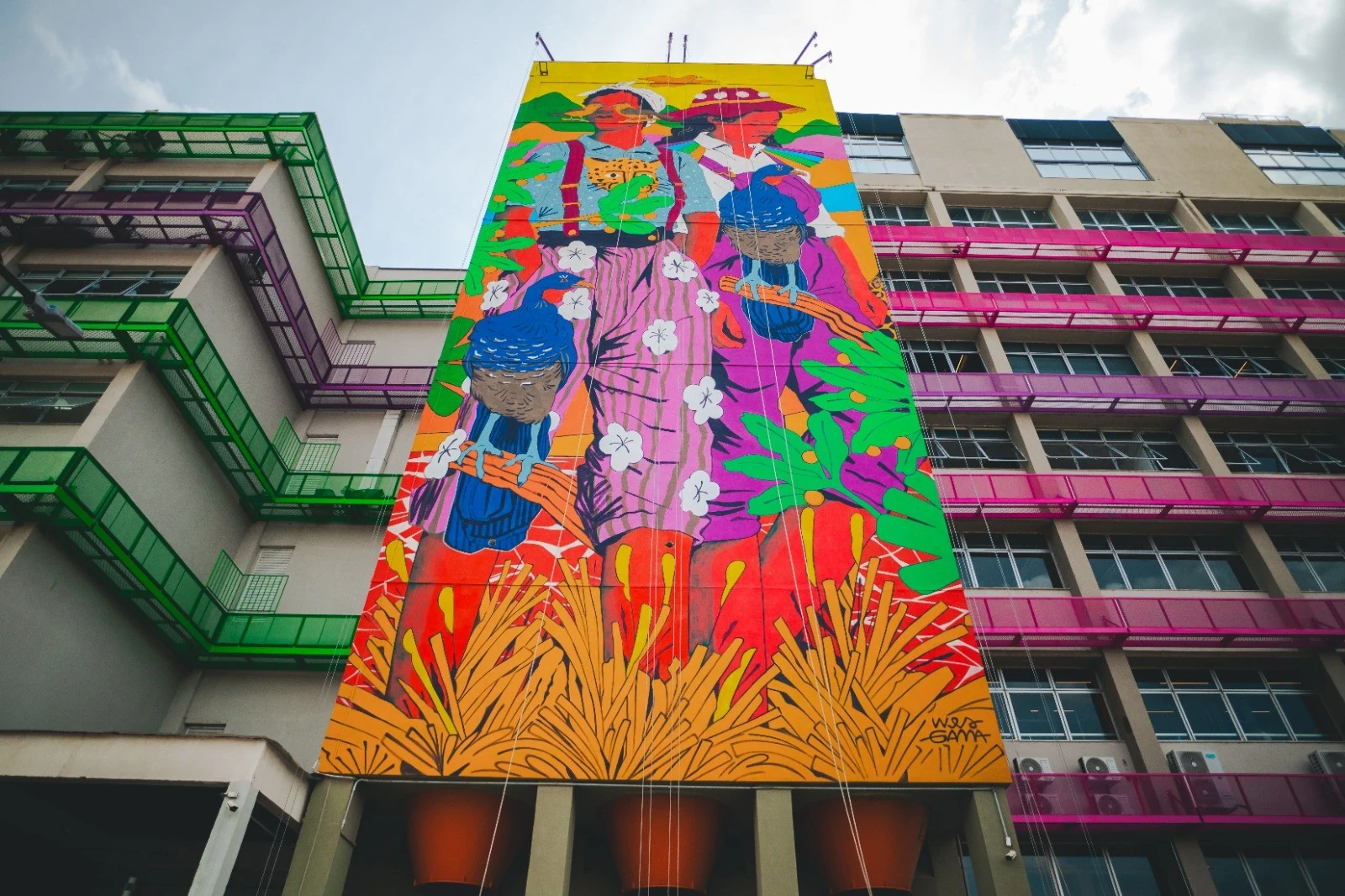
A 400 m², 26.8-meter mural is set to reshape Moinho’s skyline as Wes Gama unveils the artwork on January 31, on the new Rua ABertha.
The large-scale public artwork will become part of Juiz de Fora’s urban landscape, covering one of Moinho’s façades facing Rua ABertha. With roughly 400 m² and 26.8 meters in height, the piece stands out as a new visual landmark in the city’s North Zone and as a symbol of an urban project linking culture, mobility, and shared public life.
Art built into the street
Moinho and Rua ABertha were designed as a single urban ecosystem. In that vision, public art is not decoration—it becomes a core part of how people experience the space, encouraging walking, gathering, and cultural use.
The mural speaks directly to the street-park concept, created to prioritize people and foster everyday moments of connection. It also works as a clear new reference point, signaling a fresh cycle of inspiration and urban change in the area.
About Wes Gama
Known nationwide for his work in urban art, Wes Gama describes his style as “rural futurism” (“caipira futurista”). He blends ancestry, technology, and Brazilian popular culture through bold colors, organic shapes, and narratives that bridge past, present, and future.
His notable projects include “Amazon Alarm,” a mural created for Greenpeace Brazil, alongside appearances at major festivals and cultural programs across the country. In Juiz de Fora, the mural’s execution included support from graffiti artists Pekena Lumen, Gart Lemos, and Nathalia Medina, strengthening local exchange and visibility.
Curatorial direction
The curators are Priscila Amoni and Jana Macruz, from AGUA — Agência Urbana de Arte, a studio focused on art direction, curation, and production for public and private spaces. The group also leads the CURA – Circuito Urbano de Arte, one of Latin America’s largest public art festivals.
“Wes was the perfect translation of what Moinho wants as the image of its mission.”
That’s how Jana Macruz explains the choice. Priscila Amoni adds that the selection came from a careful search for artists whose poetics connect nature, the future, and ancestry—ideas that also shape the new urban environment.
What the mural is about
According to the artist, the work begins with a reflection on Moinho’s historical meaning and its relationship with the city. He says he envisioned an artwork that could express “this walk, this route, and the people who passed through here and still pass by today,” treating the building as a generational landmark.
Wes Gama also emphasizes the street as a public space for movement and everyday coexistence. The concept, he notes, connects the urban and the natural while highlighting women as key agents in the cultural forces shaping the city.
Urban context: Rua ABertha
The mural unveiling is part of the launch programming for Rua ABertha, delivered by the City Hall of Juiz de Fora in partnership with Moinho. As an extension of Rua Bertha Halfeld, it is open to vehicles on weekdays, aiming to improve mobility in the North Zone.
On Sundays, the plan shifts: the street closes to cars and becomes a street-park. The model prioritizes active mobility, places to linger, nature-based solutions, and cultural programming—an approach centered on people rather than traffic.
Visible from multiple points in the Industrial neighborhood, the mural arrives as a gift to local residents. From January 31 on, the piece joins Juiz de Fora’s visual identity and reinforces the idea that the cityscape can also build belonging.
Photo: Igor Tibiriçá
Gostou do nosso conteúdo?
Seu apoio faz toda a diferença para continuarmos produzindo material de qualidade! Se você apreciou o post, deixe seu comentário, compartilhe com seus amigos. Sua ajuda é fundamental para que possamos seguir em frente! 😊
