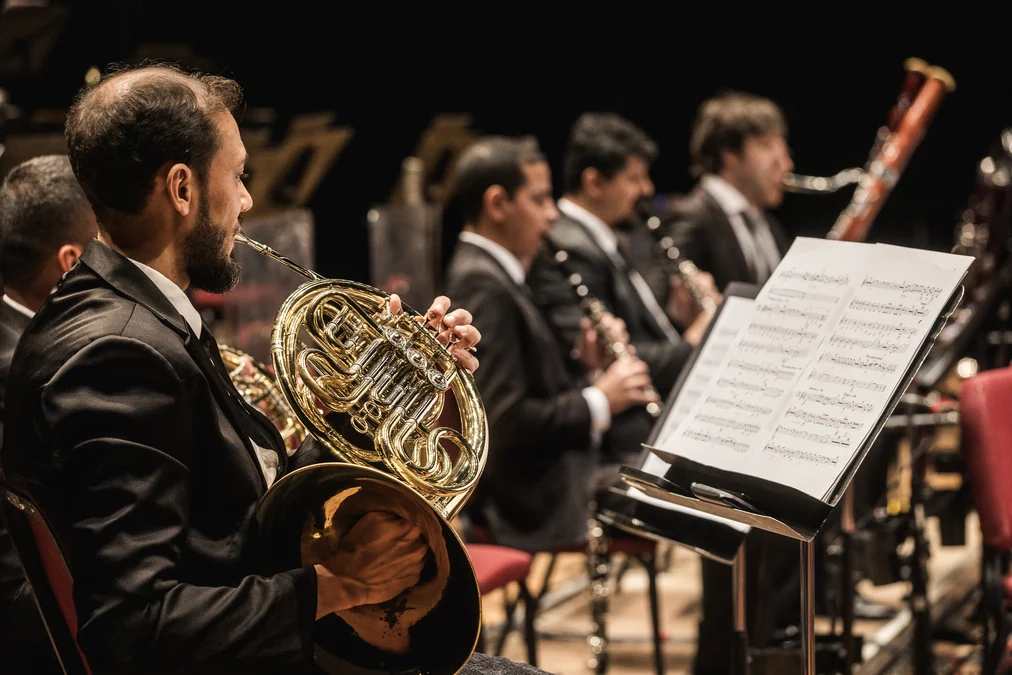
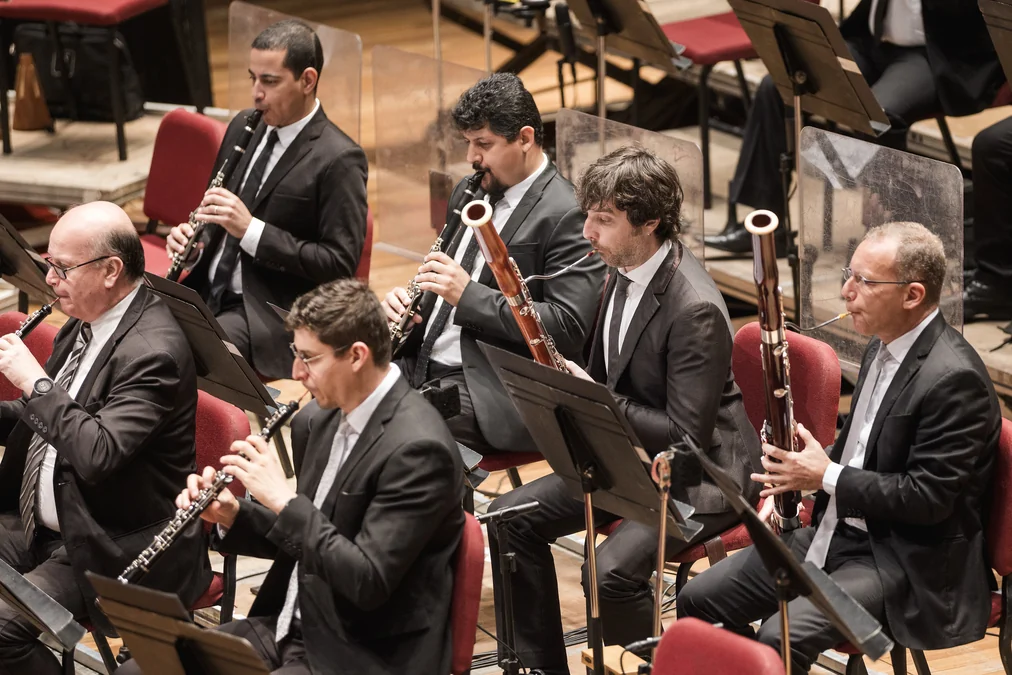
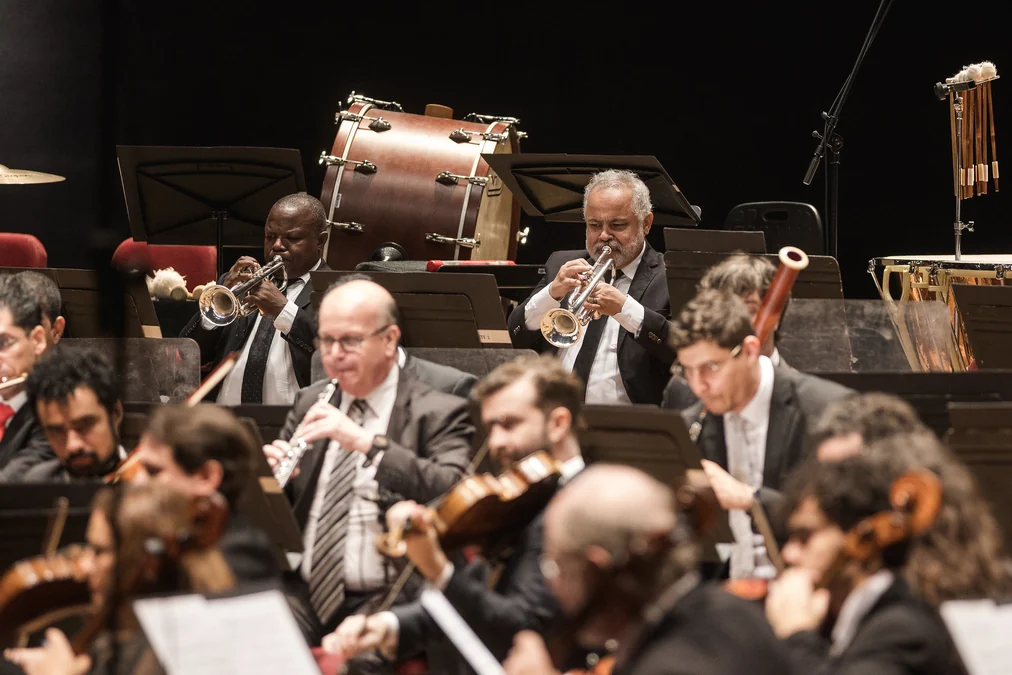
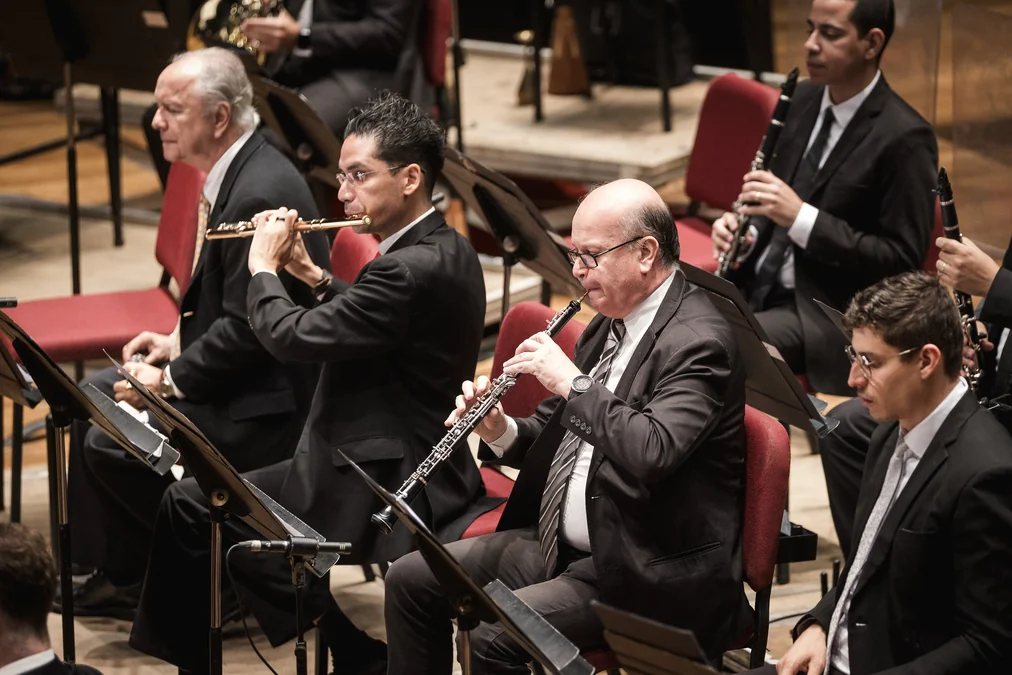
On May 10, the Brazilian Symphony Orchestra opens its Orquestra Encena series at the Cidade das Artes Chamber Theater with a program built around wind players.
Mother’s Day in Rio de Janeiro will be marked by something far beyond flowers and brunch. The Brazilian Symphony Orchestra (OSB) takes the stage of the Chamber Theater at Cidade das Artes on Sunday, May 10, at 11 a.m., launching the new Orquestra Encena concert series under the baton of conductor André Cardoso. The spotlight falls on the orchestra’s wind players in a program that spans from Brazilian modernism to Czech Romanticism.
Villa-Lobos in full force
The morning opens with Heitor Villa-Lobos’s Quintet in the Form of a Choro (1928), a work that channels everything that made the composer a singular voice: urban melodies, Amerindian rhythms, and an orchestration that feels both raw and sophisticated. Written for flute, oboe, English horn, clarinet, and bassoon — an atypical lineup for a wind quintet — the piece demands virtuosity and rhythmic freedom from every musician on stage. It lurches between lyrical passages and abrupt bursts of near-chaotic energy, never once settling into predictability.
A 60-year-old composer in dialogue with history
Few people know the quieter side of Villa-Lobos. His Bendita Sabedoria chorals (1958), settings of texts by Saint John of the Cross, reveal a composer who could be restrained, almost ascetic. That introspective voice becomes the raw material for Rodrigo Cicchelli, who turns 60 in 2026 and stands as one of the most distinctive voices in Brazilian contemporary music.
His Variations on “Bendita Sabedoria”, for brass quintet, do not quote or ornament Villa-Lobos — they extract harmonic sequences, motifs, and textures from the chorals and reshape them into five continuous sections of entirely new music. It is no coincidence that the Variations run roughly the same length as the Villa-Lobos cycle: a reflection that takes up the same space without returning the same image.
Holst, Dvořák, and the power of contradiction
After the interval, Gustav Holst’s First Suite in E-flat major — one of the most celebrated works ever written for symphonic band — brings a different kind of clarity to the program. Holst composed it while trying to break free from the late Romanticism that had shaped his early career. His path forward, paradoxically, led him backward: to the Baroque. The result is a three-movement suite — Chaconne, Intermezzo, and March — of formal elegance and rhythmic precision.
The concert closes with Antonín Dvořák’s Serenade in D minor, Op. 44, written in 1878. There is a fascinating tension at the heart of this work: the serenade as a genre implies lightness and ease, yet Dvořák chose D minor — a key loaded with tragic weight in the Western canon. That contradiction does not diminish the music; it is precisely what gives it its lasting power.
Event Info
- Orquestra Encena Series – Winds
- Date: Sunday, May 10, at 11 a.m.
- Venue: Teatro de Câmara – Cidade das Artes, Av. das Américas, 5300, Barra da Tijuca, Rio de Janeiro
- Tickets – Lower stalls: BRL 50.00 (half-price BRL 25.00)
- Tickets – Upper stalls: BRL 40.00 (half-price BRL 20.00)