
In March, Grupo Caleidoscópio takes “The Fisherman and the Skeleton Woman” to blind audiences and public schools, combining silence, puppetry, and emotion.
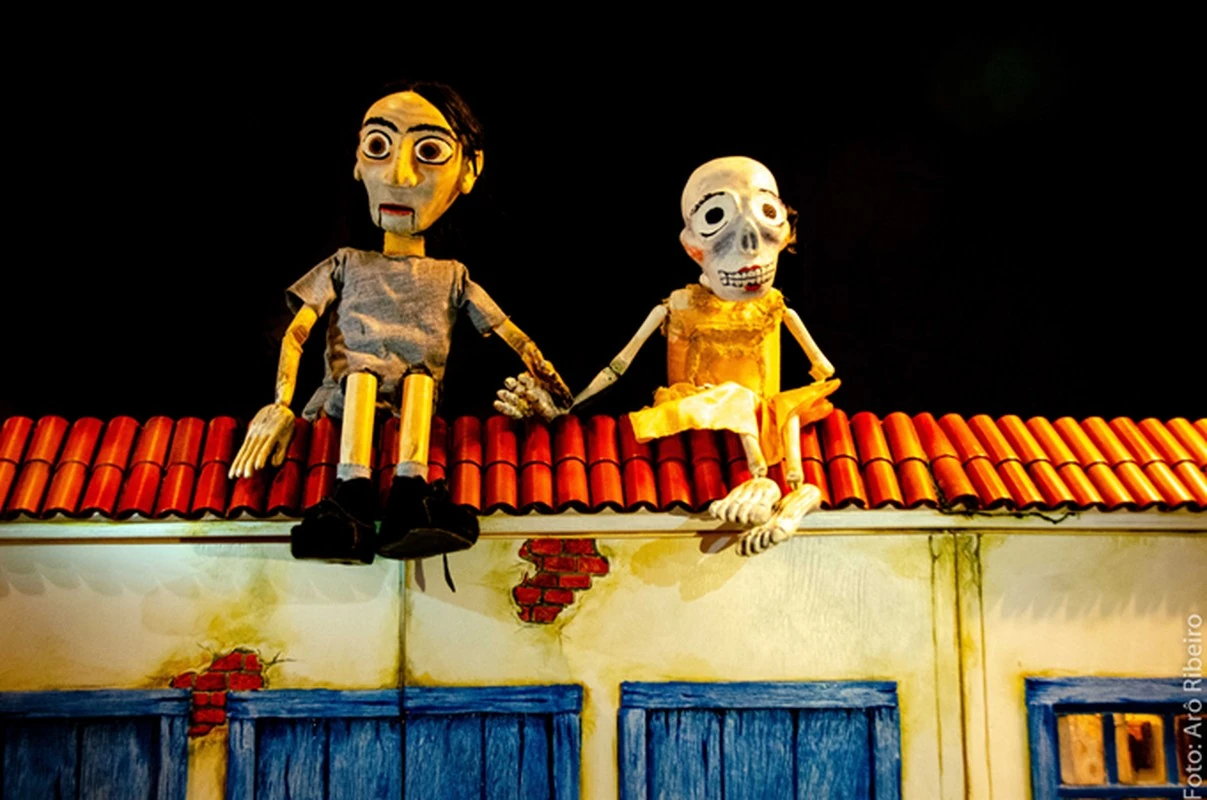
Inspired by the challenge of accepting what is different, “The Fisherman and the Skeleton Woman” blends art and empathy. Directed by João Bresser, the play uses the ancient Japanese Bunraku technique, with three puppeteers operating lifelike figures in synchronized movement. The wordless performance relies on music and projections to create a poetic and accessible experience for every viewer.
Between March and April 2026, the production tours institutions for the blind and public schools across São Paulo, reaching around 6,000 people. Each venue will host both a performance and a puppet-making workshop, strengthening accessibility and inclusion through the arts.
Based on an Inuit legend, the story follows a fisherman who accidentally catches a skeleton woman from the depths of the sea. In this adaptation, Bresser turns the tale into a reflection on bullying, prejudice, and acceptance. “Love transforms the characters only in their hearts — not in their appearance,” he says.
“Love is the guiding thread that transforms both characters from within.” – João Bresser
Set on a three-meter table, the stage recreates a fisherman’s modest home with vivid detail. Puppets crafted by Anderson Gangla and Thais Larizzatti achieve lifelike movement while the puppeteers, dressed in black, vanish in the shadows.
With over two decades dedicated to puppet theater research, Grupo Caleidoscópio continues to explore emotion and diversity through creations like “Andersen Without Words” and “Do Jeito Certo – A Play About Love.”
Photo: Courtesy / Arô Ribeiro

Gostou do nosso conteúdo?
Seu apoio faz toda a diferença para continuarmos produzindo material de qualidade! Se você apreciou o post, deixe seu comentário, compartilhe com seus amigos. Sua ajuda é fundamental para que possamos seguir em frente! 😊
