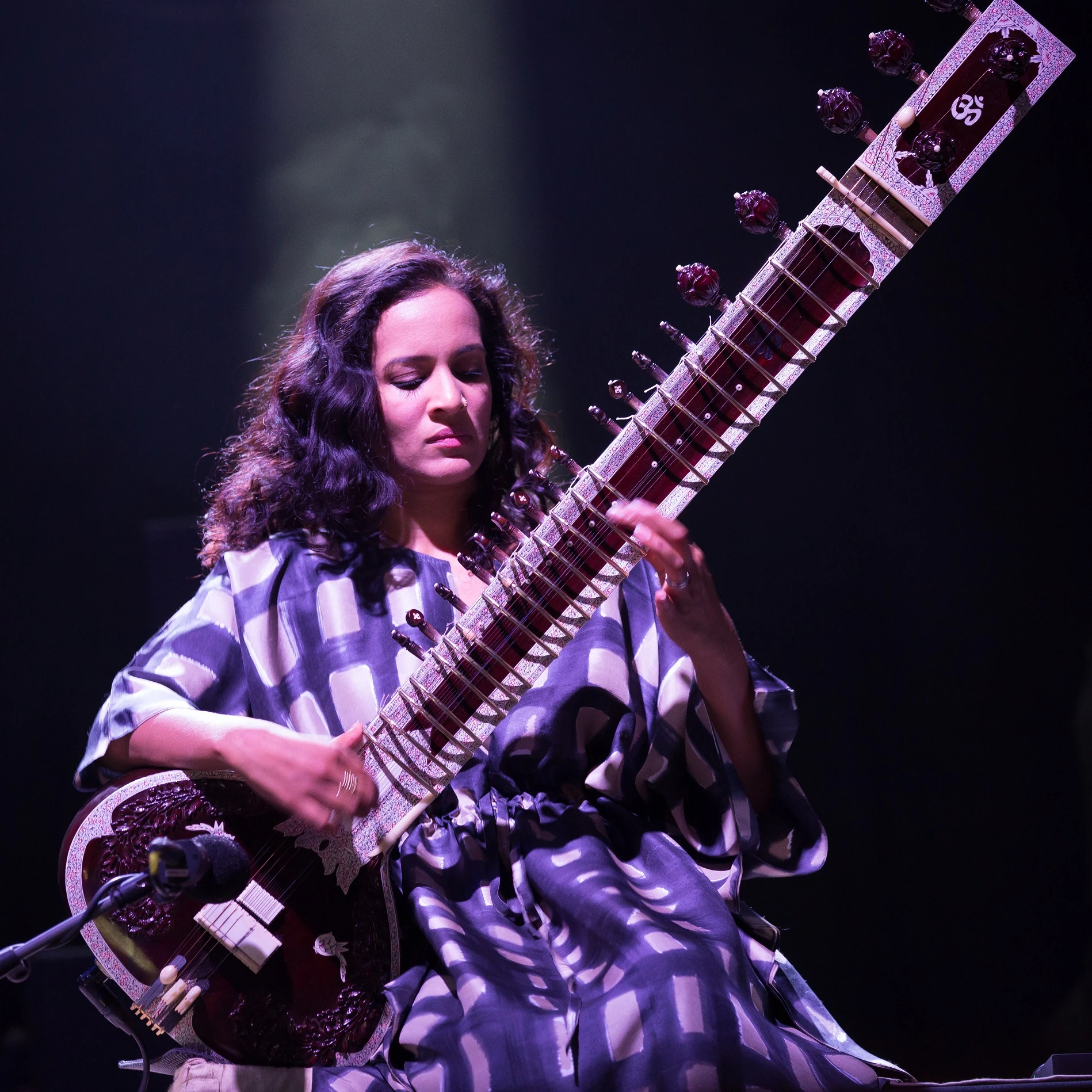
Fourteen-time Grammy nominee Anoushka Shankar makes her Brazil debut in March, with dates in Curitiba, Porto Alegre, and São Paulo.The Indian sitarist and composer brings a three-city run to the country, stopping in Curitiba (03/21), Porto Alegre (03/22), and São Paulo (03/25). It’s a rare chance to hear the sitar lead a contemporary concert setting—one shaped by tradition, but driven by bold authorship and cross-cultural exchange.
Who is Anoushka Shankar
Anoushka is the daughter of Pandit Ravi Shankar, the legendary musician who helped introduce Indian music to Western audiences and influenced generations beginning in the 1960s. Raised inside a centuries-old tradition, she built a distinct voice through experimentation and original composition, expanding the instrument’s possibilities on today’s global stage.She is also the half-sister of Norah Jones. Both artists carried the Shankar family’s musical heritage worldwide, yet in very different aesthetic directions—highlighting how that legacy can unfold across jazz, pop, and concert music without losing its identity.
From classical roots to a modern sound
If Ravi Shankar opened Western doors for the sitar, Anoushka has extended that bridge into the 21st century. Her catalog moves between Indian classical music, jazz, electronic textures, and concert music, with collaborations spanning Herbie Hancock, Sting, Patti Smith, Joshua Bell, and Arooj Aftab.Across more than three decades, she has earned 14 Grammy nominations in multiple categories—an unprecedented achievement for an Indian musician. She also became the first Indian woman to perform at the ceremony and present an award category.Her accolades include honors from the Royal Academy of Music and a recent honorary doctorate from the University of Oxford, underscoring her standing as a composer-performer with worldwide reach.
Setlist focus: the recent trilogy
The Brazil tour is expected to feature music from her latest trilogy: Chapter I: Forever, For Now, Chapter II: How Dark It Is Before Dawn, and Chapter III: We Return to Light. The projects deepen her exploration of ancestry and modernity, with immersive atmospheres and an emotionally charged tone.For Brazilian audiences, this debut lands as a snapshot of artistic maturity—an artist who didn’t just inherit a historic name, but helped redefine the sitar’s global presence in recent decades.
A equipe de redação do Aurora Cultural traz notícias e reportagens sobre saúde, beleza, cultura e comportamento com apuração cuidadosa e linguagem acessível. Encontrou algo interessante? Compartilhe com quem também vai gostar.
Nosso site se torna possível através da exibição de anúncios on-line aos nossos visitantes. Por favor, ajude-nos desativando seu bloqueador de anúncios.